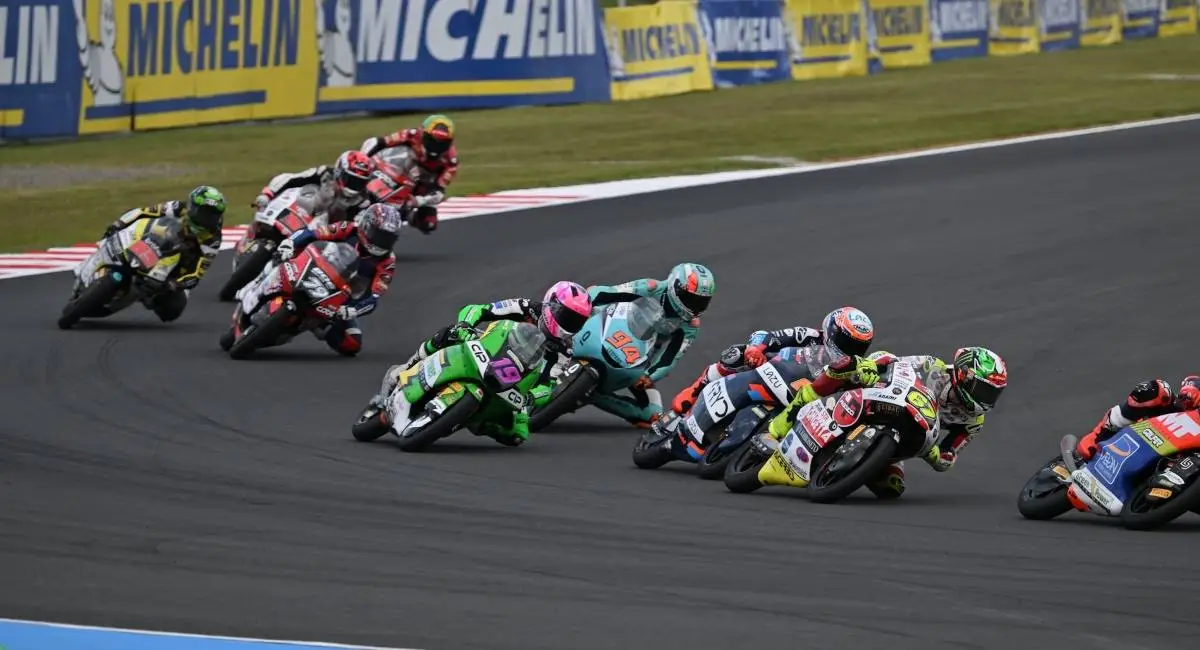
Moto3 is gearing up for the most radical change in its history, but the numbers don’t add up for everyone. From 2028, the entry-level class of the World Championship will ditch its 250 cc single-cylinder engines in favor of Yamaha’s 689 cc twins, with the stated aim of halving technical equipment costs. Several team managers, however, fear the exact opposite—at least during the transition.
The championship promoter has chosen Yamaha and its twin-cylinder CP2 architecture to replace the current single-cylinder prototypes from Honda and KTM. A bike with nearly three times the displacement, twice as many cylinders and, on paper, half the cost.
The promise: €80,000 per rider
The new Moto3 bike is expected to produce around 95 horsepower, compared with today’s 60–65, with a target weight of 120 kg. But the main selling point is the price: according to the estimates presented, equipment costs could fall from around €160,000 to €80,000 per rider per season, excluding spare parts.
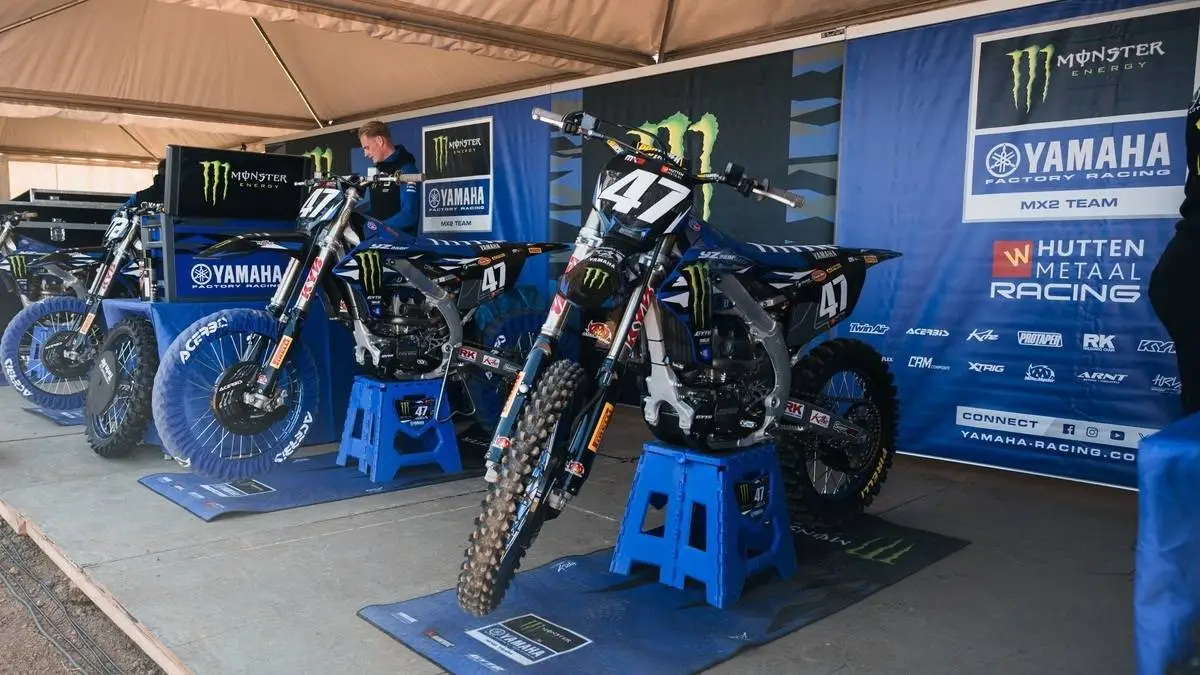
The complete Yamaha bike would be offered for around €50,000, compared with approximately €100,000 for the current Honda and KTM machines. The savings would come mainly from an engine derived from a production model: it shares its roots with the Yamaha R7 and MT-07, but will receive dedicated racing components, a dry clutch and a bespoke gearbox. In other words, it will be a true prototype, but built on a less expensive industrial platform. The exclusive supply agreement would cover the period from 2028 to 2033.
Teams see the numbers differently
The promoter’s calculations do not necessarily match those of the teams. The reason is simple: the entire fleet of bikes will have to be replaced. Some teams expect to buy three complete bikes for two riders, in addition to the essential spare parts. Those currently racing with machines that have already been paid off will not immediately see the promised savings.
There is also the issue of technical sponsors. With a single supplier requiring teams to use its own catalogue, they risk losing companies that have contributed to their budgets until now. A bike that costs less to produce, in short, does not automatically mean a cheaper season to fund.

Honda and KTM: an asset losing value
The transition also threatens the residual value of the current Moto3 bikes: Honda and KTM machines risk flooding the second-hand market, inevitably affecting the finances of their owners. Between now and 2028, teams will have to work out whether Liberty Media’s gamble will really make the class more sustainable, or whether the cost of the revolution will fall first and foremost on their shoulders.
Outside the paddock
There is another aspect to consider. Moto2 and Moto3 teams will no longer have access to the MotoGP paddock. This means they will no longer be able to offer their sponsors the chance to experience the top tier, but only a limited presence in the paddock’s more outlying area. It is the same model used in F1, where teams in the junior series (F2 and F3) operate in a parallel universe to the leading teams. Motorcycle racing is beginning to test Liberty Media’s new model, borrowed from major American sports. What will the implications be in the medium and long term?
-> Follow us on Instagram too: @Corsedimoto
Continue reading
You might also like
More news
Popular articles