The Legend of the Grossglockner: Epic Hairpins and Speed Challenges That Made History
StoriesFriday, 19 June 2026 at 21:00
I believe you can count on one hand the true motards, the hardcore mileage eaters, who don’t proudly display the badge or sticker with the big red G certifying they’ve crossed the Grossglockner Hochalpenstrasse, the scenic road over Austria’s highest mountain via the Hoctor Pass, at 2,500 meters above sea level.
With Austria on its knees after the defeat in World War I and the breakup of the Habsburg Empire, the idea of such a road seemed visionary, but when in 1929, spurred by the Great Depression, its construction was approved, it truly became an exceptional undertaking.
A visionary feat
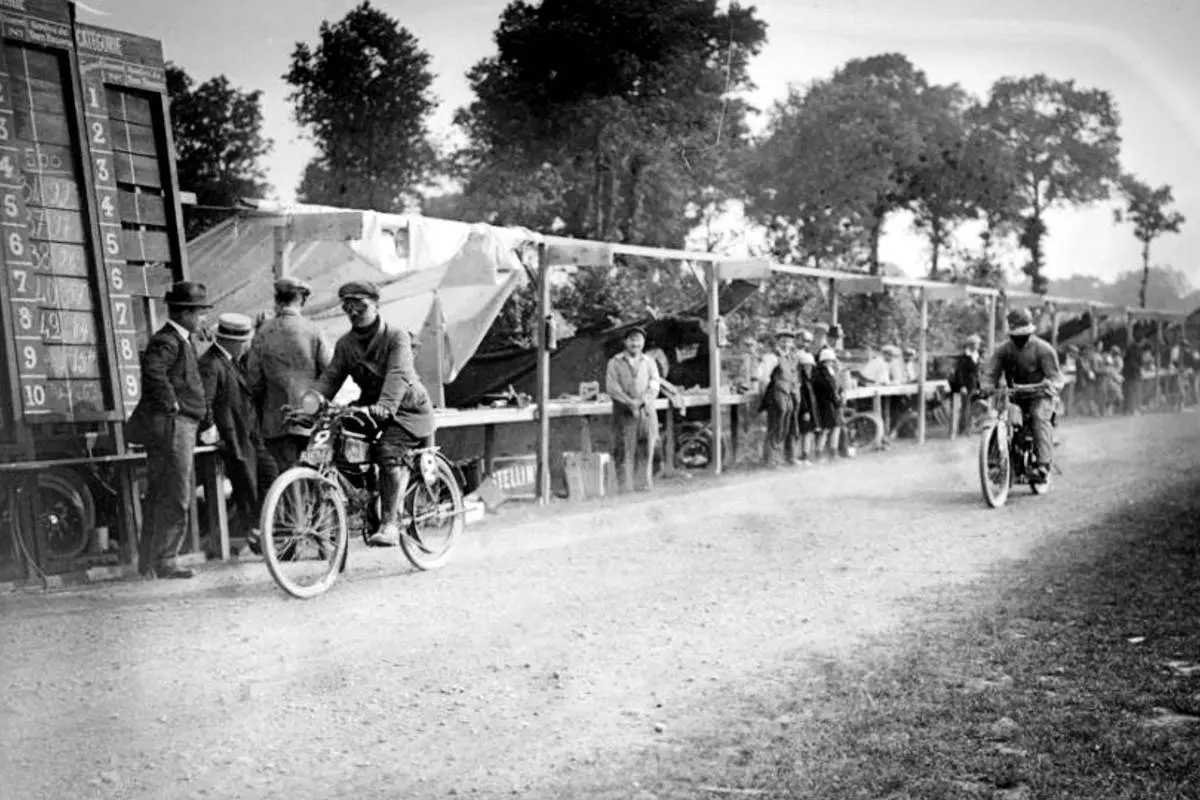
Work began in the summer of 1930 and lasted five years—a record time considering the obvious winter interruptions. It stretched 48 km, was 5 meters wide, had 67 bridges, and an impressive sequence of hairpins. Inaugurated on Saturday, August 3, 1935, there was no time wasted: the very next day the 1st International Grossglockner Rennen was immediately organized! An incredible number of spectators flooded the alpine communities, hardly accustomed to such an influx of vehicles climbing a route still decked out in decorations from the inauguration.
Following a custom that never really took hold in Italy, the race was open to both motorcycles and cars. Competitors from all over Europe lined up at dawn under acceptable weather conditions, completing final checks, particularly carburetion due to the thin air at that altitude. The course, surfaced with sand and gravel, started from Fusch and climbed to Franz-Josef Höhe at 2,346 meters above sea level.

Cars versus bikes
In the car categories, the Alfa Romeos of the Scuderia Ferrari dominated, with Mario Tadini winning the racing class and Carlo Pintacuda the sports class.
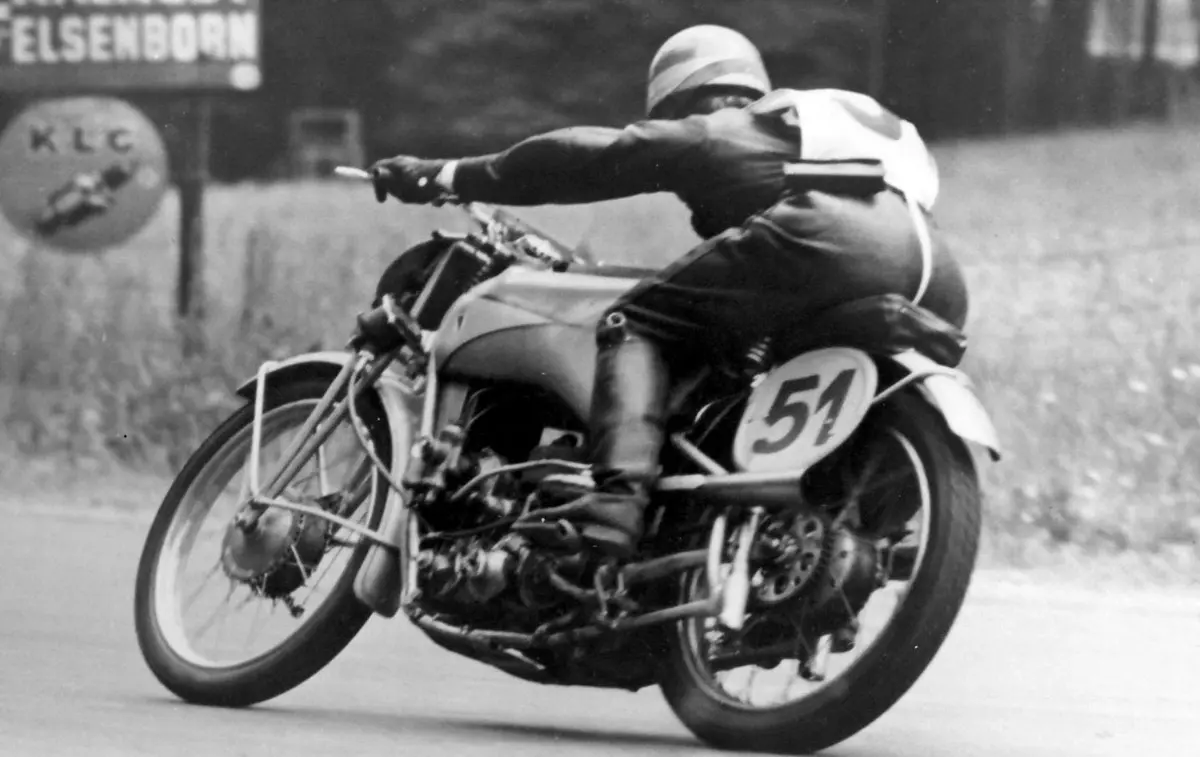
Not so on two wheels; in fact, no Italian rider took the start. The only hint of tricolor came from the Ticinese Radames Bianchi, residing in Milan as he was signed to Miller, who finished second in the quarter-liter class. The overall victory went to the Austrian Martin Schneeweiss on an Austro-Omega 1000 (in the photo above), and among the retirements we find Karl Abarth—at the time still holding an Austrian passport—on an FN sidecar. A curious detail: the first competitor to set off, the true inauguration of the race, was a woman, Maria Walcher, on a Puch 250, who, however, did not finish due to a tumble (photo below).

The Nazi invasion
The 1930s were a politically turbulent period for Europe, and the race disappeared for two years. Only in 1938, after Hitler had invaded Austria that spring and proclaimed its annexation to form Greater Germany, did talk of racing on the Grossglockner resume. The race took place on August 28, on an improved course with some corners already cobbled to prevent the gravel and sand spray that had characterized the first edition.
Given the changed political status of the area, the race took the name Grosse Bergpreis von Grossdeutschland, a hill climb that awarded the German mountain championship in a single event, attracting all the top specialists. This time, however, the race was planned in two sections: a first leg from Fusch to Fuscher Törl (12.6 km), then the event was neutralized, and a second leg covered the distance from Guttal to Franz-Josefs-Höhe (7.3 km). But bad weather intervened; visibility was nil higher up, so the decision was made to run two heats only on the lower section up to Fuscher Törl, 12.6 km with a 1,280 m elevation gain and many bends, including 14 very challenging hairpins. The result was determined by the sum of the two ascent times. Among the motorcycles, the supercharged DKWs dominated all classes, and the absolute best was Ewald Kluge with the URe250 (in the opening photo), clearly distancing his brand-mates Wünsche and Hofmann, who took the two higher classes.
In the car ranks, the Auto Union versus Mercedes duel ended with Hans Stuck’s victory ahead of Lang, but the most historically significant event was the race presence of two prototypes of the immortal Volkswagen Beetle, one of which was driven by Ferdinand Porsche himself (in the photo below), eager to personally test the air-cooled engine at altitude.

A vast crowd
The following year, the third edition of the race once again drew a massive crowd of enthusiasts; some sources speak of 60,000 spectators scattered along the mountain slopes. The weather remained fickle, alternating rain and dry spells in the days before, but on race day the Grossglockner showed its worst face: rain, sleet, and fog took turns all day. The fog was at times so dense that visibility was under 20 meters even at low altitude, so once again the race was run in two heats on the lower section, with the times of both climbs summed for the final result.
In the cars, this time it was Mercedes, with the great Hermann Lang, who prevailed over H.P. Müller’s Auto Union—Müller would become the 250 world champion in 1955. On two wheels, DKW did not repeat the previous year’s clean sweep. While they took victory in the 250s with Martin Schneeweiss and in the 500s with H.V. Georg—who also set the day’s fastest time—in the 350s it was the complex supercharged NSU of Leonhard Fassl that triumphed.
Not even a month later, Reich troops would invade Poland, and for many years sport would fall silent. The splendid Grossglockner road would no longer host sporting challenges, but thousands of passionate motorcyclists would still return to its hairpins to admire the stunning scenery.
If you enjoy Corsedimoto’s content, you can select us as a preferred source by clicking here

byMaurizio Mazzoni
Continue reading
You might also like
More news
Popular articles
Loading