The First Honda Was Lost in a Disastrous 1954 Brazilian Grand Prix
StoriesWednesday, 18 March 2026 at 09:36
Goiânia brings Brazil back to the MotoGP calendar. A nation where Japanese manufacturers have been doing business since the 1970s, Yamaha and Honda foremost among them. The House of the Three Tuning Forks opened its own branch in General Osório Square in Rio de Janeiro in 1971, with Honda following suit via Moto Importadora, establishing Honda Motor do Brazil, operational from 1972. First steps toward creating actual “Made in Brazil” models produced locally, for the domestic market and beyond.
BRAZILIAN MODELS
In 1974, Yamaha launched the RD 50 at the Guarulhos plant in São Paulo, nicknamed the “RDzinha.” A two-stroke, while Honda responded—true to its engineering philosophy—with a four-stroke: the CG 125 produced in Manaus, at the imposing factory located in the Amazon. Choosing the best possible ambassador of the era: Pelé! A masterstroke that earned Honda record revenues, making it a firmly established force in the region.
HONDA’S DEBUT IN COMPETITION IN BRAZIL
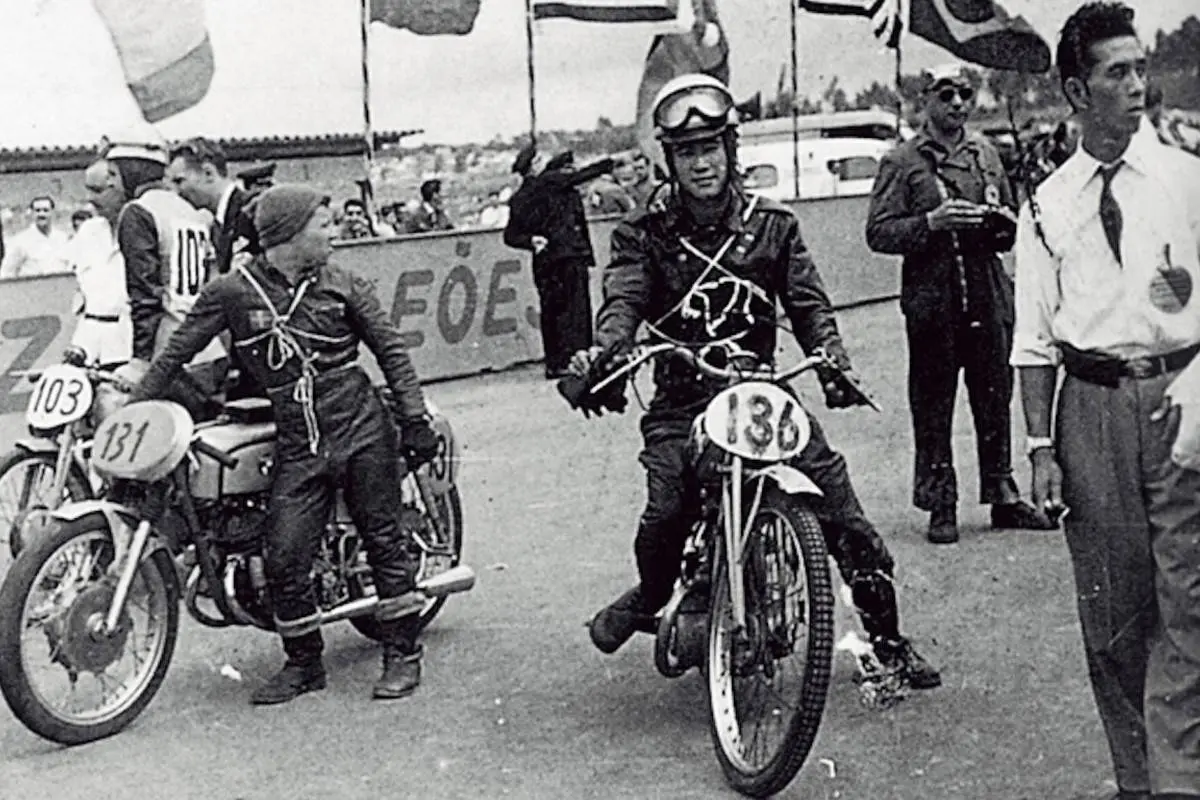
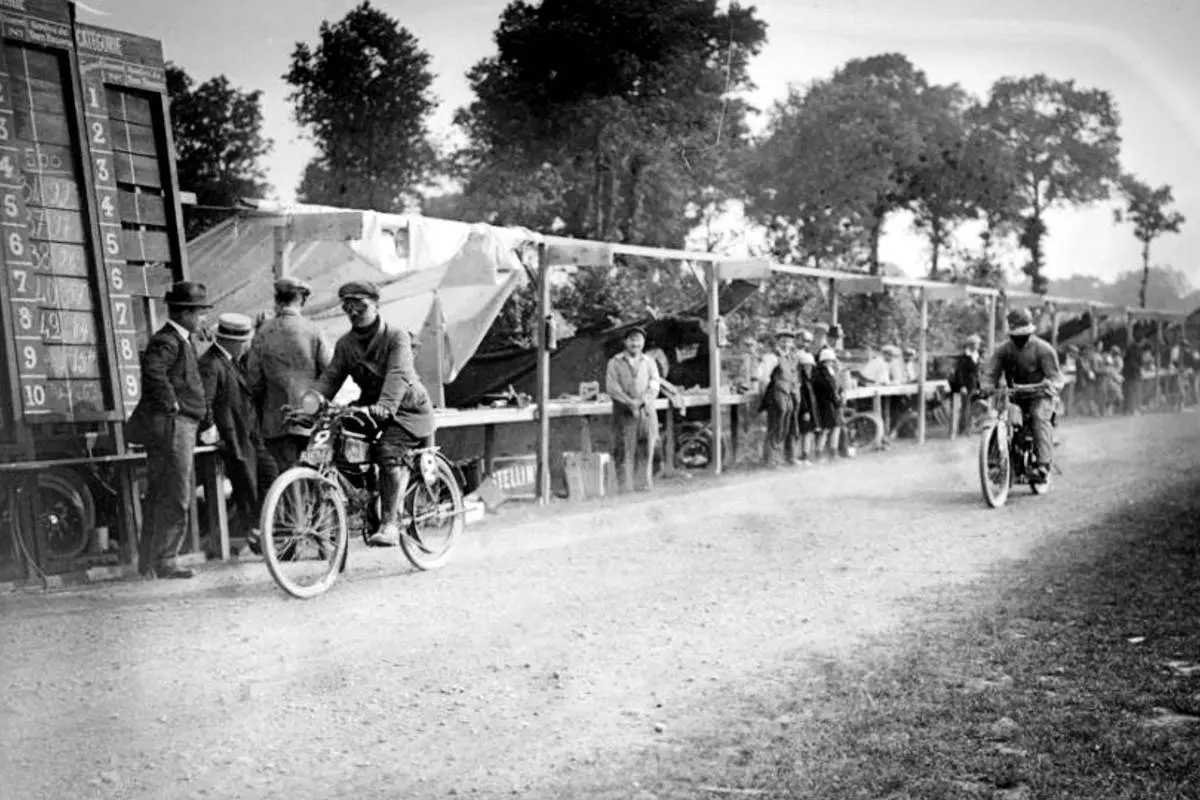
In Brazil, Honda has tied its history not only to series production, but also to racing. It was in this country that, in 1954, Honda contested its first motorcycle race outside Japan, although it didn’t go exactly brilliantly. The Grande Prêmio IV Centenário da Cidade de São Paulo, a motorcycle competition held at Interlagos in February 1954 to celebrate the city’s 400th anniversary, was originally intended to serve as a launching point and give a boost to Brazilian motorcycling. In reality, it nearly spelled its demise, with the fallout from a chaotic week of activities lingering for 20 years.
THE 400 YEARS OF SÃO PAULO GP
Some of the best competitors from the World Championship in the 125cc, 250cc, 350cc, and 500cc classes were invited to the event, and they encountered various problems along the way. From torrential rain that postponed the races to the following day, to serious accidents caused by safety standards that were, to put it mildly, questionable (and considering we’re talking about the 1950s, that says it all). Added to this were financial issues, with the organizers failing to agree on the prize money needed to secure such a high-profile starting grid. Precisely because of the disorder at that event, the FIM excluded the Brazilian federation from its affiliates until the 1970s, even though the event was organized by the Federação Paulista de Motociclismo.
HONDA’S INTERNATIONAL DEBUT
In any case, that Grande Prêmio IV Centenário remains in history also for, as mentioned, Honda’s debut in international motorcycle racing. Five years before its TT debut, an R125 entrusted to Mikio Omura finished 13th among the 125cc in a race won by Nello Pagani (FB Mondial). The original bike effectively vanished: for the return trip they had to sell it to scrape together enough cash to get back to base in Japan. This came after an in-race injury to Katsushiro Toshiro, a rider for Meguro—the company with which they were supposed to share logistical expenses—who did not receive prize money due to not taking part in the contest.

Continue reading
You might also like
More news
Popular articles
Loading