NCR M16: the most extreme carbon-and-titanium superbike ever built
StoriesMonday, 27 April 2026 at 20:15
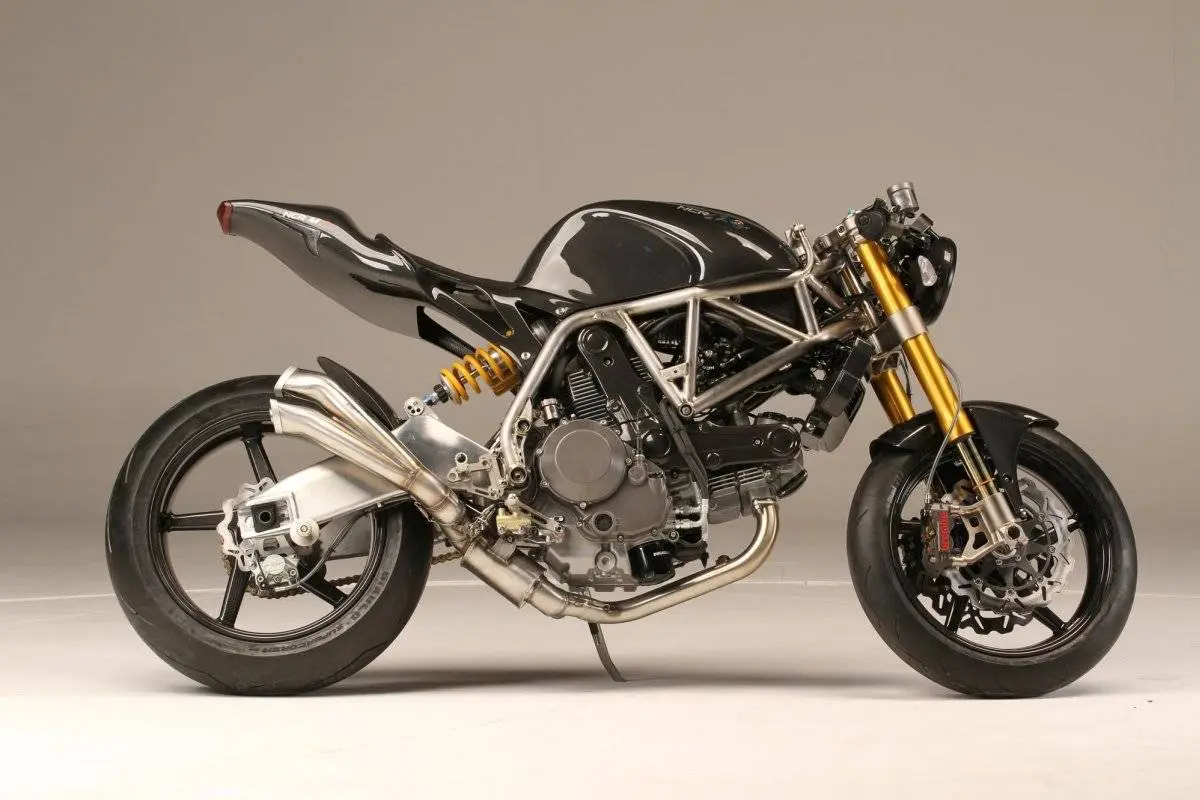
Sometimes a motorcycle isn’t born to follow the rules but to challenge them. The NCR M16 is an exercise in lightness taken almost to the extreme. Unveiled in 2010, it remains remarkably current—one of the few bikes truly capable of surprising you.
NCR, let’s recall, is a company founded by the union of Rino Caracchi, Giorgio Nepoti, and Rizzi, as a workshop specializing in preparing race bikes based on Ducati platforms. Over the years it became Ducati’s first true external racing department, contributing to the creation of legendary motorcycles and numerous international victories. NCR’s philosophy is based on the continuous refinement of every technical detail, with extreme artisanal work on engines and chassis.
The NCR M16 is built around a legendary engine: the Ducati Desmosedici RR. The Desmo16 is transformed, lightened, pushed beyond 200 horsepower at the wheel, becoming part of a larger system obsessively engineered for a single purpose: the ultimate power-to-weight ratio.
And then there’s the weight: 145 kilograms. A figure that, on its own, says it all. It’s less than logic would suggest is possible. But here logic yields to absolute pursuit—the kind that leads to choosing materials like carbon and titanium not for prestige, but out of necessity.
The M16 is built like a racing prototype, not a production bike. The carbon fiber monocoque frame is the core of a design that integrates structure, intake, and dynamics into a single element. The swingarm follows the same philosophy, as do the wheels, sculpted from carbon to shave off every unnecessary gram. There isn’t a single part that hasn’t been rethought, lightened, and refined to the extreme.
At first glance, its apparent simplicity stands out. But it’s a deceptive simplicity, because every line serves a function, every surface is the result of calculation. The fairing, the tank, the seat support: everything is born from advanced manufacturing processes developed to cut weight without sacrificing rigidity. Even the intake system becomes a load-bearing structure, turning into a key element of the front frame.
And then there are the details that reveal the M16’s true nature. Titanium is everywhere, from the fasteners to the mechanical components, treated with technologies derived directly from Formula 1. The braking system uses ceramic composite materials, the suspension comes from the world of the most extreme competitions, and the electronics are designed to manage data, traction, and performance with surgical precision.
It’s not just a matter of numbers. It’s a matter of sensation. The stated goal is to deliver an unprecedented riding experience, a feel as close as possible to that of a pure racing bike. And for those who want it, there’s even the option to make it street-legal, though calling it “street” borders on paradox.


Continue reading
You might also like


More news

Popular articles




Loading