The 1980s superbike of the future: the Suzuki Nuda—fully functional, extreme, and impossible to put into production
StoriesThursday, 30 April 2026 at 13:36
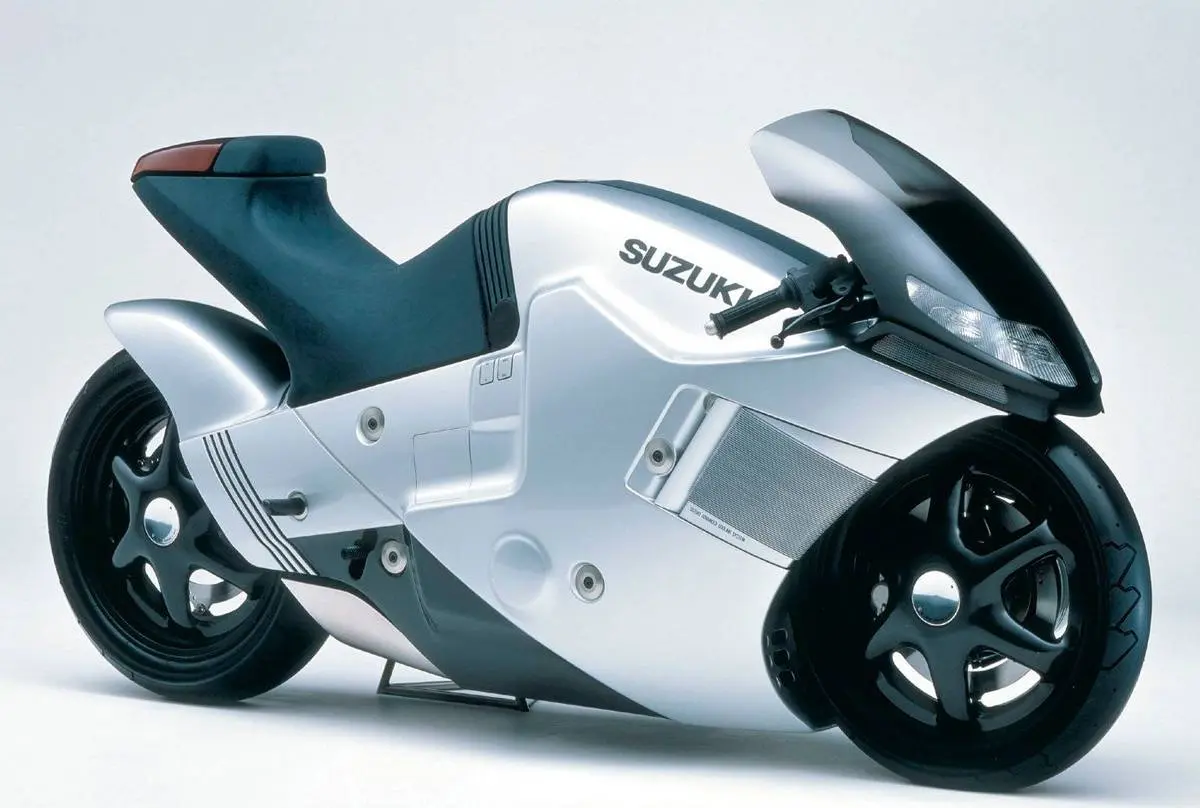
The Suzuki Nuda, one of the wildest and most visionary concepts in the history of motorcycling. It combined superbike performance, revolutionary technologies, and a design never seen before.
It was unveiled at the 1986 Tokyo Motor Show and it wasn’t just a styling exercise. It was a functioning, rideable motorcycle, and above all incredibly advanced for its time.
What immediately stood out was the bodywork: completely enclosed, smooth, with no visible mechanical elements. A radical choice in the 1980s, when sportbikes were only just beginning to develop aerodynamic fairings. Made of carbon fiber, it anticipated solutions that would only become common many years later.
Beneath that clean skin lay the engine from the Suzuki GSX-R750, one of the benchmarks among sportbikes of the era, a four-cylinder capable of very high performance. In terms of power, the Nuda was closer to a superbike than to a simple show prototype.
The real differences were in the chassis and technical solutions. The presence of all-wheel drive, with a driven front wheel, was something extremely rare and complex to achieve. Added to this was the hub-center steering, which replaced the traditional fork and completely changed the bike’s setup. The electronics, with more advanced management systems than the standard of the time, also helped make the project even more forward-thinking.
Yet this very combination of solutions sealed its fate. The Nuda was too complex and expensive to put into production. Moreover, the market of the 1980s was not ready for such a different motorcycle. Producing it would have required significant investments and technical compromises that were difficult to manage.
For this reason, it remained a concept. The Suzuki Nuda had no direct successor but served as an important testbed for ideas and technologies that, in simpler forms, appeared in the years that followed.
The Nuda thus remains a concrete example of a motorcycle that was “too far ahead”: close to a superbike in performance, but far from production reality.

Continue reading
You might also like

More news

Popular articles



Loading