Alessandro Di Mario's Diary: "Here's What the Daytona 200 Is Like from the Inside
StoriesMonday, 16 March 2026 at 14:29
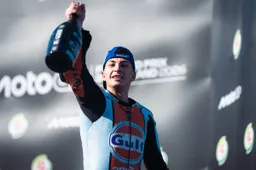
Alessandro Di Mario, 17 years old, raced the Daytona 200 for the first time, achieving a fantastic result that took us back to the glory days of Giacomo Agostini. Here is his diary, from the inside.
I had already raced at Daytona in the two previous years, but this was my first time in the premier race: the 200 miles. The track is nothing exceptional (quite the opposite), but you can really feel the charm of this nearly century-old event. The first edition dates back to 1937 on the Daytona Beach course (half sand and half asphalt); since 1961 it has been held at the current Daytona International Speedway.
The magic of the banking at 300
Among the winners of the modern era are legends like Saarinen, Agostini (the only Italian), Roberts, Spencer, Lawson, Rainey. The fundamental feature is the banking. Practically two-thirds of the track are banked up to a maximum of 31 degrees. With the Supersport bikes you brush, and sometimes exceed, 300 km/h. At Daytona they race on Saturday to keep Sunday as a backup in case it rains: rain on the banked sections would be too dangerous.
Let me tell you right away that...
Let me tell you right away that I finished fifth. For everyone it’s an exceptional result, but for me it’s not. You’ll understand why. Since the race is on Saturday, everything at Daytona is moved up by one day: you arrive on Wednesday, free practice and qualifying 1 are on Thursday, while on Friday we had qualifying 2 and the time attack: with the Supersport this is exclusive to the 200 miles.
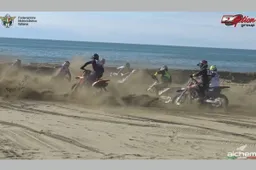
The race closes out Bike Week, which begins the previous Saturday with the Supermotocross race held in the technical section area of the Daytona track. For this reason part of the track is completely covered with dirt, something that would turn out to be one of the factors that limited me.
During this week both the immense paddocks and the city of Daytona are filled with motorcycles, most of them improbable customs that are brought in loaded on pick-ups or trailers. That’s because taking a long trip on them would be impossible.
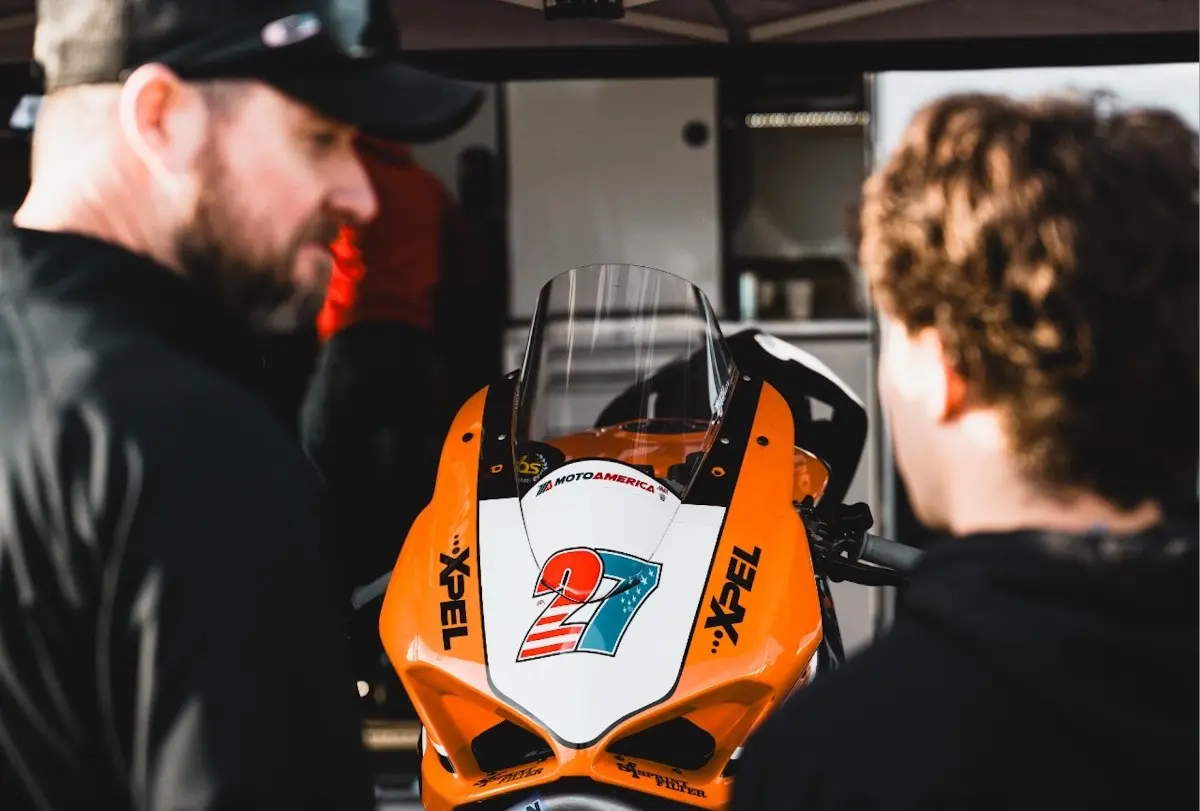
For free practice, since I had no references, my setup was the standard one used by the Rahal team two years ago. Last year my team did not take part.
I immediately noticed a front end that was too light, which didn’t allow me to be fast in the technical sections where I’ve always made the difference. Here in the Twins category I still hold the lap record. I made the serious mistake of saying that “the front end is tucking.” A front that tucks does so 99% of the time under braking because it’s too loaded. I finished the session in ninth place.
I should have thought it through
For qualifying 1 we lightened the front. The situation improved, I placed fifth, but looking closely (I should have done it and thought it through) the gap to the leaders had improved only slightly. This is where the part of the track that had been covered with dirt comes into play. I felt the improved feeling not because we were going in the right direction, but because the track was getting cleaner and more rubbered in, and I was also adapting a bit to the situation. In qualifying 2 I set the fifth time; in the time attack I dropped one position, as Josh Herrin, who also had initial setup issues, moved ahead of me. These sessions, including the warm-up, followed the same script.
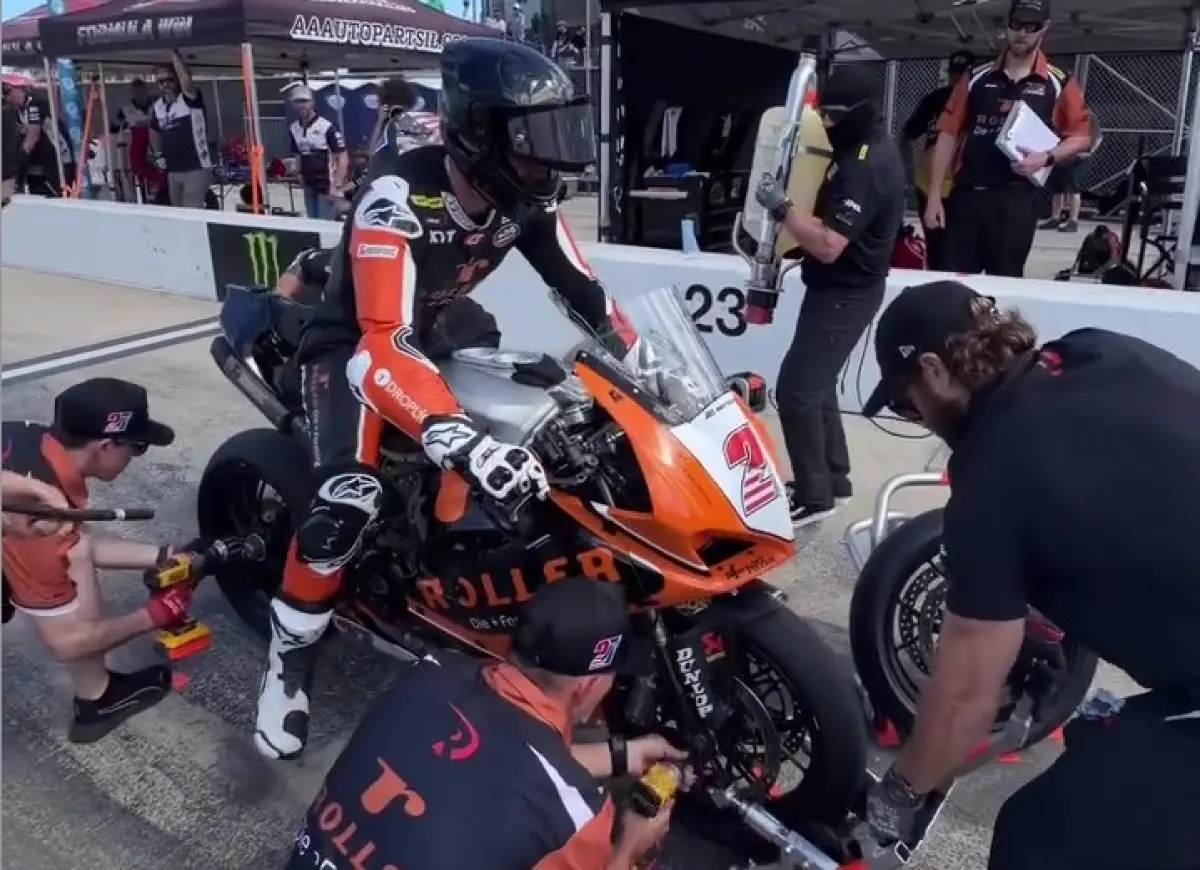
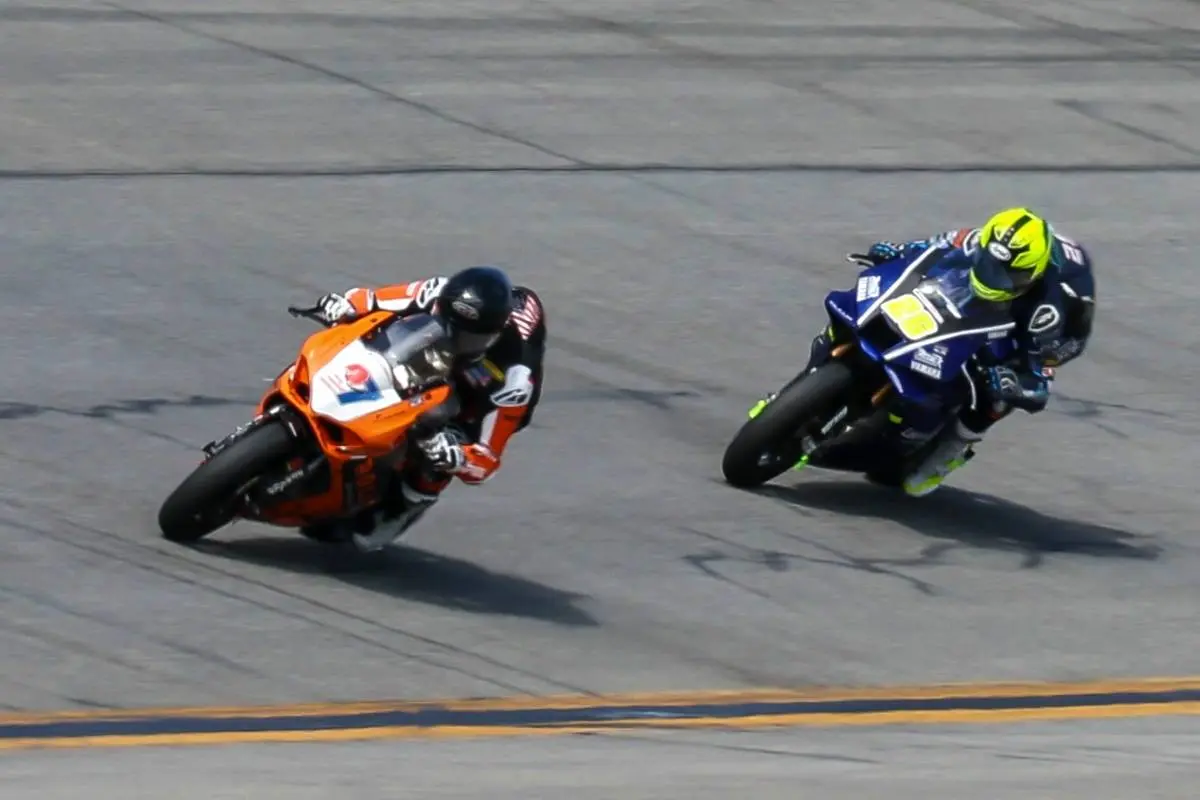
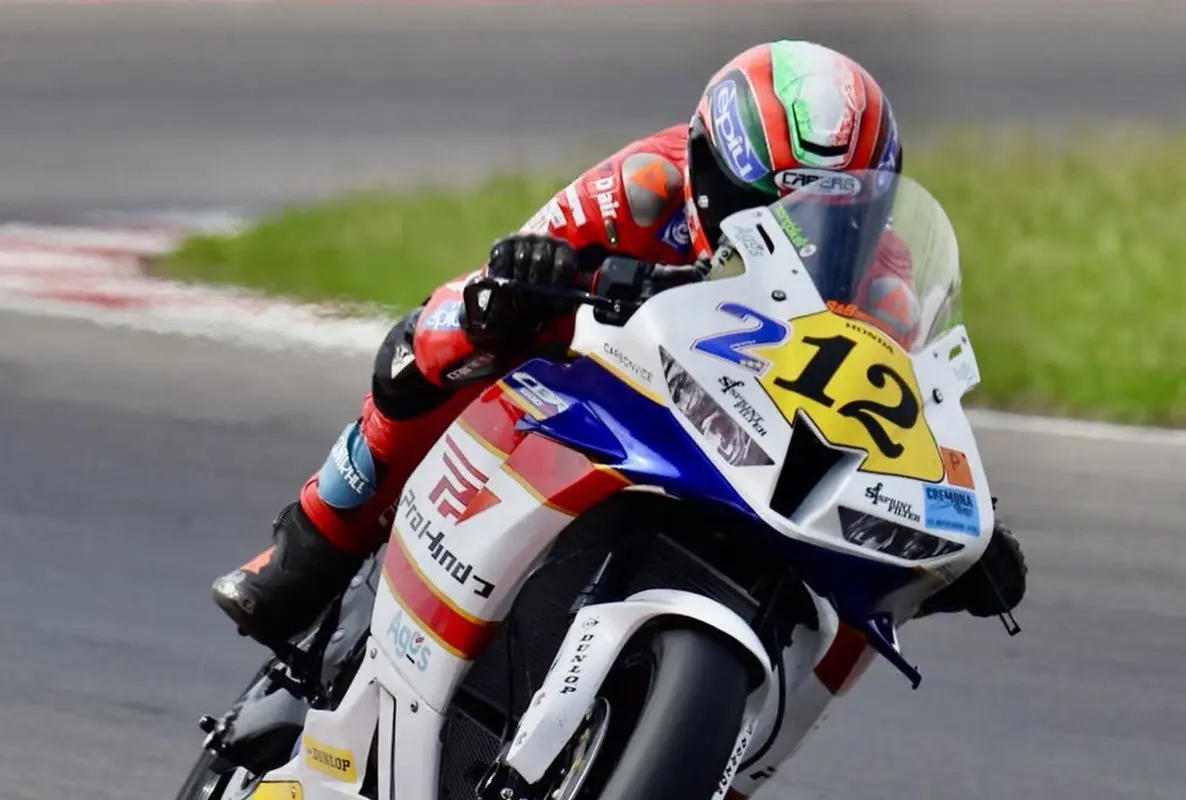
In the race I managed to finish fifth, about 10 seconds behind Kayla (Yaakov) and Darryn Binder, who fought for the podium. Much of the credit also goes to my fantastic mechanics, who executed three perfect pit stops. This year, since the 200 Miles was part of the Supersport championship and awarded points, to avoid teams having to heavily modify the bikes—especially the Yamahas with small tanks—three pit stops were mandatory. In practice, the challenge was made up of four sprints.
I have a lot of regret
In itself it’s a beautiful result for the first race in Supersport and moreover at the Daytona 200, but it also leaves me with a lot of regret. What’s done is done. The positive thing is that in the debrief we figured out what happened. Now we know where to work, and we’re truly confident for the next events. I can’t wait to get back to racing to really see where my place is.
As you’ve seen, I don’t dwell on data and numbers; I prefer the emotions and the analysis of what happens. Let me know in the comments if you like it this way and if you have particular curiosities, and follow me on Instagram to stay updated. My profile is here.
byAlessandro Di Mario
Continue reading
You might also like
More news
Popular articles
Loading