Ducati satisfies Marc Marquez: what the new GP26 will be like
MotoGPWednesday, 29 April 2026 at 11:04
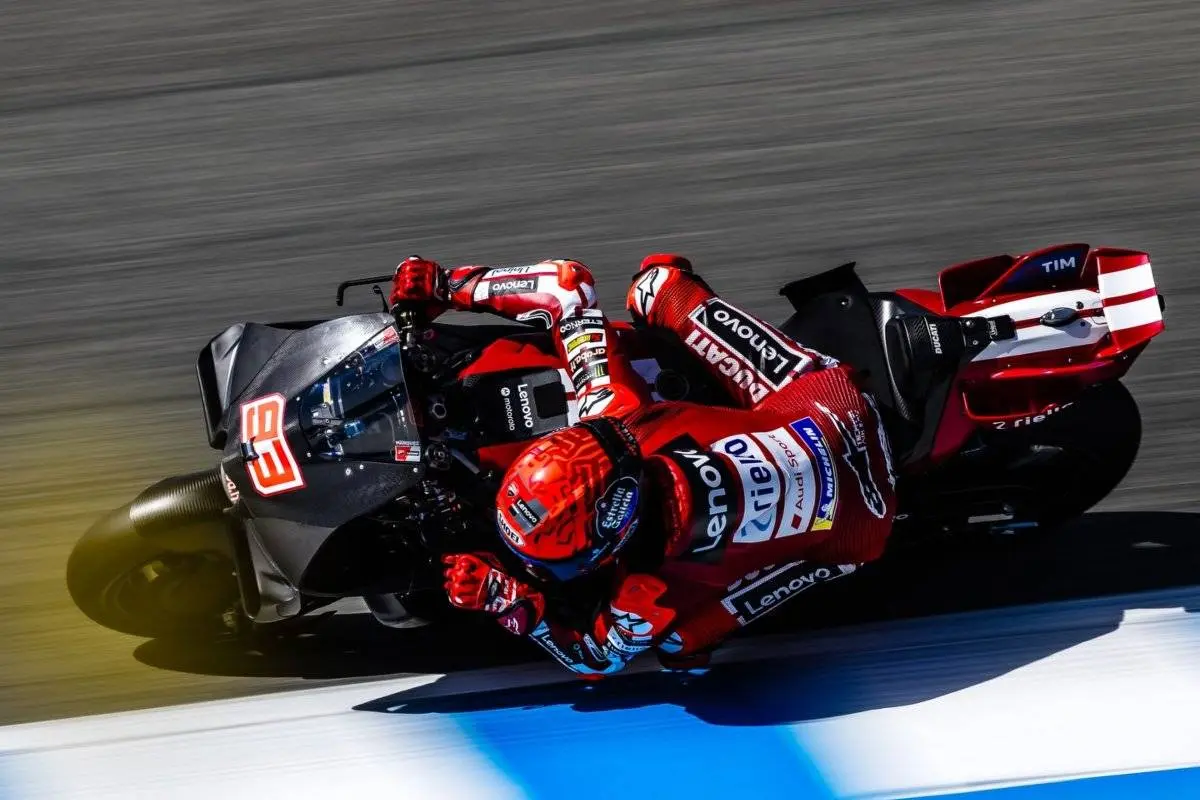
They returned to winning ways this weekend, but Ducati knows they still don’t have the best bike. The Borgo Panigale crew focused heavily on the MotoGP test in Jerez to continue the evolution of the Desmosedici GP26. The goal is to gain more speed in fast corners, where Aprilia is currently making the difference in this phase of the championship.
Major Ducati moves in Jerez
Many parts to test at Ducati, but the primary objective is to gain more downforce through a new aerodynamic package. There isn’t a final version ready for homologation yet, but the Red team’s engineers certainly have a good amount of data to work with. Not only in the factory box: Alex Marquez (Gresini) and Fabio Di Giannantonio (VR46) also had to complete many laps to provide the most precise feedback possible. Mistakes are forbidden, because the MotoGP regulations allow only one more aerodynamic update for 2026.
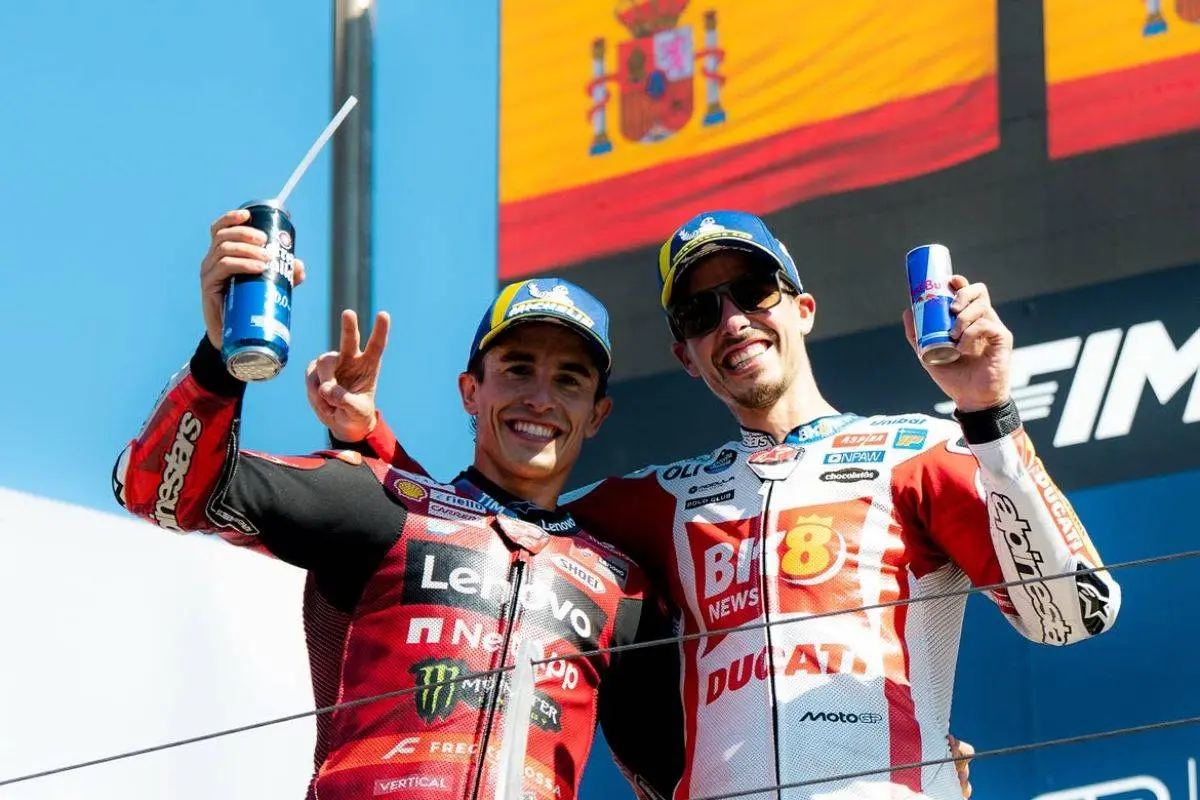
The first step is positive because Ducati is providing what Marc Marquez was looking for. "It’s nice when you see you have lots of things to test and the factory is working." Both Lenovo Ducati riders made the most of the day from start to finish. In the garage were the GP26 bikes used in Sunday’s race, alongside others with unpainted components showcasing the characteristic black of carbon fiber.
How the GP26 will change
The Cervera champion tested a new front fairing which, at first glance, didn’t seem to have undergone major changes. On closer inspection, it appeared wider, extending to the edges of the front wing and eliminating the arrow-like shape typical of Ducatis. The wings also featured changes: the lower one appeared thicker, while the upper one was narrower than the current configuration. The impression is that they are aiming for a larger contact surface at the front end.
The side panel of Marc Marquez’s bike was completely new, with a vertical panel that kept the characteristic step, but with more rounded edges. The Red team kept the side winglets at the rider’s leg height—an aerodynamic element for which Ducati had harshly criticized Aprilia, but which has ultimately become standard on its bikes. Two smaller winglets, one at each end just below the handlebar, significantly alter the bike’s structure.
Pecco Bagnaia also had a different aerodynamic package, but in this case it was a reintroduction of the one used in the Sepang tests last winter, which had previously been discarded. It features a more stepped fairing that Alex Marquez also had the chance to try.
A new swingarm for the Desmosedici
At the end of the MotoGP test day, Marquez admitted in the press room that he had tested a new swingarm which, beyond its usual function, featured an unprecedented component. It’s a metal structure combined with carbon fiber, anchored to the swingarm. It’s an element never before seen on a Ducati, but one that Aprilia had already tested this winter with the aim of further improving aerodynamics.
Apart from aerodynamics and the swingarm, Ducati hasn’t made substantial changes to its bike. Or at least, there are no immediately visible changes, except for a slightly modified frame. Now it’s a matter of analyzing the data and deciding when to introduce these updates, but they don’t want to rush. New tests are scheduled soon at Montmeló, but for now Ducati has satisfied Marquez.
The challenge to Aprilia
On Sunday Aprilia placed four of its bikes in the top six, an alarm bell that Ducati immediately picked up on. While Fabio Di Giannantonio tries to stay at the top, the factory team comes off a race to forget, after Marc Marquez’s crash and the technical issue that forced Pecco Bagnaia to retire.
Team manager Davide Tardozzi looks optimistically to the next MotoGP World Championship rounds: Le Mans, Barcelona, and Mugello. "From the next race we’ll have something extra to be more competitive and fight more consistently with Aprilia."
Continue reading
You might also like
More news
Popular articles
Loading