Two-wheel-drive electric Honda Fireblade: LMT02 prototype targets the 2029 24 Hours of Le Mans
Road Racing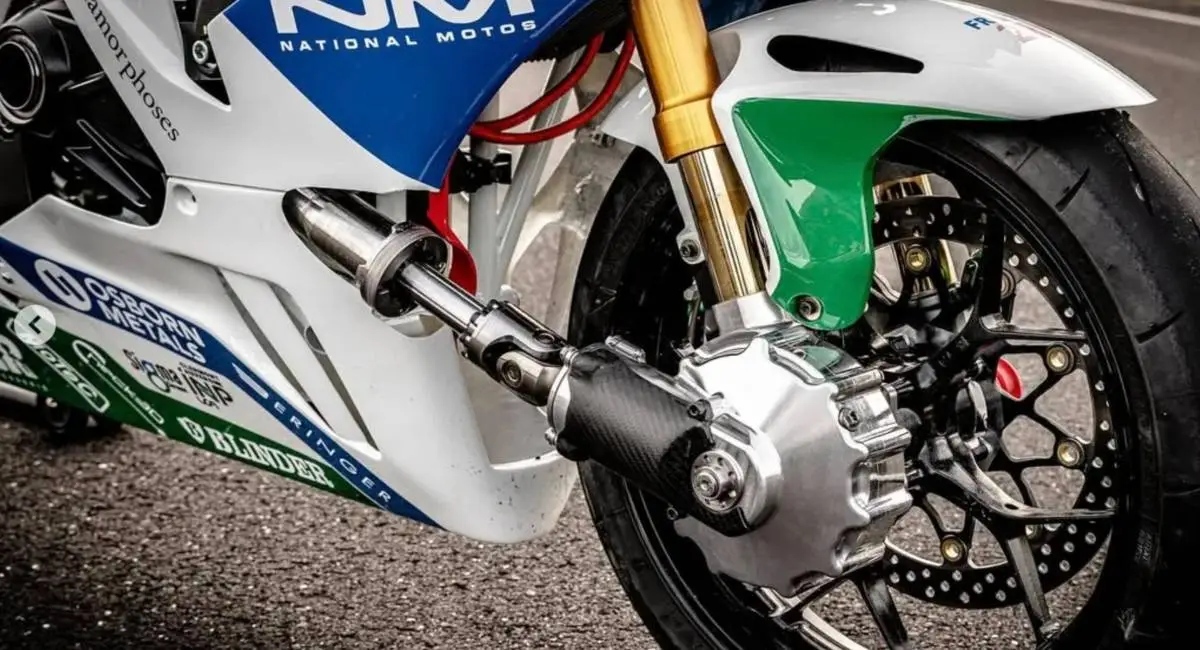
A Honda CBR1000RR-R Fireblade without a combustion engine, with the front wheel working alongside the rear and a stated goal: the 2029 24 Hours of Le Mans.
The team behind the SIGMA Regen Superbike program has officially unveiled its new prototype, named LMT02, and its standout feature is all-wheel drive. A solution that has always remained on the fringes of the motorcycle world.
The project was born in France at SIGMA Clermont, where students and engineers are working with the support of National Moto, a team with a long history in endurance racing that supplied the original Fireblade chassis. The first model, the LMT01, served mainly as a test bed for the electric powertrain and battery energy-recovery system.
The front wheel becomes a driven wheel
At the heart of the LMT02 is the SRERA system, the French acronym for Système de Récupération d'Énergie sur la Roue Avant, or front-wheel energy recovery system. The front end thus becomes part of both the electric drive and regenerative braking, which until now had only been used at the rear. According to SIGMA, the technology has been tested and validated and can recover up to 33% of the battery's energy.
Choosing the front wheel is no coincidence. Under braking, weight shifts forward, and much of the braking load is borne by the front wheel—that's where the most energy can be recovered. On conventional motorcycles, all-wheel drive has always been held back by weight, complexity, and packaging issues, since the same wheel that steers the bike also has to be driven. With an independently controlled electric motor, however, no mechanical transmission is needed, significantly reducing the obstacle.
In addition to all-wheel drive, the new prototype features revised electronic management. This step allows the team to move beyond the LMT01's experimental phase and closer to a complete, fully functional motorcycle.

The roadmap to 2029
There is still a long way to go. The next chapter will be called LMR01, with a first concrete goal: setting the electric motorcycle lap record at the Bugatti Circuit in Le Mans. The LMR02 will follow, and according to the plans it should feature an 800-volt electric architecture and produce up to 250 kW, or around 340 horsepower.
- LMT01: test bed for the electric motor and energy recovery
- LMT02: all-wheel drive with the SRERA system and new electronics
- LMR01: attempt to break the electric motorcycle lap record at the Bugatti Circuit
- LMR02: 800 volts and up to 250 kW for the 2029 24 Hours
The financial challenge remains, too. The team is still looking to raise around €190,000. Securing those funds will be crucial to turning a university project into a motorcycle capable of taking on a 24-hour race and becoming a benchmark for electric endurance racing.
-> Follow us on Instagram too: @Corsedimoto
Continue reading
You might also like

More news

Popular articles