Let’s turn the clock back twenty-five years. From digital back to analog. From electronics to pure, simple mechanics. On the streets, 50ccs buzzing in swarms, with kids on top dreaming of just one kind of bike: the supersport.
Scenes now distant, but not forgotten. Times have changed, and we’re not just talking about the shift from two to four (in engine terms): there are new needs and desires.
We discussed this metamorphosis with Alessandro Delbianco and Lorenzo Dalla Porta, protagonists in the CIV with Yamaha. In a recent interview, we dug down to the roots of the change, tackling the impact of electronics and the new dynamics of the global market.
Electronics: sterilizing the fun or evolution?
That the level of safety, on track as well as on the road, has increased is hard to dispute. And this, despite opposing opinions—think of Stoner, who argues that, at least in MotoGP, electronics make it harder to perceive the limit, contributing to more crashes—and controversial episodes linked to electronic system anomalies, potentially at the root of accidents.
It’s equally undeniable, however, that electronics have tamed the wild character that distinguished supersports of the ’90s and early ’00s. They’ve denatured the soul, smoothing out that rough-edged personality that struck and bewitched.
In this sense, Alessandro Delbianco doesn’t see electronics as an insurmountable barrier: “It’s true, it takes away a bit of that arrogance,” admits the Italian Superbike champion, “but it gives you a big helping hand in riding, at every level. Plus, it can still be turned off. We riders basically race without it, and the bike goes back to being a ‘super’ supersport.”
Yet a fundamental question remains: those who are born and raised with electronics—and aren’t named Delbianco—do they have the desire and the courage to buy a modern supersport (paying, among other things, three times more than in the past) and set it up in a raw way, like the older generations did?
Lorenzo Dalla Porta, on the other hand, puts the focus on the cultural and mental shift: while electronics allow for more consistent performance and a greater safety margin, they also impose a different approach compared to the past. What’s required is an adaptation that goes beyond riding technique alone.
A return to the past through the future
Despite the drop in sales, there’s optimism. As both riders point out, a new desire is emerging among younger generations to rediscover the pleasure of sporty riding. The market no longer focuses solely on extreme power. Models like the Yamaha R7 or R9 represent the new course: less intimidating bikes, yet extremely effective. The pursuit of outright speed is no longer the only path to fun. For many, an agile bike you can be on a first-name basis with is preferable to a rocket you struggle to stay on. The new key is versatility: bikes that can thrill both on track and on mountain passes, accessible even to those without racing experience.
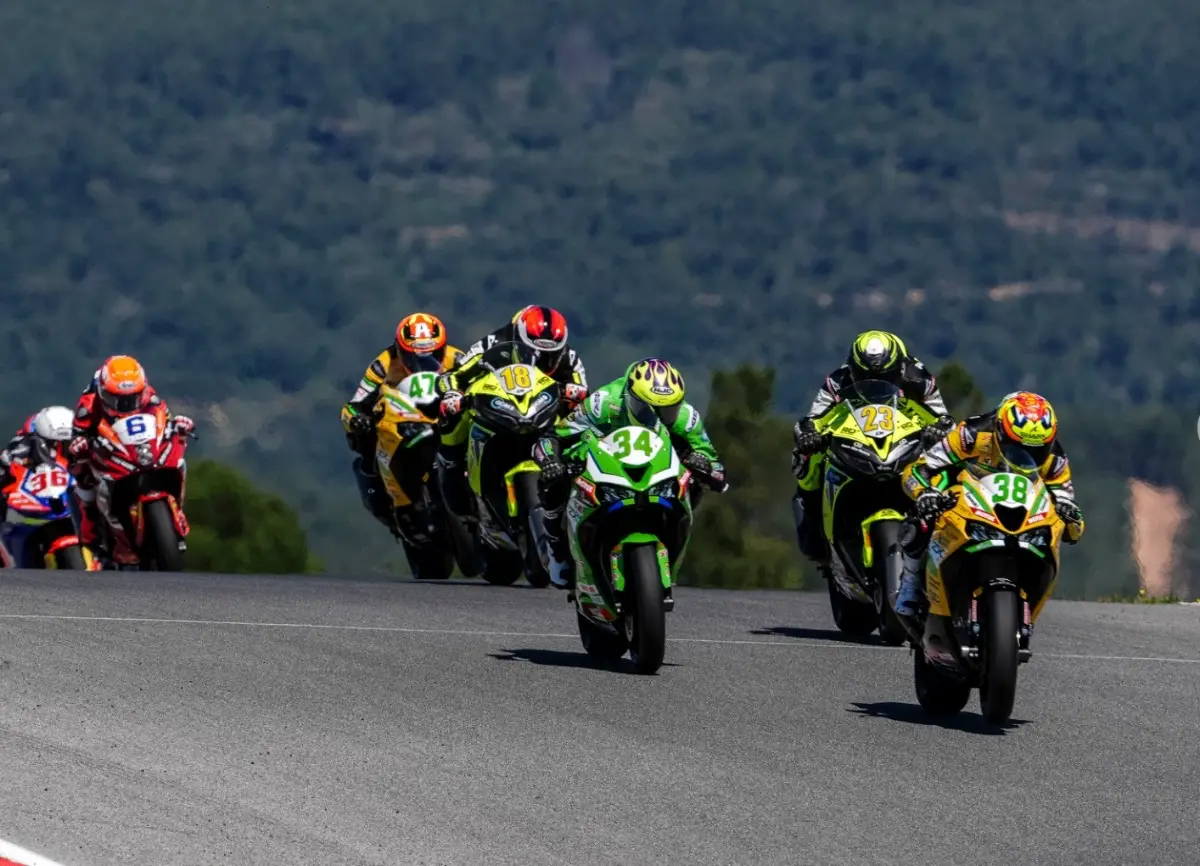
In this new scenario, so-called entry-level models take on an increasingly central role. And the CIV has become their showcase, with categories like Sportbike bringing to the track machines closely derived from stock entry-level models. The aim is to (finally) narrow the gap between race audiences and dealerships.

Continue reading
You might also like
More news
Popular articles
Loading