It will be a transition year for the MotoGP class, ahead of the regulation changes scheduled for 2027. Nevertheless, manufacturers have worked on evolving the latest 1000cc prototypes, starting with the winning Ducati. Even though aerodynamics will be drastically reduced from next year, the engineers from Borgo Panigale have continued to push in this technical area.
The latest step of the Ducati 1000cc
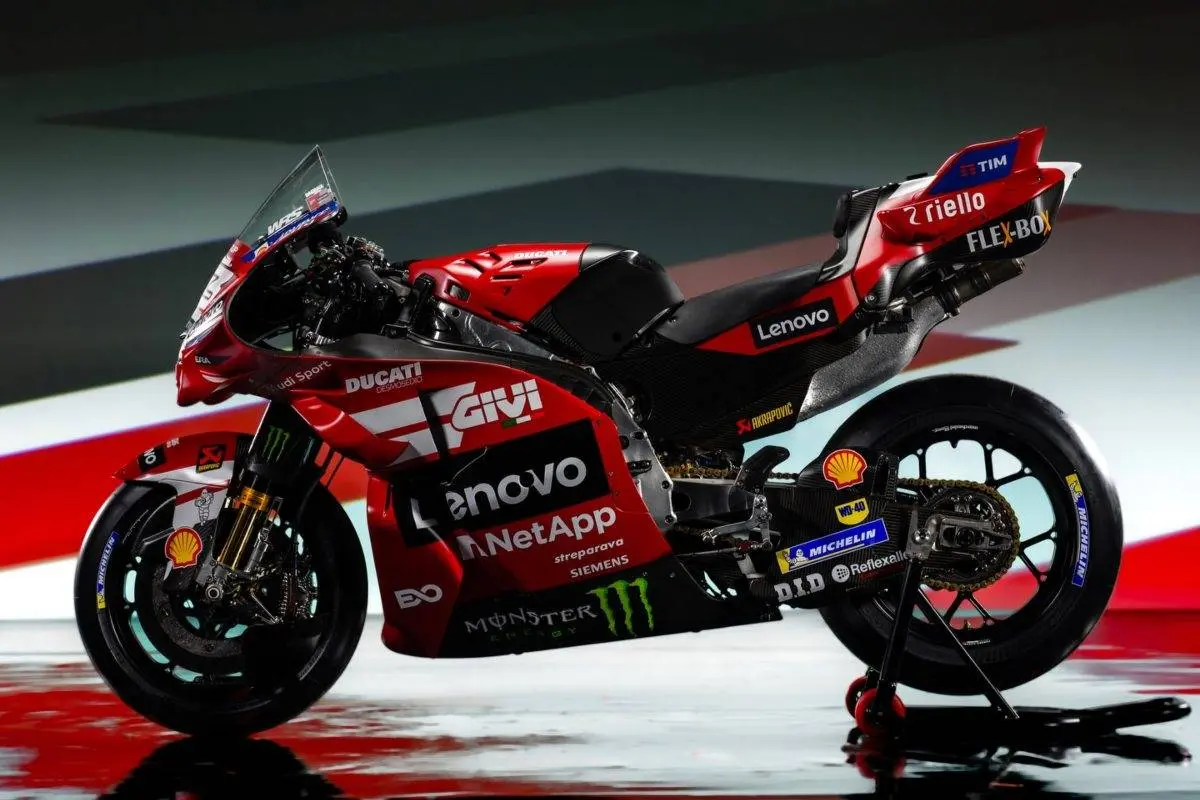
On January 19, Ducati Lenovo unveiled the Desmosedici GP26 in Madonna di Campiglio. With this bike, Marc Marquez wants to defend his world title, while Pecco Bagnaia aims to regain confidence on the machine that allowed him to win two MotoGP titles. The prototype we will see on track this season has improved in several areas. "Having a good base is not enough, because our competitors are catching up," said Davide Barana, Ducati Corse Technical Director. "Our goal is to improve the bike to widen the gap again."
An engine freeze does not mean you cannot work on some elements surrounding the V4. The beating heart of the Red will certainly gain more horsepower, for instance with optimized air intake. Work has also been carried out on the frame to minimize vibrations. Another important aspect Ducati has improved is aerodynamics, given that rival Aprilia in particular made a big step forward in this area in the previous MotoGP season.
A new ride-height device
In 2026 the Desmosedici will receive a new holeshot device, before they are banned the following year. "The first prototype of this system we brought to the track was exclusively for the start," explains Davide Barana. "Then further developments followed to make this system usable over the entire lap. This year we will take another step, but I can’t go into more detail."
The technicians’ skill lies in finding the right balance between power and agility. "Normally, riders always complain about not having enough power available... Riders like things that make them faster on the straights. They can take care of the rest themselves."
General manager Gigi Dall'Igna echoes his engineer. "I think the ride-height adjustment device is something special. It’s something we have to discard at the end of the year due to the regulations. We change it every year because it’s very important for performance. It’s a really ingenious part." All that remains is to wait for the first MotoGP tests to see the Ducati in action.
Continue reading
You might also like
More news
Popular articles
Loading