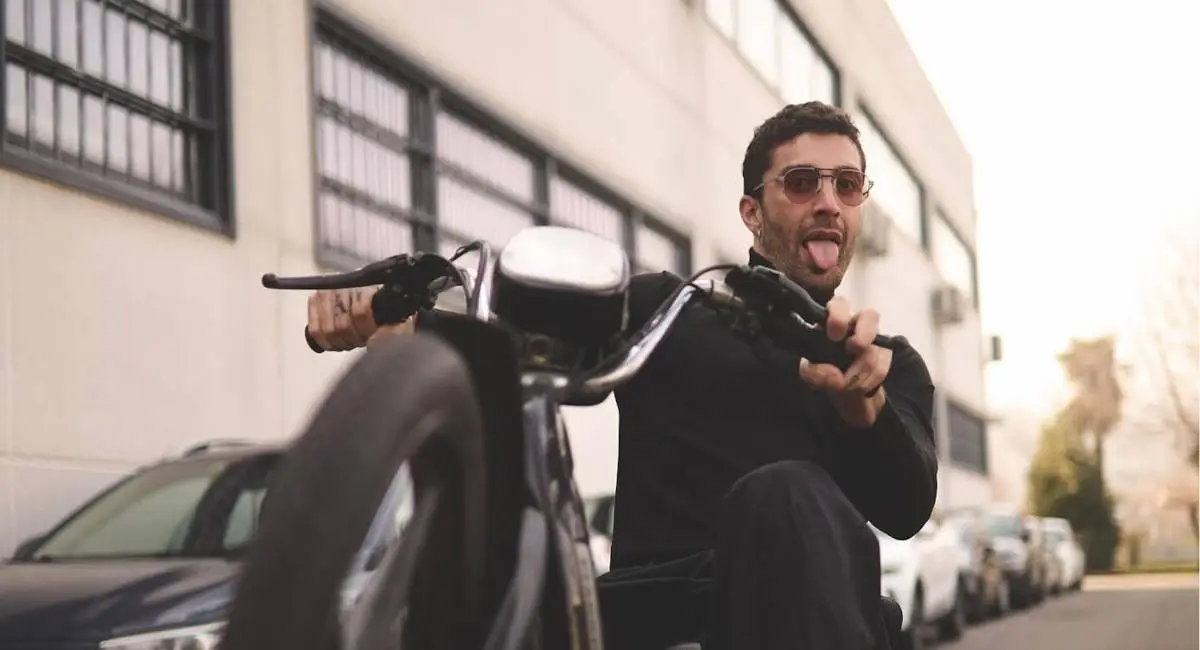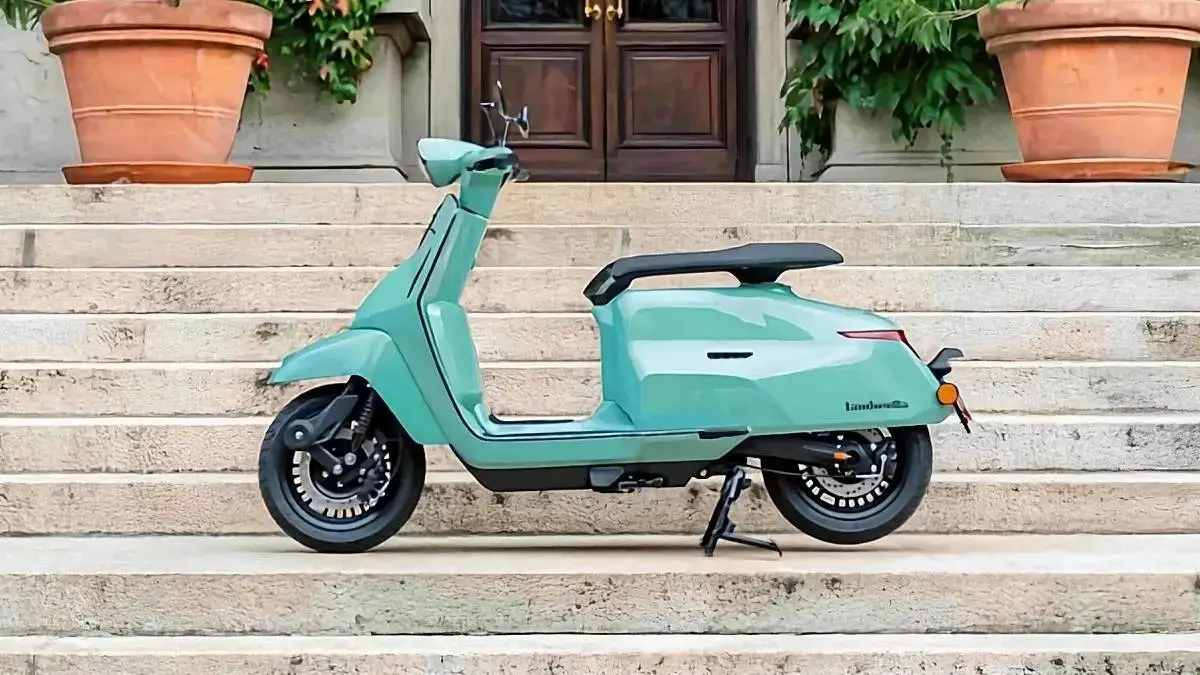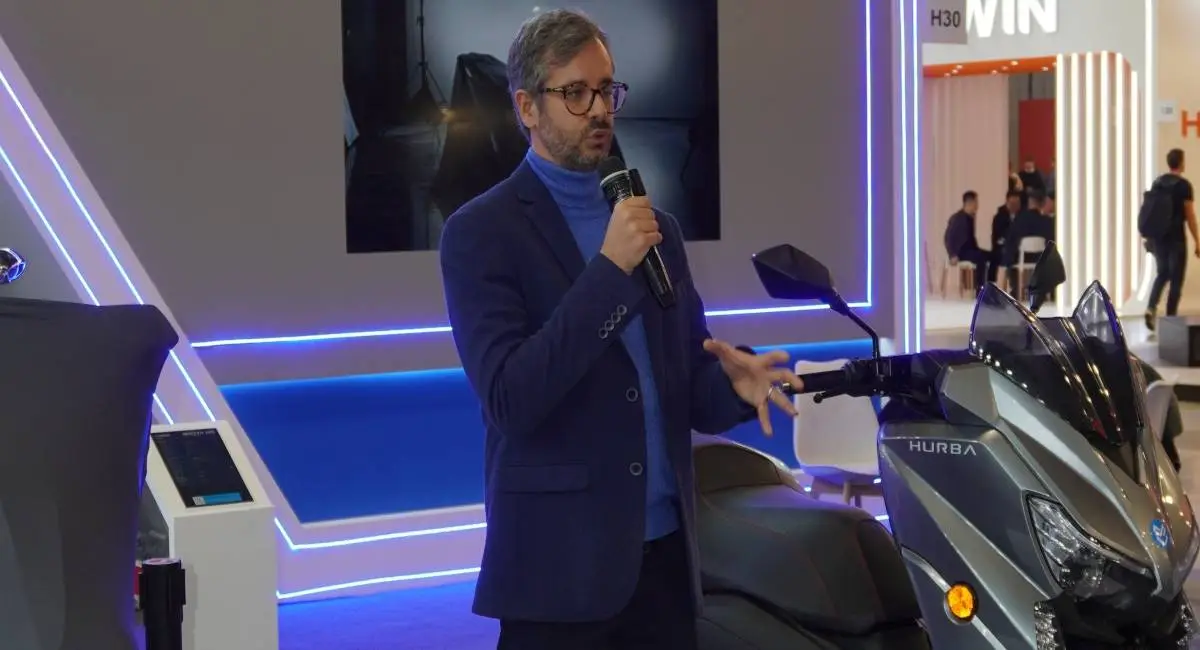
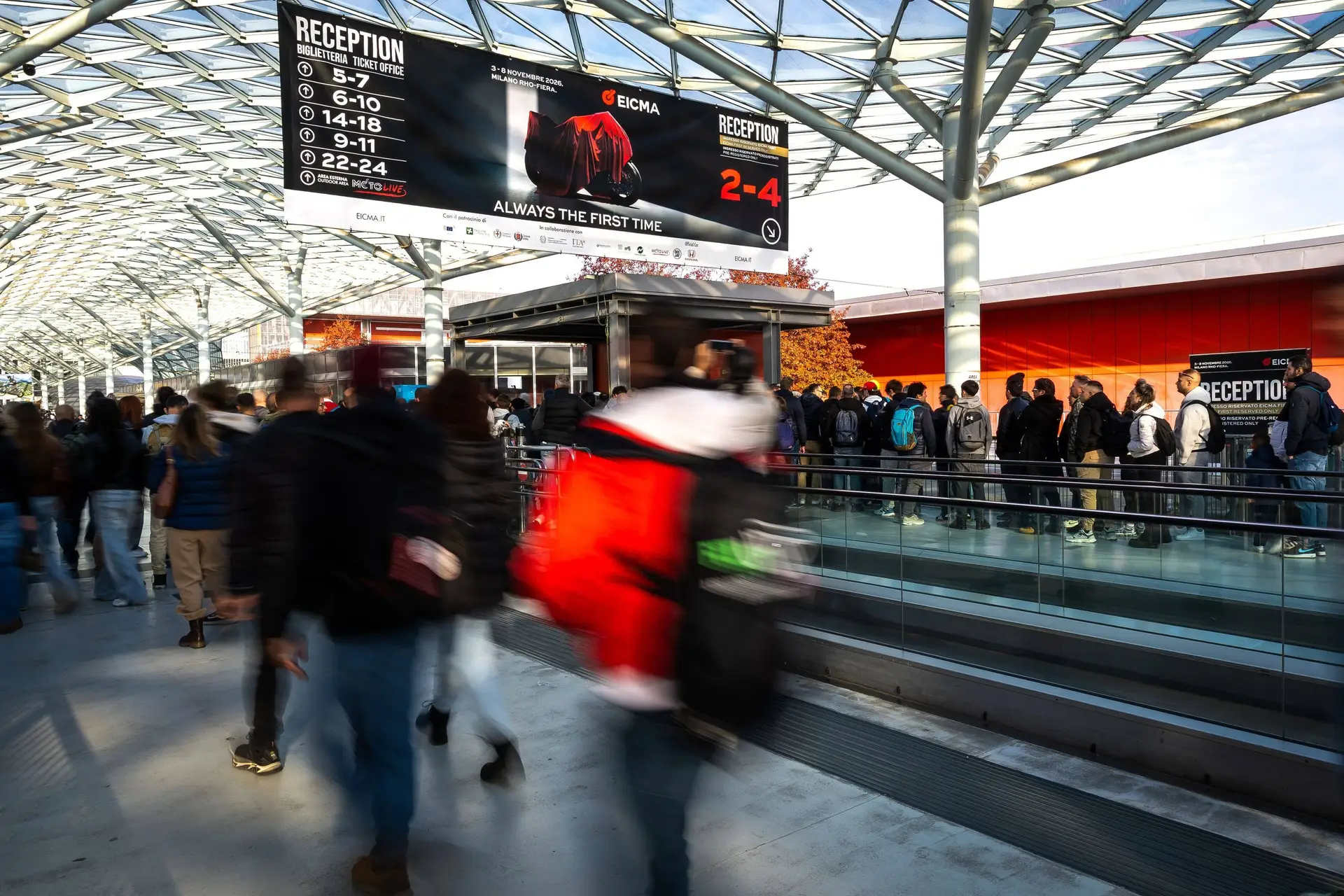
The Hurba stand at EICMA 2026 was neither the biggest nor the brightest. But perhaps it was one of the most elegant: efficiency isn't about flashiness; it's a way of life. That same philosophy drives the project led by Camillo Piscitelli, a young Roman entrepreneur who has hit upon a winning formula: offering the market scooters and motorcycles that combine Italian design and ingenuity with the extensive use of Chinese manufacturing methods and electric mobility technologies.
Hurba is not just an appealing, efficient vision of the future of mobility, but also a fascinating human story.
«Nothing has been made up. Sometimes people even tend to invent stories, because stories always resonate. But mine is a true story: I was studying Chinese,” recalls Camillo Piscitelli. “In 2016, at the age of 23, while studying at Peking University, I decided to deviate somewhat from my academic path. I kept studying, but at the same time I was looking for a factory that could bring my idea to life.
I realised that electric scooters could be a solution for getting around Rome. So I decided to take the best of what China had to offer and build a moped for Rome—for myself.
From there, the idea began to take root and became a fully-fledged project. I was a one-man band: I created the brand and came up with the name all by myself. I did all of this in my bedroom at Peking University. That’s how it all began. In July 2017, I completed my studies, returned to Rome and set up a company. The first people to believe in my idea were my parents, who are still by my side and have supported us every step of the way, including at EICMA».
How has the company evolved?
«The company has increasingly moved towards becoming a manufacturer. At first, we imported existing products, but I had a say from the outset. I gave our partners in China guidance on how to industrialise the product, which technical specifications to adopt and other aspects. We began sales in 2019. Within two or three years, we had built a dealer network and started developing higher-performance products.
With the 300S, we were among the first to introduce 11 kW, bringing a different level of performance and the ability to ride on motorways. The real turning point came in 2024, when two new partners and experienced managers joined us. They complemented my skills with managerial and strategic expertise I didn’t have.
From that point on, the company became a true manufacturer. We obtained a WMI identification code: initially for production of fewer than 500 units a year, and later a full code valid for higher production volumes».

You unveiled the new 150S at EICMA. How did it come about?
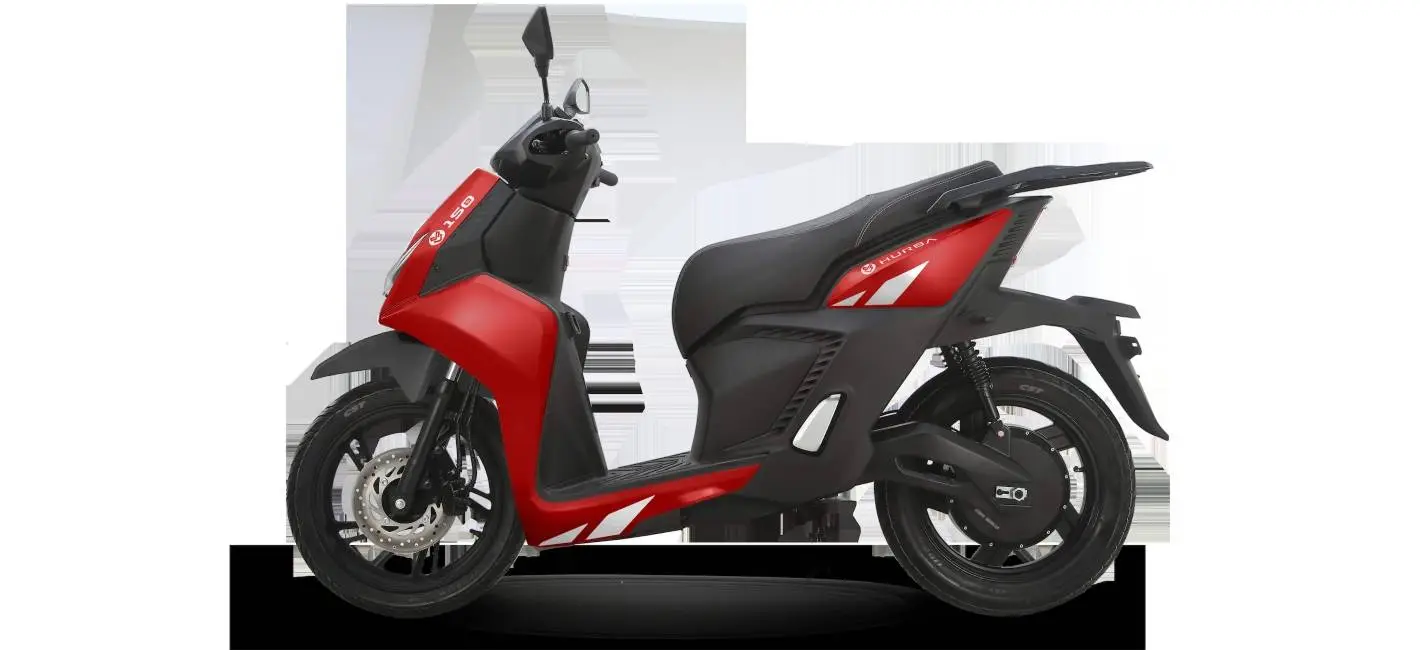
«It’s a product I’ve been working on for more than two years. I see it as the quintessential urban model: a flat floorboard, large wheels and long range. I had already expressed my intention to build it in 2024, but I was still missing a few pieces of the puzzle.
Thanks to our collaboration with Aldo De Giovanni, whom we’ve been working with for more than two years, and a significant investment in industrialisation, we managed to produce the prototype unveiled at EICMA in 2026. We started practically from a blank sheet. The product turned out exactly as Aldo and I wanted.
I oversee the technical development, while he handles the design. I gave him an Asian model as a reference, one that came close to the large-wheel concept, also to help our Chinese partners understand the idea. Large wheels, after all, are not particularly common in Asia.
Aldo and I created a full-scale model, working with clay. The model was then scanned, converted into a 3D design and industrialised».
What are the 150S’s technical specifications?
«When I say it has no compromises, it’s because its claimed range can reach 260 kilometres. In real-world conditions, it will be 240–250 kilometres—still a very long range. The battery capacity is nearly 8.5 kWh, practically the same as the Zephyr, an electric motorcycle with some distinctive technological features.
The batteries are removable, so they can be charged at home. That was the concept I started out with in 2019, because it was what I had seen in China. It also has a 6 kW motor, which makes it suitable for riding on ring roads and motorways.
Add to that the large wheels and flat floorboard, and you have the vehicle I had in mind—the one we’ve managed to build».
Which market are you targeting?
«We’re expecting significant sales. Our main competitor isn’t whichever Silence happens to be on the market. In fact, I see these companies as partners in the transition to electrification.
The real competitor is petrol—the combustion-engine segment. Large-wheel urban scooters account for a market of at least 30,000–40,000 registrations a year. We’re targeting at least 2%. We also want to reach people who have been riding a combustion-engine scooter for 20 or 30 years and might decide to go electric, perhaps taking advantage of a scrappage scheme. Our goal is to offer a vehicle that’s easy to ride and less expensive to run».

Price also seems to be part of this strategy.
“We’ve conducted several studies. The goal is what I call the democratization of electric mobility: we want to lower the barrier to entry. The price is €4,190 for the version with one battery and €5,190 for the Long Range version with two batteries. With our trade fair promotion and the eco-incentive, we can bring the price of the first version below €3,000. But even without the eco-incentive, we’re on a par with our combustion-engine counterparts.”
How is the work divided between Italy and China?
“The company is Italian, the capital is entirely Italian, and the design is Italian. The entire concept, design process, research and product development originate within our company.
Industrialization and component manufacturing, on the other hand, take place in China. I continue to oversee this process personally, alongside the same partners who have been working with me for five years now.”
One interesting aspect of your messaging is the idea that an electric scooter can pay for itself through the savings it offers in use.
“When I first had the idea, charging seemed simple to me. It was like a smartphone: I’d get home, plug it in before going to bed, and find it ready to go in the morning. For everyday use, its range was virtually unlimited. The comparison I used to make years ago was this: just as we have hot and cold water taps at home, we can also have a place to charge our vehicle.
It always seemed incredibly easy to me. I realize, though, that it’s mainly a question of mindset. We need a cultural shift, almost a change in habits, to overcome preconceived notions.”
Where is your operational base located?
“We’re in Riano, just north of Rome, right after the ring road. We have a multi-purpose center where we handle assembly, container reception and logistics for all of Italy.”.
You also have an electric motorcycle, Zefiro.
“It’s a product that was brought to us two years ago, and it represents a different technological positioning. It introduced some distinctive solutions, including semi-solid-state batteries, but it targets a more niche market: sports motorcycles.
Our urban scooters, by contrast, are designed for everyday use and appeal to a much broader audience. Motorcycles are more closely tied to passion. That said, some segments of electric mobility are growing rapidly, such as off-road, with many new enduro models coming onto the market.”
How do you see the electric market evolving?
“According to industry projections, we expect the market to grow by at least 20% between now and 2030, and we want to play an active part in that development. As HURBA, we can also help transform the market.
We face strong competition from Asian brands, which sometimes lose sight of the needs of the European and Italian markets. They bring here what they produce in Asia, in huge volumes, without always considering that needs differ.
Just think about the wheels: in Asia, smaller wheels are widely used and produced by the millions. But if a brand wants to gain a significant share of the European market, its product has to deliver what European customers expect.”
Are you ready to embrace the new era of urban mobility? Hurba is showing you the way.
-> Follow us on Instagram too: @Corsedimoto
Continue reading
You might also like
More news