Superbike Analysis: The path to the future is laughable—will a minus times a minus equal a plus?
Paolo Gozzi ColumnFriday, 31 July 2026 at 18:14
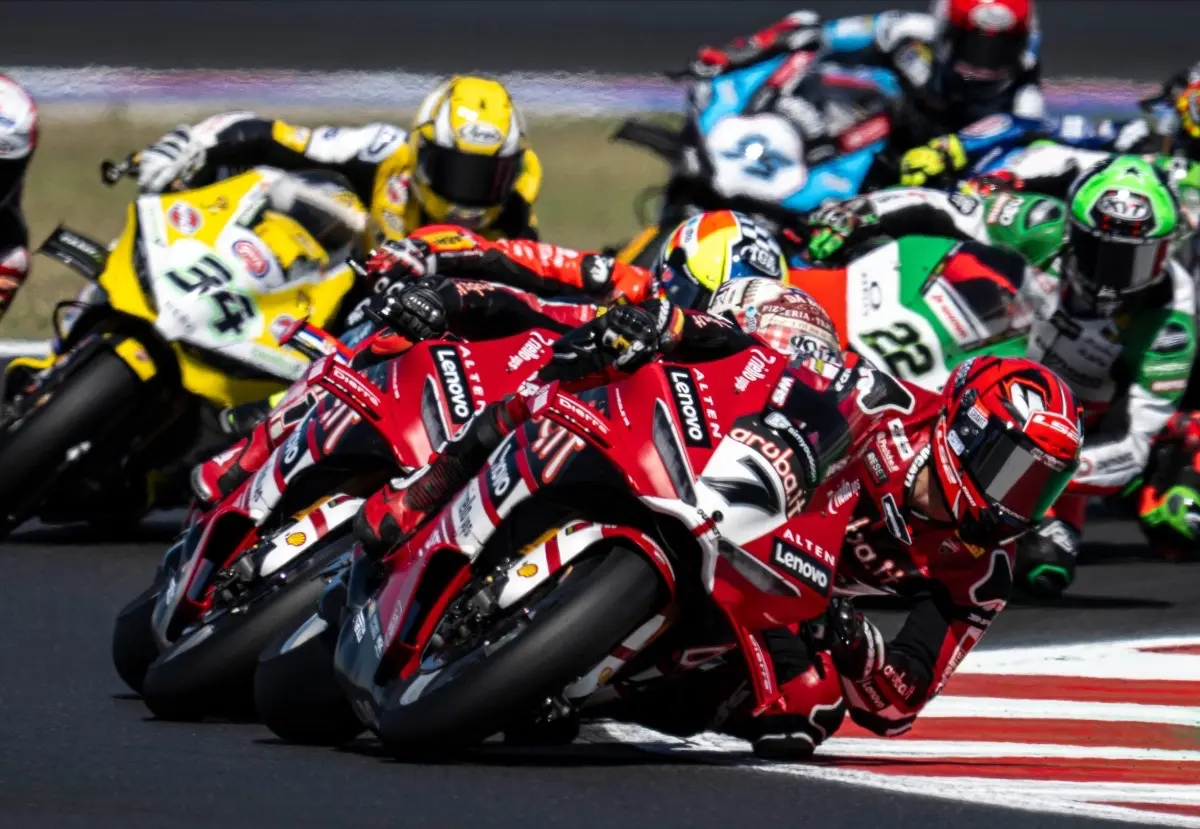
The Superbike outlook from now to 2030 has been written with the rule of signs: will multiplying two negatives produce a positive effect? Jokes aside, we’re at the incredible: the future restarts by mixing the two regulatory procedures that haven’t worked in recent years: the rev limiter and fuel flow control.
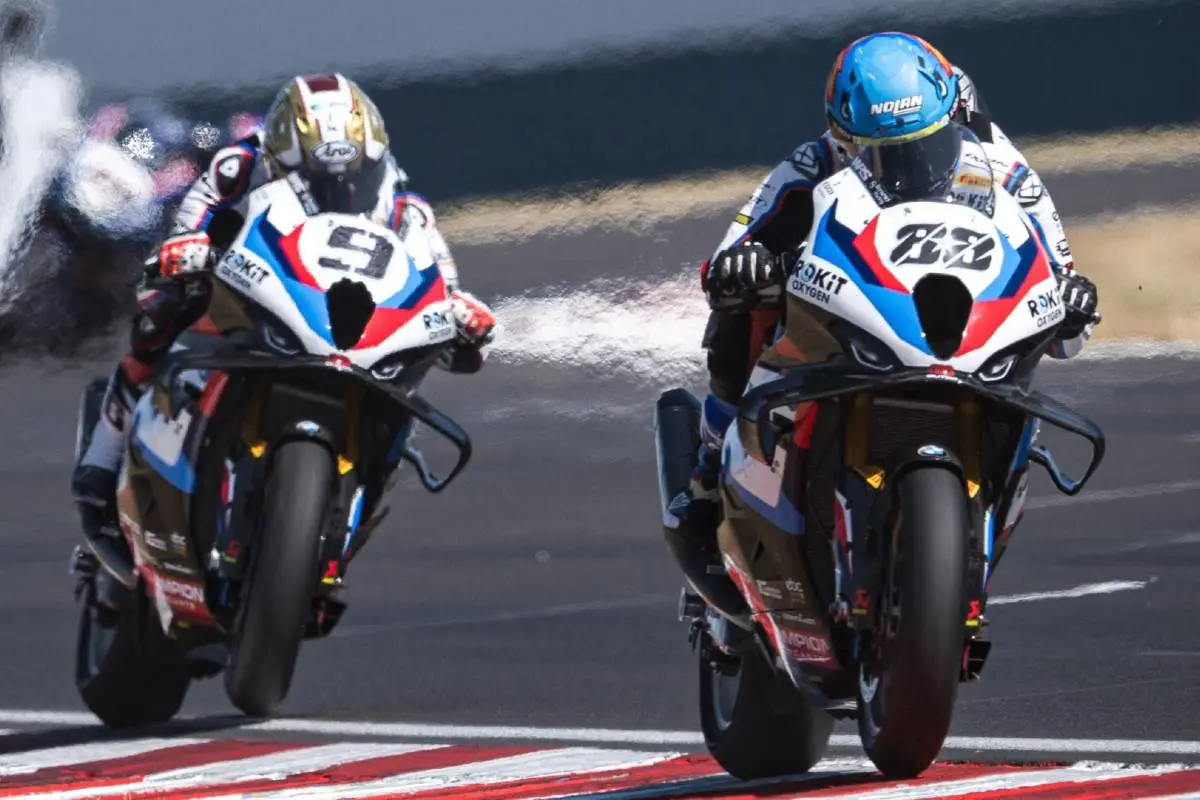
Here you can read what has been issued by the International Motorcycling Federation and the promoter MSEG, the old Dorna now under a (broad) Liberty Media majority. The problem to solve was (in fact is, since four rounds remain) the technical dominance of the Ducati Panigale V4 R. An unchallenged reign: the factory riders have won all 24 races (23 times Nicolò Bulega, once Iker Lecuona) and even the satellites have almost always trounced the competition from Bimota, Kawasaki, BMW, Yamaha, and Honda. A disaster, given that the technical regulations of this era are supposed to generate parity so that (like it or not) just about anyone can win. Radical intervention was needed, and what did they come up with?
All for nothing
In recent years, to balance performance they first focused on controlling maximum engine speed. It meant officially setting a ceiling, cutting revs in 250 rpm chunks whenever any brand had too much advantage. This procedure was scrapped at the end of 2025 because it was totally ineffective: in 2022–23 Ducati blew everyone away with Alvaro Bautista, so much so that from then on a ballast of about 6 kilos was imposed on him alone. In the following two-year period (2024–25) BMW cleaned up with Toprak Razgatlioglu, going toe-to-toe with Nicolò Bulega’s Ducati. The problem was that almost always the two dominators reached the finish with a 15–16 second lead. They cut revs, and everything stayed the same. With almost comic twists: Ducati kept winning in Superbike with an engine that revved less than the street version!
So from 2025, to control performance they came up with the flowmeter. That is, the ability to reduce fuel to the fastest bikes. But it was worse than useless. With so many cuts, we hit the limit: for two rounds Ducati has been at 44.5 kilos/hour and can go no lower, while Yamaha and Honda, the brands struggling most, are at 46.5 kilos/hour. Verdict: this balancing method has also been a failure.
The most grotesque solution
Instead of completely rethinking the system, from 2027 the double standard will be adopted, applying both rules that haven’t worked. For revs, they’ll start from a standard value indicated by each manufacturer, but it’s unclear which parameter that’s based on: the end-of-2026 value? The street bike’s rev limit? If needed, reductions of 500 rpm a shot will be imposed. On top of that, the flowmeter will also remain in force. The hope is that the sum of both procedures can produce the desired effects, namely limiting the potential of the Ducati Panigale and bringing the rivals back to the surface. They’re starting at a disadvantage because they race with models that are technologically less extreme than the Red machine, to the point that the street versions cost much less. Since the technical regulations of this era are hardly permissive, it’s clear that the track more or less photocopies the potential of the base machine.
But will it work?
By playing with multiple factors, it’s likely that in the end they’ll find the sweet spot. That is, from two wrong rules, the “right” solution might emerge. But that’s not the point, because the feeling is that today’s Superbike is spiraling due to a lack of strategy and bold choices capable of giving new momentum to a struggling World Championship. The decision to combine rev limiting and flowmeter, more than for technical reasons, is driven by the need not to call into question the role of the FIM technicians who studied and imposed these rules, only to find that the manufacturers already had countermeasures in hand to render them completely ineffective.

And what should be done?
The key would be adopting a single ECU, as in MotoGP since 2015 and in all other Superbike championships around the world. The single ECU would allow easy performance balancing by acting on engine speed and/or throttle opening, exactly as FIM and MSEG are successfully doing in Supersport. It’s a decidedly artificial BoP (Balance of Performance), but at least it works, because this year the races are spectacular, with many different winners and minimal gaps. Without a single ECU, this procedure can’t be activated. And why, you might ask, don’t they do it in Superbike too? Simple: because the final say on technical rules lies with the MSMA, the manufacturers’ association, and everything must be decided unanimously. Ducati, Honda, and Yamaha already have the single ECU in MotoGP, so they’re in favor, as are Kawasaki and Bimota. The veto comes from BMW, which will insist on using proprietary electronics in the future as well. So the Germans are putting their specific interest ahead of the broader good of the entire series.
1200 is coming, but don’t hold your breath...
A very sensible decision has been made: increasing displacement to 1200. It will allow new manufacturers, like Aprilia, to come in, but above all it will let those currently racing with a 1000 redesign their engines to increase capacity, for a range of needs tied to the street hypersport market. We’re now in 2026, so a lot of water will have to pass under the bridge between now and 2030. Such a distant horizon is yet another consequence of manufacturers’ choices that don’t support Superbike’s success, but respond solely to parochial interests.
-> Follow us on Instagram too: @Corsedimoto
Continue reading
You might also like
More news
Popular articles
Loading