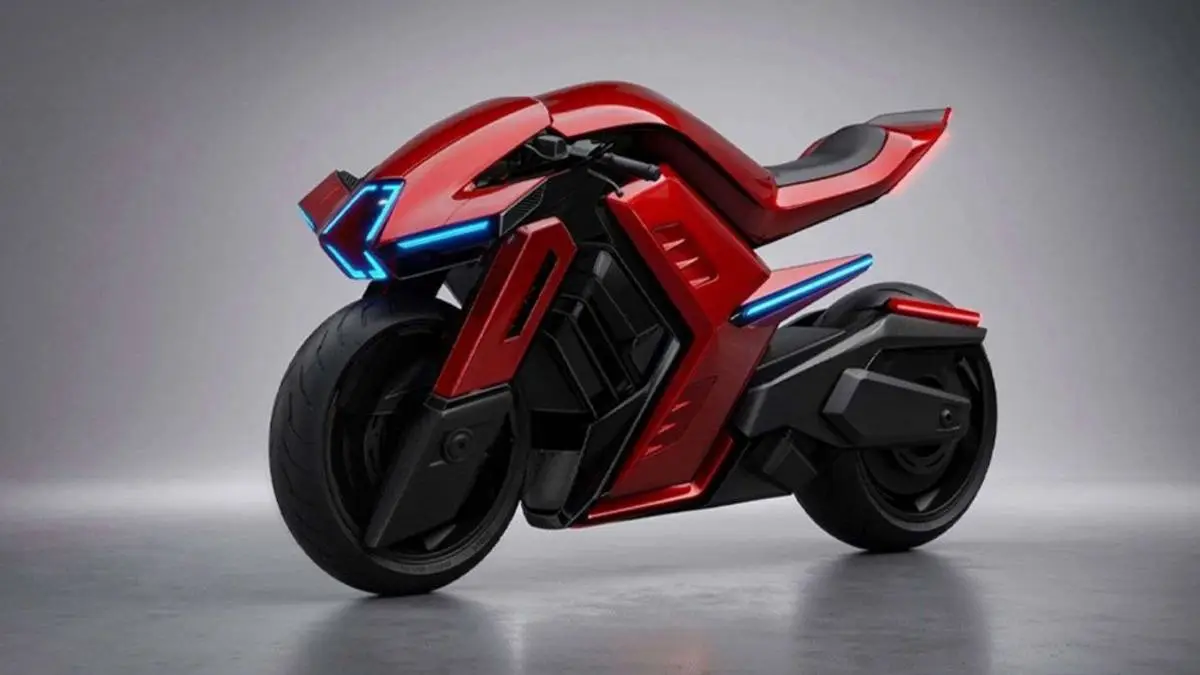
Furion Taran: details of what will be the first all-wheel-drive electric hyperbike. A sci-fi project, or is this really the future?
Progress continues in every sector, including electric mobility. The latest project unveiled by French company Furion points to a particularly interesting breakthrough. Its Taran is not the first electric hyperbike, but it would be the first to feature an innovative EVERSOR all-wheel-drive architecture—a first for the industry, revealed just in the past few days. The design comes from Takumi Yamamoto (you may remember the futuristic GT by Citroën supercar), with art direction by the Pigment agency, combining futuristic aesthetics with aerodynamic efficiency. A sci-fi project, or is this really the future? The Taran is not yet a tangible reality, but it will be produced in a limited run, while the patented EVERSOR technology (currently under active development and being tested on track) is also available to other manufacturers under a production license. Let’s take a look at some of the details.

Some technical specifications
Furion Motorcycles is a French start-up founded by designer Marc Evenisse in Le Mans in 2015, but it began attracting attention two years later for its work, particularly on high-performance hybrid and electric motorcycle projects. Among these is the aforementioned innovative EVERSOR powertrain, which led to the development of the Furion Taran.
Far more powerful than conventional high-performance road-going superbikes (200–240 hp), its 326 hp (240 kW), delivered by a two-motor electric system, puts it in hyperbike territory. EVERSOR (2WD) technology is at the heart of this electric powerhouse: as explained on Furion’s official website, it is an all-wheel-drive architecture featuring an axial-flux motor on the front wheel and a module equipped with a controlled gyroscopic counter-rotation system that improves agility by 11%, while recovering 77% of the energy during front-wheel braking.

It is equipped with a 20 kWh battery pack, offering a real-world range of around 200 km thanks to the EVERSOR system’s improved energy management. The bike’s dry weight is 230 kg, giving it a power-to-weight ratio of 0.72 kg/hp. The full carbon-fiber fairing surrounds a frame designed to accommodate the generous battery pack while integrating the dual electric drive architecture. A rear monoshock, twin-disc front brakes with four-piston calipers, and ultra-light carbon-fiber wheels complete the package.
As mentioned, progress marches on, including in electric mobility: a sector often portrayed as the future, but one that still leaves two-wheel and motor enthusiasts unconvinced. What do you think?
Continue reading
You might also like
More news


Popular articles
Loading