Suzuki Takes on Carbon Fiber with Flax Fiber: The Sustainable Revolution That Could Transform Racing
Stories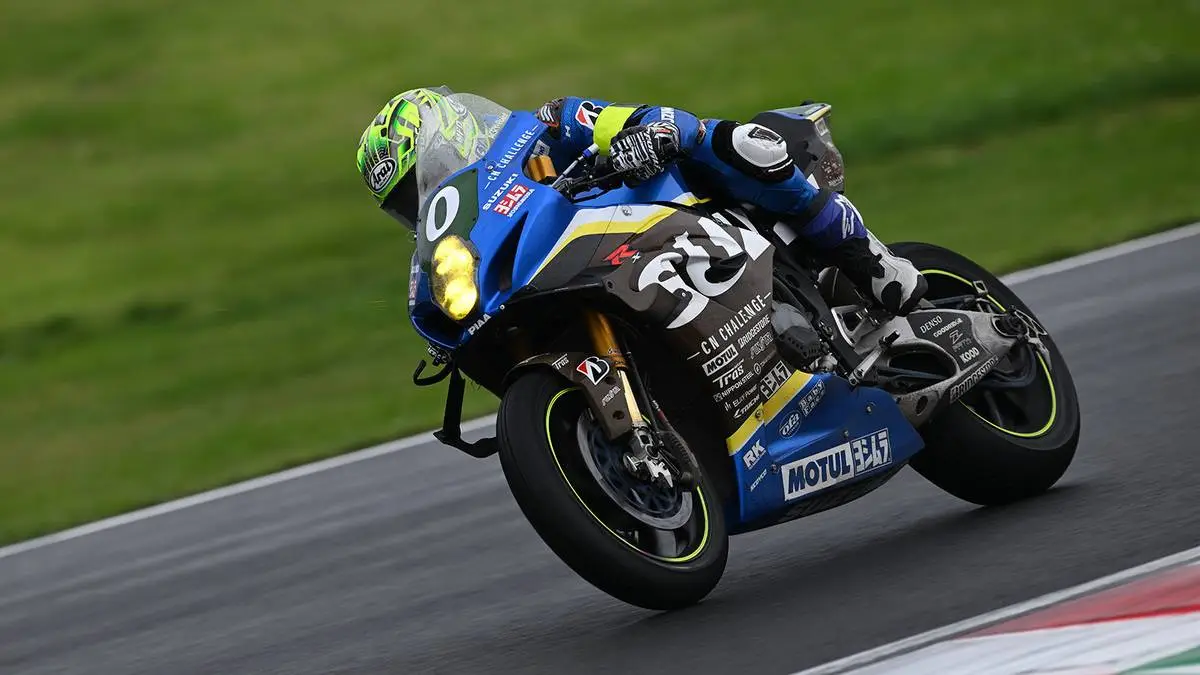
For three years, Suzuki has been testing a natural material on its racing bikes as part of a dedicated project. Here’s what it is.
Technology never stops evolving. In motorsport, research into new components and materials yields excellent results, since everything is tested under extreme conditions. One example is ampliTex, a technical fabric made from natural flax fiber and produced by Swiss company Bcomp. It is part of Suzuki’s project, led by Shinichi Sahara, former MotoGP project leader, which saw the Team Suzuki CN Challenge compete in the 8 Hours of Suzuka in the FIM Endurance World Championship starting in 2024. When Suzuki announced its departure from the World Championship, it had already said it intended to focus on other projects. This one is particularly interesting, as this year the material covered almost the entire bodywork of the GSX-R1000R, replacing carbon fiber. The material has now also been brought to the All Japan Road Race Championship for further testing in the JSB1000 class (the Japanese Superbike series). A more sustainable and revolutionary choice—and here’s why.
Key features
Made entirely in Europe, natural flax fiber is a far more environmentally friendly material. As Suzuki is demonstrating, it can effectively replace traditional petroleum-based materials such as carbon fiber, reducing CO2 emissions by up to 85%. In terms of mechanical performance, it offers a safer, more protective response in a crash: carbon fiber shatters into sharp, dangerous pieces, while natural flax fiber bends. This substantial difference can reduce both punctures and potential rider injuries, as demonstrated by a crash at the 2025 8 Hours of Suzuka. The material also significantly reduces vibration, absorbing up to 250% more than the more common carbon fiber. At the end of its service life, it can be disposed of in standard incinerators to generate renewable energy, leaving no hazardous residue.
The Suzuki project
In 2024, the Hamamatsu-based manufacturer brought its exciting project to endurance racing, developed in collaboration with Swiss company Bcomp and Japanese specialist Tras. The project is pursuing the highest level of sustainability achieved so far, from fuel that initially contained 40% bio-based content and has now reached 100%, to components made from recycled materials. At first, the use of flax fiber was limited to the front and rear fenders and the winglets, while everything else was still made from recycled carbon fiber. That was the case until 2025; this year, however, flax fiber has been used much more extensively on the GSX-R1000R, replacing carbon fiber across almost the entire bike’s bodywork, including the full side fairings and the tail section. Regardless of the final result, Suzuki is shining a light on something that could perhaps revolutionize the world of racing in the not-too-distant future.
-> bcomp.com
-> Follow us on Instagram too: @Corsedimoto
Continue reading
You might also like

More news



Popular articles



Loading