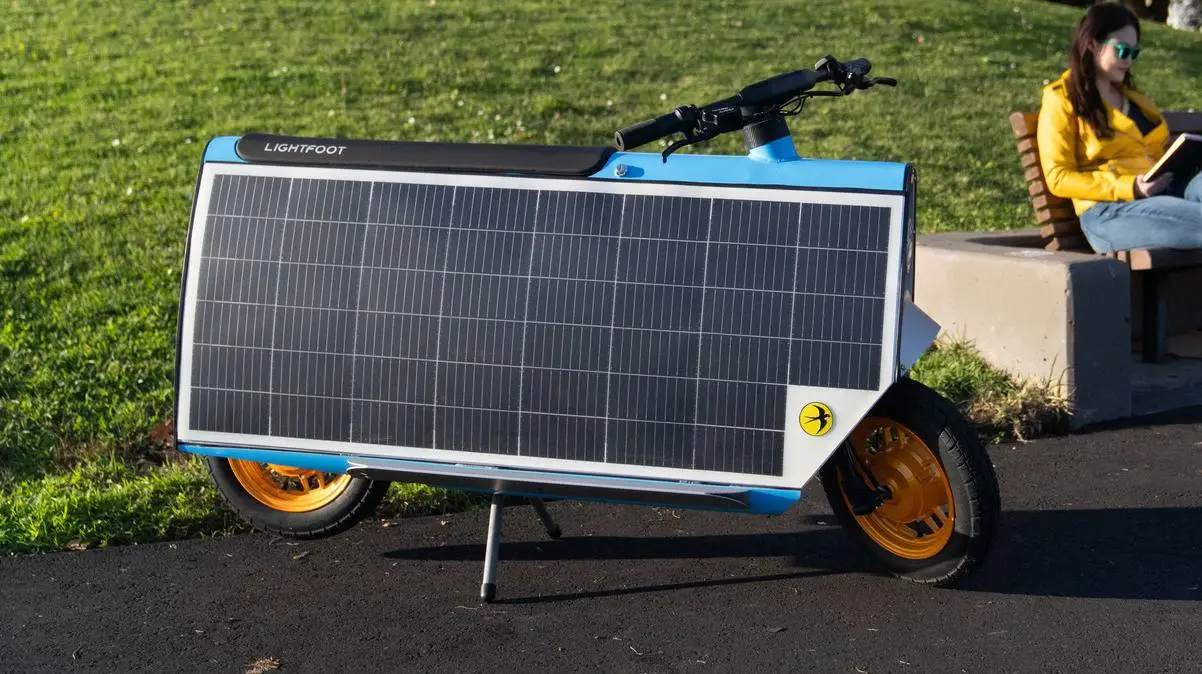
The Californian start-up Otherlab has launched Lightfoot, a highly unusual, innovative and sustainable scooter. Here’s why.
Innovation, creativity and sustainability often go hand in hand, sometimes with surprisingly curious results. The subject of this article is Lightfoot, a very unusual scooter developed by San Francisco, California-based start-up Otherlab and built in Taiwan. It was first discussed in 2024, when the initial announcements and technical details were released. However, delays in deliveries—which were originally scheduled to begin in January 2025 and only actually got underway this month, alongside announcements and press materials published on the official website—raised some doubts. For now, the scooter is available as a Launch Edition: a limited run of 100 units, sold exclusively in the United States, though the aim is to expand globally in the future. In the meantime, let’s take a closer look.

Technical specifications
An innovative scooter designed for short daily trips at no cost, with room for up to two people. Its distinctive design is clear at a glance, with a shell-like body flanked by two 120 W solar panels that charge the scooter whether it is in use or parked in the sun. Under ideal conditions, this technology can provide enough energy for up to around 29 km of range per day—about 5 km for every hour of exposure to sunlight. Lightfoot’s solar power is complemented by two 750 W brushless electric motors and a 48 V, 1.1 kWh battery, providing a range of up to 60 km. The battery takes about four hours to fully recharge from a household outlet using the supplied 600 W charger.

This scooter is designed to be practical for grocery shopping and carrying cargo, too: sliding aside one of the side panels reveals a waterproof 45-litre storage compartment, capable of holding up to 20 kg of groceries or other items. The scooter weighs around 62 kg in total and features an aluminium frame, 10-inch tyres, front and rear suspension, and a 2.8-inch touchscreen display. Its top speed is around 32 km/h, which allows it to be ridden on urban roads and cycle paths in the United States without a licence plate or driving licence. In Europe and Italy, by contrast, it would be classified as a moped. As mentioned, logistical considerations mean it is currently sold only in the United States. Who knows—perhaps it will make its way over here before too long!
-> Follow us on Instagram too: @Corsedimoto
Continue reading
You might also like

More news




Popular articles

Loading