Motorcycle Stories: Grandpa Hermann’s Revenge—Meet the Oldest World Champion
StoriesThursday, 13 August 2026 at 08:15
Those who only peered into the racing world at the end of the last century find it hard to believe that a superstar like Giacomo Agostini, at twenty-one, didn’t already have four or five world titles in his pocket, but was merely a “very promising youngster.”
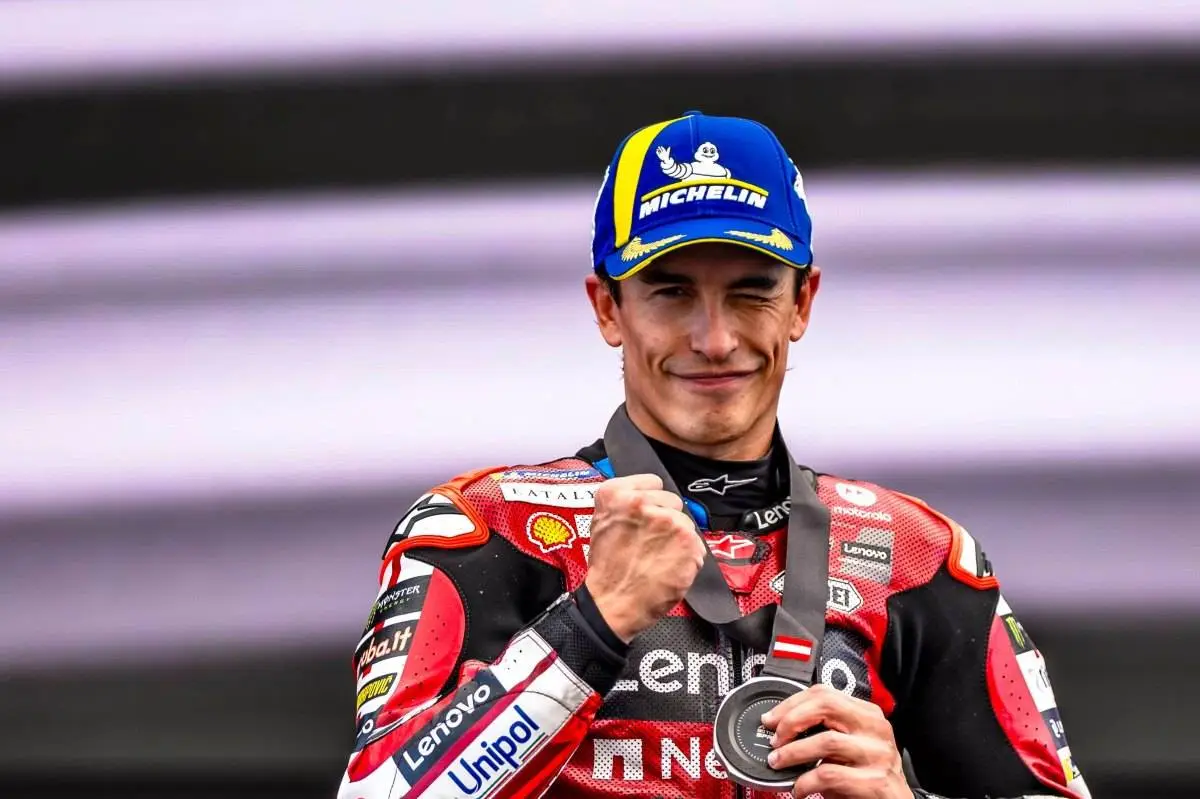
But that’s how it really was. Anyone who wanted to race had to wait until they came of age—then set at 21—to obtain a license, or, for the luckier ones, get paternal permission at 18; mini-bikes were yet to come, and there were no child racers who, at 15, already had a decade of competitive experience behind them. Under such conditions, it wasn’t hard to find forty-year-old riders, whereas today there are those who see Marc Márquez, 34, as already on the decline!
The oldest champion
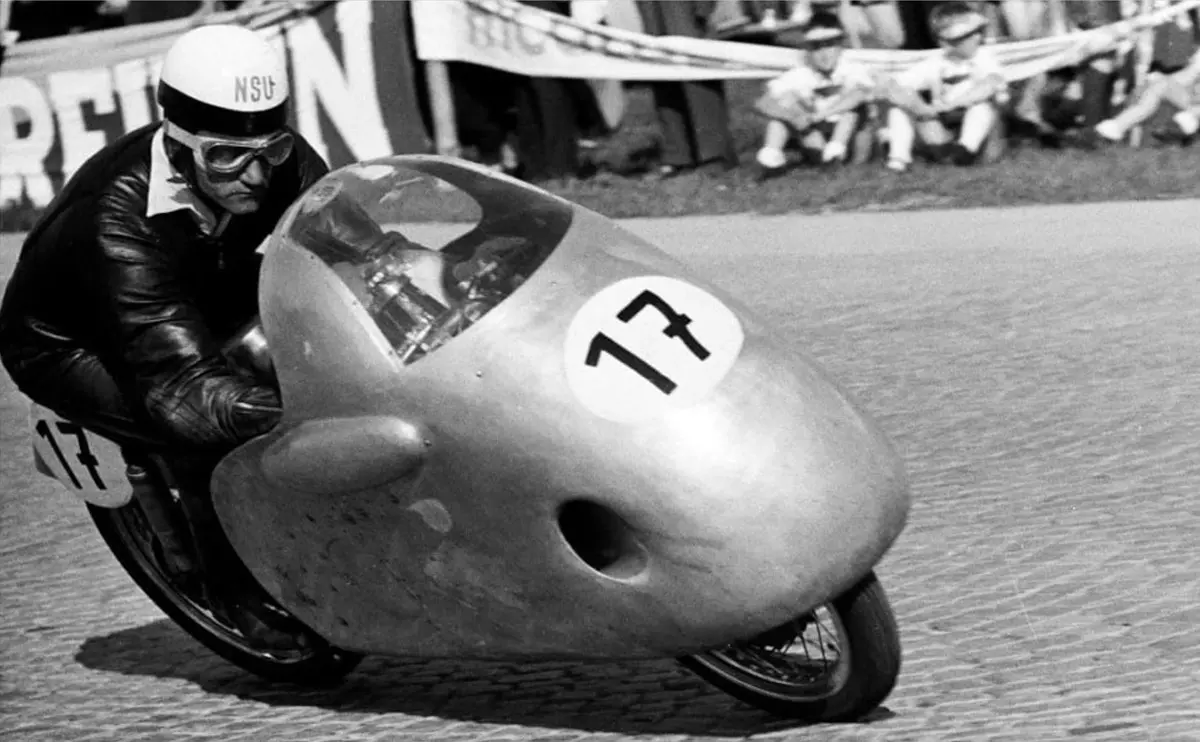
In fact, leafing through the roll of honor of motorcycle Grand Prix racing, while everyone rushes to find the youngest champion, few look at the oldest champion. The record in the “old-timer” category belongs to the German Hermann Paul Müller, 250cc world champion in 1955 at the age of 45, having been born in Bielefeld on November 21, 1909.
It was a fiercely contested championship held over eight races, marked by constant twists and disqualifications, at the end of which Müller prevailed with 20 points ahead of the Englishmen Cecil Sandford (Guzzi) with 14 and Bill Lomas (MV Agusta) with 13, the latter paying dearly for his disqualification at Assen, where he stopped to refuel without turning off the engine.
A lightning-fast grandpa
But don’t think Müller was some random nobody. Our “old-timer” had started racing at twenty with an Imperia 500 in hill climbs and dirt track—hugely popular at the time in Central European countries—before being called two years later by Victoria, another German manufacturer, with which he became national sidecar champion. After Victoria closed, DKW, which had already noticed him, wanted him to ride its 500, with which he won the German title in 1936, as well as the gold medal at the Six Days.
The following year Auto Union, the group to which DKW belonged, called him to join the squad competing in Grand Prix car racing at the wheel of the mighty, rear-engined, supercharged 16-cylinder Auto Union C-types, and he soon became one of the team’s mainstays, even though it already boasted champions like Rosemeyer and Stuck.
At the outbreak of the Second World War, only 4 of the 5 Grands Prix scheduled to award the European Championship—the top honor of the time (the Formula 1 World Championship was only born in 1950, a year after the motorcycles)—had been held, and at that point the standings were led by Hermann Paul Müller and his Auto Union with 12 points, ahead of the archrival Mercedes of Hermann Lang with 14 points, Rudolf Caracciola with 17 points, and Manfred von Brauchitsch with 19 points.

The minimum point system
Don’t be surprised by the scoring: for the European Championship the AIACR, forerunner of the FIA, had adopted the “minimum point system,” with one point for first, two for second, and so on. At the end of 1938 this system had been challenged, and the Belgian delegate Langlois had been tasked with studying a new “maximum point system,” based on the principle that still applies in various national and international championships today. But at the CSI’s summer congress, the International Sporting Commission decided to confirm the old system for 1939 as well.
Naturally, with war setting Europe ablaze, the AIACR had far more pressing matters than proclaiming the European champion. The October congress scheduled in Paris was canceled, so Müller was never declared champion. To make things even messier, General Adolf Hühnlein, undisputed head of the NSKK, the German organization overseeing motorsports, where everyone, including the drivers, was militarily structured, stepped in.
In November 1939 the official newspaper of the Nazi party, the Völkischer Beobachter, published a communiqué from Hühnlein that read: “Since, due to the war, the AIACR cannot meet, I hereby declare, on the basis of the existing points, the NSKK Staffelführer Hermann Lang of Mercedes the European champion of motor racing with 23 points…”
What happened? Whether out of sycophancy toward Mercedes, the Führer’s favorite—though he rode in a luxurious Horch from the Auto Union group—or out of genuine conviction, given that Lang had indeed been the best driver of the season, with seven wins out of ten races run overall, Hühnlein had adopted the new points system devised by Langlois and not yet adopted by the AIACR, which, after the four GPs held, crowned Lang champion with 22 points, ahead of Müller with 21 and Caracciola with 18. Needless to say, this result was never made official, neither at the time nor after the war.

War survivor
During the war Müller, who held the rank of lieutenant in the Luftwaffe, worked as an engine mechanic at Focke-Wulf, then, taken prisoner by the Red Army, first managed to avoid deportation thanks to his technical skills and later to reunite with his family in Bielefeld, in one of the Länder controlled by the Americans. There he began racing motorcycles again, winning four national titles in five years between 1947 and 1951. After Germany was readmitted to international competition, he was called to join the NSU squad, taking third place in both the 125 and 250 classes in the 1954 season, then in 1955 again third in the 125 while clinching the 250 world championship.
After NSU withdrew from racing, he set several land speed records at Bonneville, again with NSU, in 1956, before retiring from competition for good.
-> Follow us on Instagram: @Corsedimoto
byMaurizio Mazzoni
Continue reading
You might also like
More news
Popular articles

Loading