“I bought the motorcycle on an installment plan, then I won 15,000 lire”: in 1922, a one‐make race could make you rich!
Stories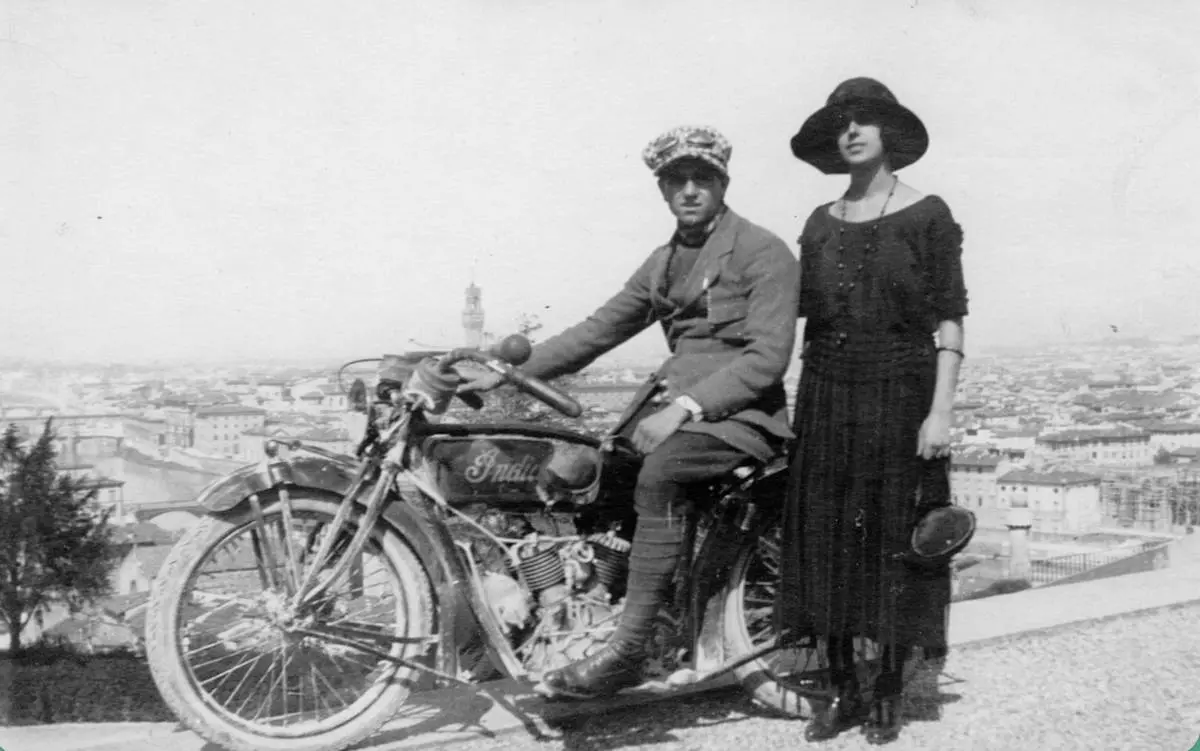
One-make series are becoming increasingly popular. Many think this is a relatively recent phenomenon, roughly dating back to the late 1970s, but that’s not the case! One-make races, at least in Italy, are now over a hundred years old!
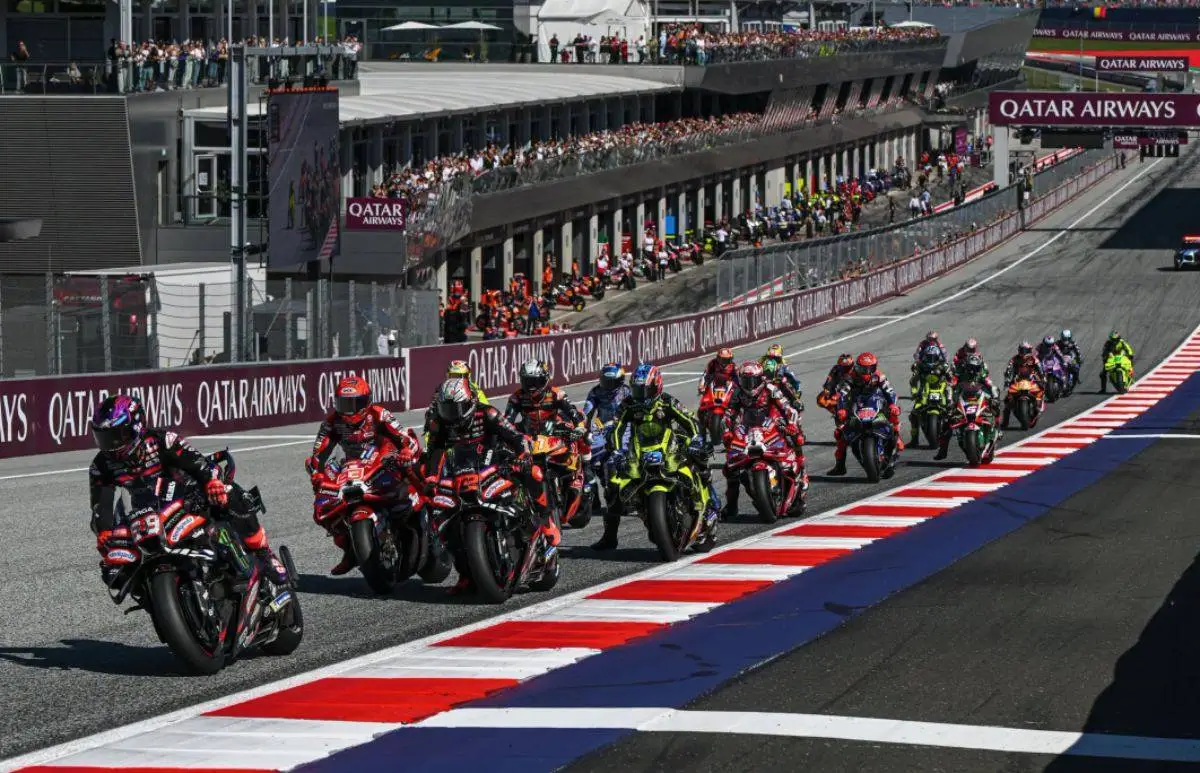
Now even in the World Championship the trend is moving further in this direction. Moto2, which replaced the highly prestigious 250cc class, is single-engine. From 2028 Moto3 will even be a complete single-make class, with Yamaha all the same. Another arena where manufacturers and designers could compete at the highest level disappears. I must confess I don’t like this personally: it removes that technically thrilling challenge for once, but above all it steers us down a very specific path: the world championship status will be taken away from the smaller categories to reserve the crown for MotoGP alone, along the lines of what we’ve already seen in Formula 1. That’s the slope we’re on; faced with business, we enthusiasts can do nothing.
Once upon a time, a century ago
It was in 1922 that Nagas & Ray, the Turin-based company importing Indian into our country and engaged in a no-holds-barred commercial battle with archrival Harley-Davidson, proposed a race called the Indian Grand Prix. It was reserved for riders on motorcycles from the Springfield brand, which at the time produced two models with the same engine architecture, a 42° V-twin: the 600cc Scout and the 1000cc Chief.
The race was organized over three stages, totaling 1,250 km, and like almost all long-distance races of the era, it imposed an average speed limit of 50 km/h. Riders who exceeded the set average would be assigned the time corresponding to the imposed pace. To resolve any ties, each stage included a pure speed section: in the first stage from Genoa to Florence it would be an uphill stretch on the Bracco Pass. In the second, Florence–Rimini, it would be the climb of La Scheggia to Gubbio, and finally in the closing stage, Rimini–Milan, it would be a flying kilometer trial in Cremona, on the famed Piadena straight used at the time for record attempts.

The great names of the time
There were four categories in the race: Category A was reserved for riders on the 600 who had never won a race. Category B for those on the 1000 who had never finished in the top four. Category C for sidecars with riders who had never won. Category D admitted Junior and Senior riders without restrictions, on the Chief 1000: it therefore hosted all the big names of the time who raced with Indian, from Miro Maffeis to Self, Rava, Spallanzani, Zanchetta.
The prizes on offer were rich: the stage winner would earn 500 lire and a gold medal, while the overall winner would take home a whopping 10,000 lire; this meant bringing back, if the overall winner triumphed in all stages, about 15,000 lire in cash and gold—a hefty haul! Let’s remember that the famous song “Se potessi avere mille lire al mese” by Gilberto Mazzi dates to 1938, over fifteen years later, with the devastating Wall Street crash in between.
Without respite
The race, which began almost as a promotional parade, turned out to be extremely demanding. In the end no one managed to complete the event at 50 km/h. The condition of the roads and, above all, the bad weather that raged throughout the race—particularly in the final two stages—gave no respite: crashes, accidents, breakdowns, and navigation errors spared no one.
Nevertheless, at the Milan finish in Cascina Gobba, near Crescenzago, the technical-sporting balance sheet was encouraging: of the 40 starters, 23 arrived within the time limit. Another ten or so stragglers finished badly battered, some seriously, and unfortunately outside the time limit.

Unconquered audacity
Leonardo Acquati’s words at the awards may raise a smile today, but they reflect the prose of a century ago: “If the victorious machines were American, the unconquered audacity with which all the riders brought them to the final goal was quintessentially Italian.”
The winners of the various categories came from all over Italy: the Florentine Lanza took cat. A, the Palermitan Ambrosini took cat. B, the Neapolitan pair Bongiovanni–Perez won among the sidecars, and the great Miro Maffeis among the experts. But the big surprise came with the proclamation of the overall winner: leading them all was the very young Alessandro Lanza, just of age, because his father Benedetto—though a pioneer of Florentine motorsport—had always denied his son the necessary consent to obtain a license.
"I bought the bike on installments, then I won 15,000 lire"
The photo showing a proud Lanza astride his Scout with his fiancée Nella beside him and the Florence skyline in the background bears a telling caption on the back: “Summer 1922: I bought the bike on installments – September 1922: I won the Indian G.P. – Lire 15,000.”
For the record, Alessandro Lanza was a prominent figure in the city’s sporting life: first a goalkeeper for the football team of Club Sportivo Firenze, from which Fiorentina would be born in ’26. Then a fairly successful rider of motorcycles, sidecars, and cars, later for many years president of M.C. Firenze, an enthusiastic organizer and FMI race director at major events such as the Milano–Taranto.
The race was, however, practically snubbed by the press, even the specialist press, out of spite, since the organizers had granted a sort of exclusive to a single journalist who, moreover, following the race by car, regularly arrived at the destination when the protagonists were already at the hotel and was thus forced to have things recounted to him. A splendid opportunity wasted.

-> Follow us on Instagram: @Corsedimoto
byMaurizio Mazzoni
Continue reading
You might also like
More news
Popular articles
Loading