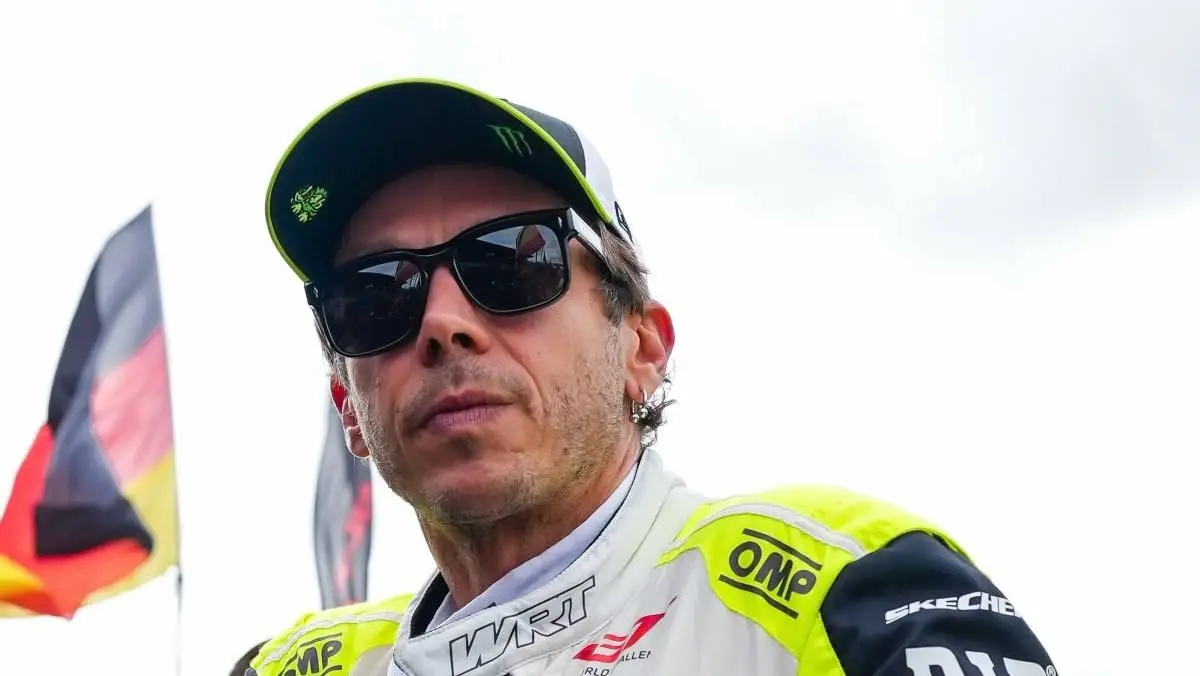
November 14, 2021, marked a turning point in MotoGP history. After 26 seasons in the World Championship and 9 world titles, 115 wins and 235 podiums, Valentino Rossi brought his two-wheeled racing career to a close. The Ricardo Tormo circuit in Valencia hosted his final motorcycle Grand Prix before he opened a new chapter in car racing. Five years later, his autobiography has been published, revealing numerous behind-the-scenes stories from his life.
A closed chapter in MotoGP
A legend of Valentino Rossi’s stature, who inspired generation after generation of fans to fall in love with MotoGP, has plenty of stories to tell, both about his private life and his professional career. The official announcement of his retirement came on August 5, 2021, during the Austrian Grand Prix weekend. But when does a rider know it’s time to say goodbye? The champion from Tavullia admits: "That’s a question you shouldn’t ask me, because I probably should have retired a little earlier". He doesn’t consider himself a role model when it comes to retirement. Still, despite his late decision and having spent more than three seasons out of title contention, he has no regrets.
Since that November in 2021, the thought of returning to race in the premier class has never crossed his mind. "After my last race, it really was a closed chapter. I never thought about getting back on a MotoGP bike. It was like writing the word ‘the end’ at exactly the right time". After all, the battle with Marc Marquez was at risk of becoming one-sided....

Stressful schedules and insomnia
Years later, Valentino Rossi has revealed some previously untold stories from his career, including insomnia, pre-race anxiety and the occasional use of tranquilizers during his golden years in MotoGP. Today, he enjoys a peaceful life with his daughters Giulietta and Gabriella, but his past was marked by an extreme schedule. In his autobiography, "La mia storia" ("My Story"), co-written with Giorgio Terruzzi and published by Rizzoli, The Doctor recalls a time dominated by adrenaline and noise. His body clock ran in reverse to the rest of the world’s. "At home, I always tried to start my day in the afternoon. In winter, I’d go months without seeing the sunlight, really. I’d wake up late, have dinner late, and training would start at 9:30 or 10 at night".
His body clock changed radically during Grand Prix weekends, as stress and pressure mounted. "When you race, you have to deal with your paranoia, and your blood pressure shoots up. I always slept very little—far too little". To escape the absolute silence, the nine-time champion relied on a set ritual. "I’d turn on the TV at one in the morning with the volume off, so I wouldn’t be left in the dark. In the dark, the torture would begin: thinking about Honda, Yamaha, how to improve a corner...".
The use of tranquilizers
The physical and mental stress peaked between 2005 and 2006, when results stopped going his way. Television was no longer enough to quiet the whirlwind of thoughts, so he sought help in the form of medication. "I tried a drug, a tranquilizer, because I could barely sleep. But it didn’t work very well; it made me apathetic, and it felt as though my eyes were closed". Fearing he might lose his reflexes or become dependent on pills, he stopped taking them. "I was afraid I’d get used to them and suffer withdrawal symptoms; I didn’t want to become dependent. Later, I discovered melatonin, which works very well".
-> Follow us on Instagram too: @Corsedimoto
Continue reading
You might also like
More news