Parilla, between dreams and speed: the Fox 175, the world’s racetracks, and the art of refusing to compromise
StoriesFriday, 06 February 2026 at 19:00
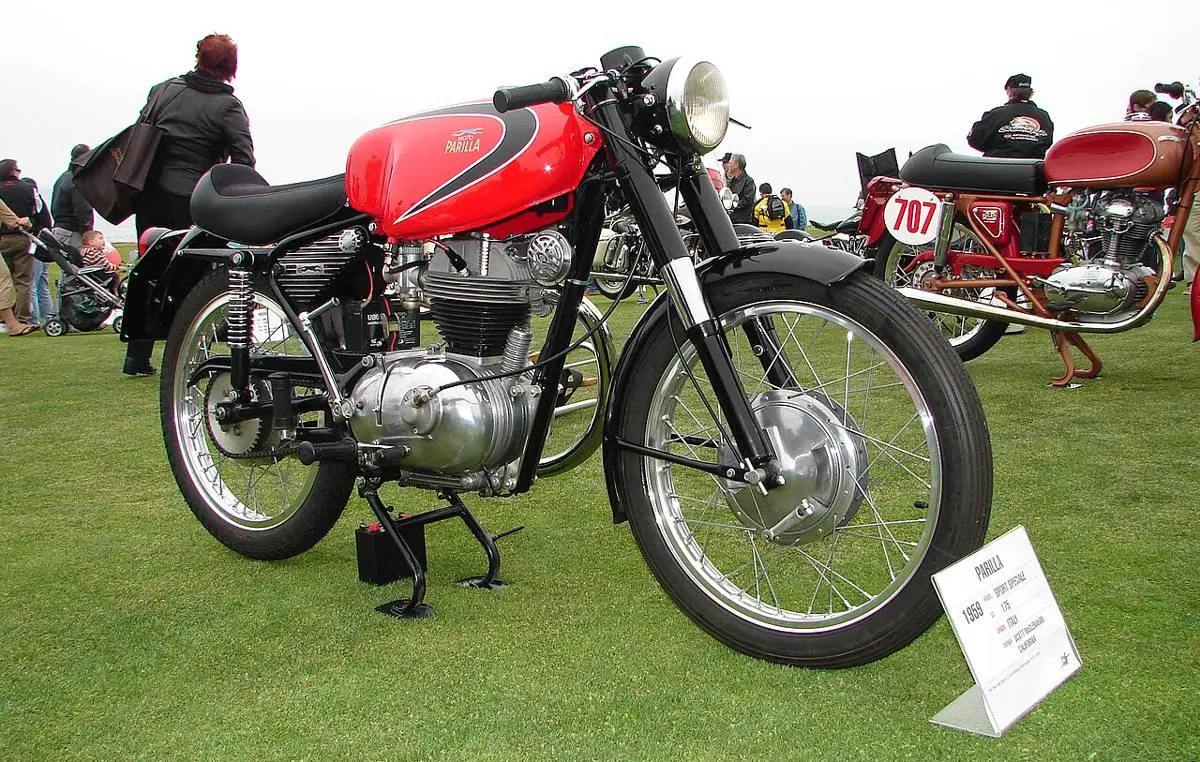
The desire to be reborn, to dream. In the immediate postwar period, Italy was hungry for beauty, hope, and speed. The roads still bore the scars of bombings, but inside the workshops something new, stubborn, and beautiful was being born. That’s where the Parilla motorcycle took shape, along with a certain idea of irreducibly artisanal motorcycling.
Giovanni Parrilla came from the world of diesel engines. When he decided to found his motorcycle company in 1946, he changed his surname just slightly: Parrilla became Parilla—quicker to pronounce, easier to remember.
The first model produced was a 250 cc four-stroke single overhead cam with bevel gears. From the outset, the bike was conceived for both racing and the road. The competition version went straight to the track, while the “Sport” road version, credited with 14 HP at 6200 rpm, was unveiled at the Milan Motorcycle Show in November 1946. The project arose from a collaboration with Alfredo Bianchi, who would later become one of the Aermacchi designers, and it already clearly represented the company’s technical approach.
In the following years Parilla grew, refined itself, changed its skin. Single cam, twin cam, larger carburetors, telescopic forks replacing now-outdated solutions. Power reached 21 horsepower, but more importantly, a style emerged: technical, rigorous, almost aristocratic. Perhaps too much so. Because that obsessive care, that precise choice not to compromise, made Parillas splendid and expensive. In the first six years, only three hundred were sold. Few—very few. Jewels for connoisseurs.
At the end of 1949 came the simple and economical 98 two-stroke, followed by the 125. Then bicycles, scooters, new models that kept an ever-changing lineup filled: Levriere, Bracco, Fauno, Setter, Veltro. Names taken from the animal world, as if Parilla wanted to give each bike a character, a precise temperament. In the 250 and 350 cc twins, Giovanni Parrilla’s love for British motorcycles was strongly felt: a declared, almost nostalgic passion.
Meanwhile, people changed. Alfredo Bianchi left, and William Soncini, Cesare Bossaglia, and Giuseppe Salmaggi arrived. It was a team that worked, experimented, and took risks. And in 1952 came the bike that would become the true mainstay of the company: the Fox 175. A balanced, intelligent motorcycle, so well designed that it remained in production for over ten years without upheavals. The Fox raced, won, and convinced. It won the Motogiro d’Italia in 1957, crossed the ocean, and won hearts in the United States as well. It carried the Parilla name far, all the way to Daytona.
Racing remained a lifeblood: Six Days, Valli Bergamasche, American dirt tracks. Parillas got their tires dirty with mud and glory, proving that elegance does not exclude toil. But the company also tried to reinvent itself. The Slughi, presented in 1957, was a strange and fascinating object: neither motorcycle nor scooter, with a load-bearing sheet-metal body. The press applauded it; the market betrayed it. The more traditional Olimpia followed, then other attempts: the Oscar scooter, scramblers, motocross bikes.
In the 1960s the market changed, and tastes moved faster than the company’s financial means. In 1962 Giovanni Parrilla stepped away, entrusting his creation to a financial company. Production continued for a few more years, until 1967, but the original spirit was already dissolving. Parrilla, stubborn like certain workshop men, made one more attempt with a motocross model, the MP. It was the final act.
The Parilla brand fell into oblivion for many years, until 2017, when it was repurchased and brought back to life in the electric bicycle sector, maintaining a symbolic link with one of the most particular stories in Italian motorcycling.
Continue reading
You might also like
More news

Popular articles
Loading