The Ducati 900 SS is one of the most iconic Italian motorcycles of the 1970s. Produced from 1975 to 1982, it won over enthusiasts and racers with its desmodromic engine and sporty design, earning its place in history both on the road and in competition.
It wasn’t just a motorcycle; it was the perfect synthesis of elegance, technology, and pure sportiness, ready to usher in a new era for the Bologna-based company. Even the simple play of colors—blue and silver inverted on the fairing—spoke to its desire to stand out.
Its beating heart was the “square-case” engine from the 860 GT, reimagined for a sport bike: desmodromic head, no electric starter (replaced by a more assertive kickstarter), and a raised compression ratio of 9.5:1. A combination that made its intentions clear. The 900 SS wasn’t built for comfortable daily use, but for those seeking pure excitement in every corner.
Over the years, the bike evolved: in 1977 the second series arrived, with slight tweaks to the tank. In 1978 the third series introduced a two-seater version and a new black-and-gold color scheme, along with the first alloy wheels. In 1980, the fourth series brought further aesthetic and technical updates. Meanwhile, Ducati continued to offer enthusiasts special parts to boost performance: open exhausts, hotter camshafts, jets and needles for the carburetors, an oil cooler, and a full fairing.
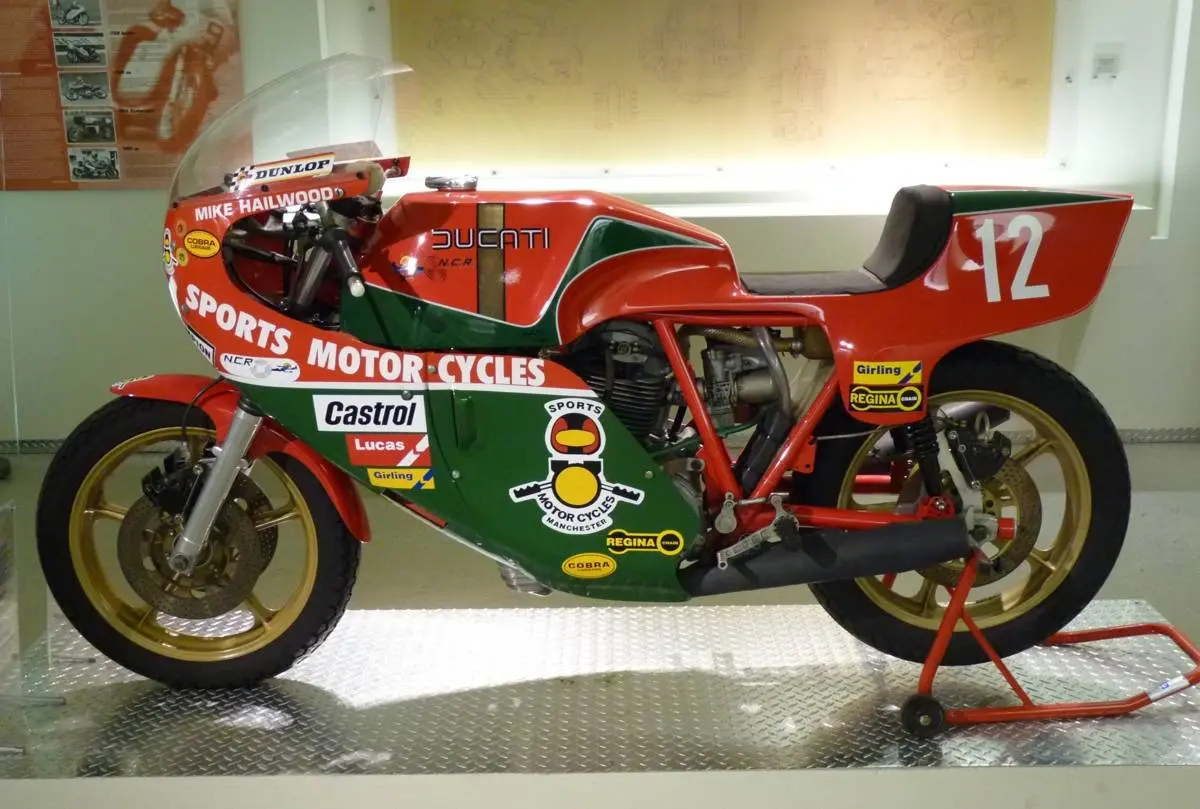
In 1978 came glory at the Tourist Trophy. Mike Hailwood, riding a 900 SS tuned by NCR and prepared by the Ducati dealer in Manchester, clinched victory in the TT-F1 category. The bike, with displacement increased to 883 cc and a gearbox revised by Hewland, unexpectedly beat the more powerful Japanese machines thanks to its agility. Only at the checkered flag did the engine give out: the lower bevel gear of the rear cylinder disintegrated, preventing post-race noise checks. A small technical drama that, paradoxically, made the victory even more epic. From that feat was born the Mike Hailwood Replica, an immortal symbol of a triumph and an era.
The 900 SS’s career ended in 1982, with 6,103 units built, replaced by the 900 S2. But in that period, between road and track, this motorcycle wrote an indelible page in Ducati’s history: a model that combined aesthetics, engineering, and legend, and one that still makes enthusiasts’ hearts race.
Continue reading
You might also like
More news
Popular articles
Loading