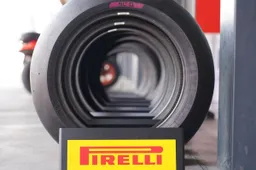
The incident at the start of the Hungarian GP has unleashed a storm that won’t pass without consequences. A mistake by Jorge Martin in the first braking zone at Balaton Park triggered a domino effect, on track and beyond. The MotoGP paddock is in turmoil after the exits of Bezzecchi, Fernandez, Di Giannantonio, and Aldeguer, all caught up in the smash. Who bears responsibility, and how will the World Championship organizers react?
The incident at Balaton Park
The main author of this disaster, much to his own dismay, was Jorge Martin. The Madrid rider, starting from eighth, aimed to quickly climb positions and latch onto the leading group. But things went wrong. The Aprilia rider from Madrid missed his braking point at Turn 1, completely lost control of the RS-GP, and plowed into several colleagues who were on the racing line at that moment.
The only silver lining is that none of the riders involved suffered serious physical consequences—no fractures, only bruises. The mistake will be costly for “Martinator,” who at the next MotoGP round in Brno will have to serve two Long Laps that will prevent him from targeting the win, and perhaps even the podium. Jorge publicly apologized on social media and was placed under a media blackout along with his garage mate Marco Bezzecchi, who lost 30 points in the overall standings to direct rival Marc Marquez over the Hungarian weekend.
Jack Miller’s analysis
But the responsibility does not lie solely with Jorge Martin. As veteran Jack Miller pointed out, technology also plays a role here. The Australian from Pramac Yamaha witnessed the entire scene live and points the finger at holeshot devices. "Jorge was trying to engage the device, the bike got unsettled and then, when it starts hopping, it’s hard to stop it... I’ve said it all along, since Barcelona, ever since we saw two crashes at Turn 1—the same thing every time: remove the starting devices so we’re all on the same level."

How starts are changing
MotoGP is ready to take corrective action. The start-line crash in Catalunya, in which Johann Zarco suffered a severe knee tendon injury, was the last straw. After the Hungary weekend, urgent changes are needed to prevent similar situations from recurring. The organizers have developed an emergency plan with the teams, to be implemented in two distinct phases starting next July.
The first change will be seen on track at the Sachsenring. From that race onward, the rows on the starting grid will be much more spaced out. Instead of the current nine meters between rows, the gap will increase to twelve meters. The goal is to give riders more room to accelerate and to have a much more spread-out pack by Turn 1.
Holeshot devices banned
The second phase of the plan is the most important and will kick off right after the summer break at the Silverstone circuit. Starting from the British GP, the use of holeshot devices for starts will be completely banned. MotoGP prototypes will no longer be allowed to launch with the front or rear suspension compressed to improve traction off the line. Riders will still be able to use the rear ride-height device during laps to lower the bike on exit from slow corners and gain acceleration. The restriction aims to eliminate the dangerous excessive speed reached in the first meters after the start.

If you enjoy our journalism, you can select it as a preferred source by clicking HERE
Continue reading
You might also like
More news
Popular articles
Loading