Superbike, Manuel Puccetti: "It’s unfair to rein in Ducati; the other manufacturers need to wake up"
Superbike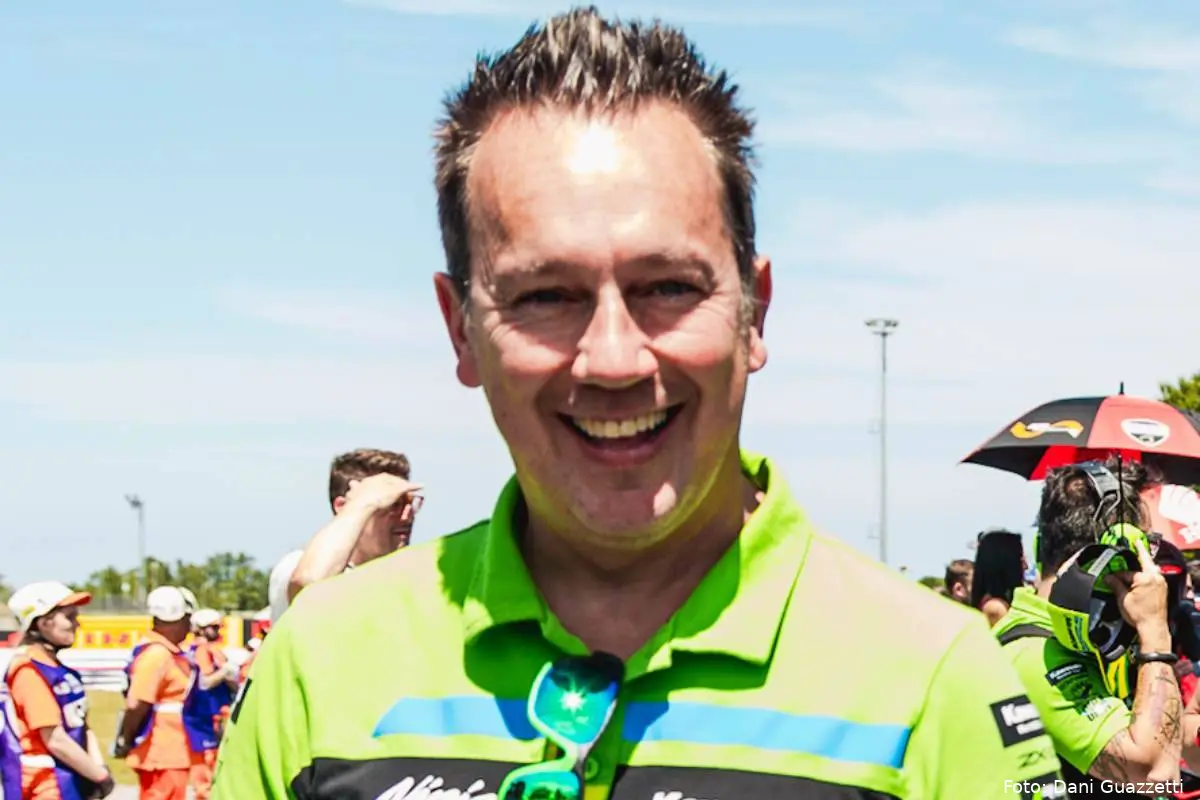
The Donington round, Kawasaki’s future in SBK and SBK regulations: Corsedimoto’s interview with Puccetti.
A nightmare weekend at Misano Adriatico, but three top-10s at Donington Park for Garrett Gerloff and the Kawasaki WorldSBK Team. In Supersport, Jeremy Alcoba took his first podium of 2026, while Dominique Aegerter continued to struggle with the other Ninja ZX-6R 636. Team principal Manuel Puccetti spoke to us about the last round before the long break and other key topics.
Superbike–Supersport, Kawasaki: Corsedimoto interviews Manuel Puccetti
Manuel, how do you rate the weekend at Donington Park?
“It was definitely the best round of the season. In Superbike, finishing close to the top five with Ducati at such a high level is an excellent result for Kawasaki. We’re happy—we’re back to our pre-Misano results. We’re also satisfied with the first Supersport podium of the season. I think we could have had a second one if an overly aggressive rider hadn’t taken Alcoba out halfway through Race 2. I believe the Ninja 636’s potential is still largely untapped: there are weekends when we’re podium contenders and others when we’re farther off. Unfortunately, we’re racing with just one spearhead. We hoped to have two, but Aegerter is going through a tough 2026.”
We know one of your big goals is to field two Kawasaki Ninja ZX-10RRs on the World Superbike grid. Will you manage to double up in 2027?
“Within about a month I should have a clearer picture. I’m trying to make the project happen, but it’s not easy for budget reasons. Anyway, there’s no final decision yet—I’m working on it.”

Manuel Puccetti is banking on David Salvador for the 2027 World Supersport Championship
For 2027 you announced the signing of David Salvador in Supersport. What do you expect from the current Sportbike World Championship leader?
“We certainly won’t put pressure on him at the start; he’ll need time to grow. He’s already done a year in Moto3, two in Supersport 300, and this year he’s racing in Sportbike: he’s young, but not totally green. We expect him to adapt fairly quickly, also because he’s currently using the same bike, albeit limited by the Sportbike regulations. Kawasaki wanted to introduce the Ninja 636 into the new category for young riders precisely to help them make the jump to Supersport. Salvador is a rider with great potential, but we need to wait to see him in action in 2027 to assess him concretely.”
Regarding the choice of the second rider for the Kawasaki WorldSSP team, what are your plans?
“Around September we’ll have a clearer idea. At the moment, we have about ten riders on the list that we’re evaluating. I don’t know if keeping Alcoba is an option, because it’s his second season with us and we expected a bit more. In 2027 we’d like to aim higher with our technical package.”
Back to Superbike: we’re seeing a clear dominance from Ducati, which is sparking new discussions about possibly changing the technical regulations to make the championship more balanced. What’s your position?
“Ducati already had the benchmark bike in 2025 and managed to improve it further, so maximum respect to this manufacturer for what they’re showing with both the factory and private teams. All Ducati riders are competitive. That said, in my opinion the FIM should open up to greater super concessions, so that the bikes that are currently maxed out can get some extra help and be a bit closer to the Ducatis. We also have to consider the Michelin question—the new tires we’ll have in 2027 could reshuffle the deck.”
So you’re not among those pushing to penalize Ducati in order to gain an advantage.
“From a sporting perspective, it wouldn’t be right to hobble Ducati, a manufacturer that has clearly done a better job than the others. Doing so would also dampen other manufacturers’ motivation to build new models and developments. I think it makes more sense to grant greater technical concessions to the brands that need to catch up. It’s too easy to ask to slow Ducati down—the other manufacturers need to wake up and work more effectively to improve.”

Another hot topic is the introduction in SBK of Brembo carbon-ceramic brake discs from 2027. We’ve discussed it with other colleagues of yours, who were quite critical, especially about the poor communication. What do you think of this change?
“It was a decision made by the organizer, and we were presented with a fait accompli. We acknowledge it and will have to adapt. Brembo has said that, over a two-year view, the cost will be essentially the same as what we currently bear, because carbon-ceramic discs last much longer. We need to work on it to get a clear idea and understand whether there really won’t be an increase in expenses. At the moment, we don’t have official data, and there hasn’t been a meeting involving the organizer, the manufacturers, and the teams to give us precise information.”
Do you also think the way communication is handled in World Superbike needs to be reviewed?
“We definitely miss an IRTA, which in MotoGP is the teams’ association. In Superbike it doesn’t exist. An initiative has started to create an association of independent teams, but it would be important to have a body that represents all the squads, not just the private ones. Whether they’re factory teams or independent teams, unfortunately there’s no involvement in the decision-making process. I hope that in Superbike there can be a change in this respect and also in terms of communication.”
Continue reading
You might also like
More news
Popular articles
Loading