Superbike and experimentation: how will Brembo's carbon-ceramic brake discs perform?
SuperbikeFriday, 12 June 2026 at 15:24
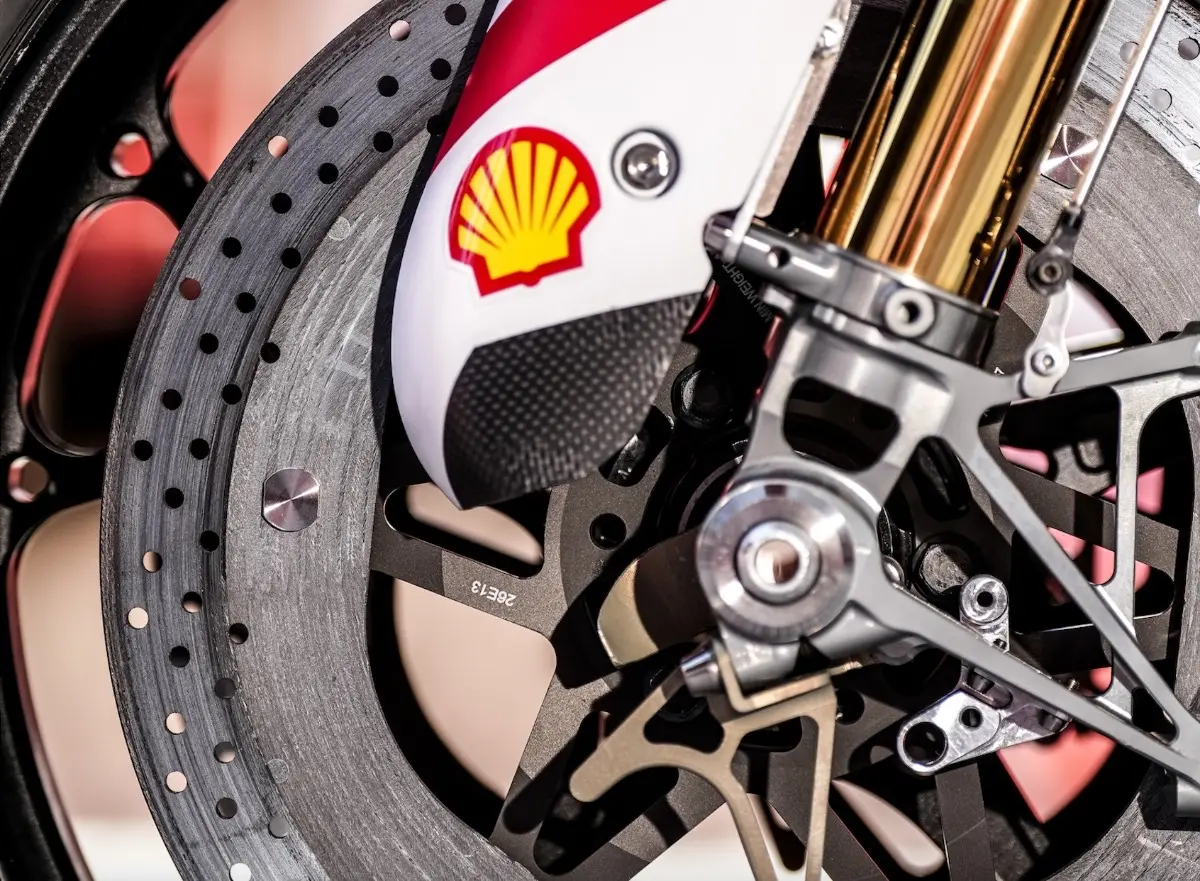
Brembo has made official at Misano the sole supply of brake discs in carbon-ceramic material for all riders on the 2027 grid. Already now, all teams use braking systems. The novelty lies in the material: steel discs are being retired.
We have already discussed it extensively here. Carbon-ceramic discs, already widely used in motorsport, will soon become the new technological frontier in production sportbikes as well. This is due to a series of advantages: to begin with, they are lighter than steel, reducing unsprung mass and thus improving handling. But above all, they will ensure more reliable braking, because this type of material is more heat-resistant than steel.
Will there be adaptation issues?
Several World Championship teams have already tested them, and the test riders were enthusiastic, saying the braking feels “easier.” In other words, for the same performance, this solution offers exceptional feel and a greater sense of safety. So it is reasonable to expect there will be no adaptation issues, nor performance drawbacks—in fact, it will outperform steel in terms of braking stability. In addition, carbon-ceramic material does not wear out in the same way, so component longevity will be a key factor. The introduction of carbon-ceramic brake discs coincides with a change of single tire supplier. Pirelli will in fact make way for Michelin, now the former exclusive supplier in MotoGP.

From track to road
“With Hyction (a brand born from the mix of hyper and action, ed.) we’re introducing a technology designed to offer riders a more direct and predictable relationship with braking,” explains Mauro Piccoli, Brembo’s marketing director. “WorldSBK is our ideal laboratory: here we work closely with the best riders and teams in the world, and what we develop on the track directly fuels innovation destined for road applications as well.”
That’s why Ducati, blazing the trail, chose this technology for its flagship production model, the Superleggera V4 Centenario. Thus, the technical supply agreement reaffirms the role that the Superbike World Championship has played as a development laboratory.
And the costs?
“They will be identical to current ones,” assures Brembo. So, at least on paper, the material revolution brings only advantages. Now it will be up to riders and teams to adapt to the new technology: in the end, the real ambassadors of this new product will be the very protagonists who race with it.
Read also
Corsedimoto on Instagram: subscribe here to our news channel
Continue reading
You might also like


More news

Popular articles



Loading