MotoGP Between Speed and Danger: Why Rear Ride-Height Devices Are Controversial
MotoGPThursday, 13 August 2026 at 07:33
The safety issue in MotoGP is not resolved: it’s time to ask a few questions about the rear ride-height devices too...
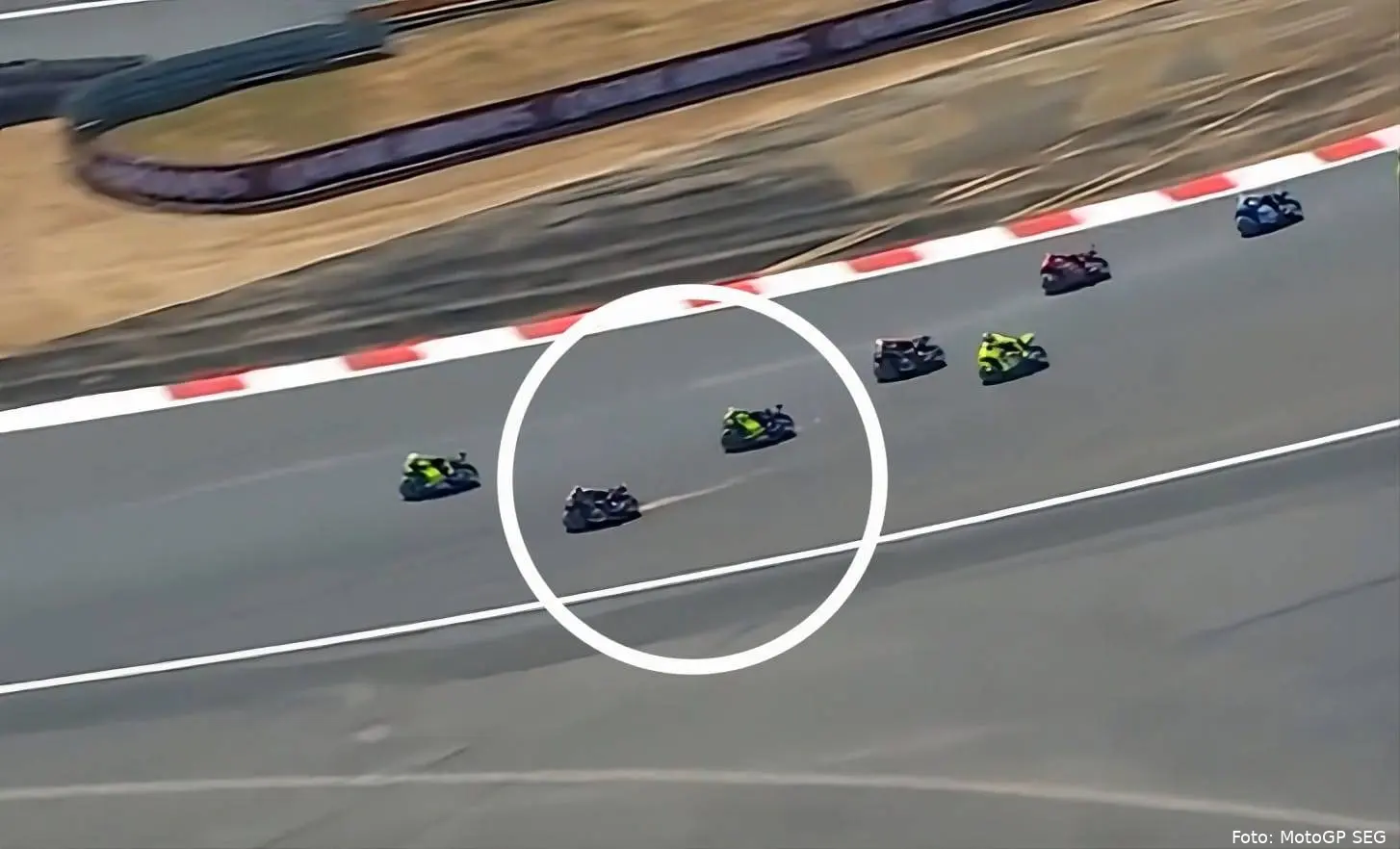
Did you see the sparks from Martin’s and Ogura’s bikes at the start of the British GP? It all came down to the rear ride-height devices, the ones still on MotoGP bikes, which got stuck. We’ve now lost count of the problems caused by these devices—an added on-track hazard until they can be released—and at times their failure has even forced some riders to retire from races. That wasn’t the case last weekend at Silverstone; in fact, it was the “fault” of the two Aprilia riders: they didn’t brake hard enough at Turn 1 to deactivate the rear device, so the two RS-GPs stayed lowered longer than they should have (as both reported, up to Turn 3), and the riders lost several positions in the opening moments of the GP. But it’s worth discussing: the front devices have been removed, yet there are major risks with the rear ones too, as they are still present on the premier class machines.
MotoGP, the contradiction: one device removed for safety, risks remain with the other
As highlighted by our colleagues at Paddock-GP, the incident raises an important issue. Since the last Dutch Grand Prix, front ride-height devices have been banned, following the terrifying moments in previous GPs—most notably the horrific incident in Catalunya with the triple crash at Turn 1 involving Zarco, Bagnaia, and Marini. Hence the decision to bring forward the ban that was set to take effect in 2027, when all these contraptions will disappear with the 850cc era: from that event at the TT Circuit Assen, MotoGP bikes no longer have front devices for safety reasons. But it seems the issue has only been half-solved, especially after what we saw just this past Sunday on the British track. There’s also the problem of the rear ride-height devices.
If a bike doesn’t immediately return to normal height, it becomes noticeably slower and less maneuverable amid a tightly packed group of machines at full throttle: a major risk at the start of a race, when all riders push to gain as much as possible over their grid positions. Unlike the front units, however, the rear ride-height devices are an integral part of current MotoGP bikes, so removing them would be a significant problem. Silverstone showed that a technology capable of creating dangerous situations at the start has been banned, yet another remained that could cause a very similar issue. And it would be wise not to wait for another incident like this to address it!
Continue reading
You might also like

More news

Popular articles

Loading