Is Nicolò Bulega boring? No—he's the victim of a Superbike series without an identity
SuperbikeWednesday, 06 May 2026 at 11:00

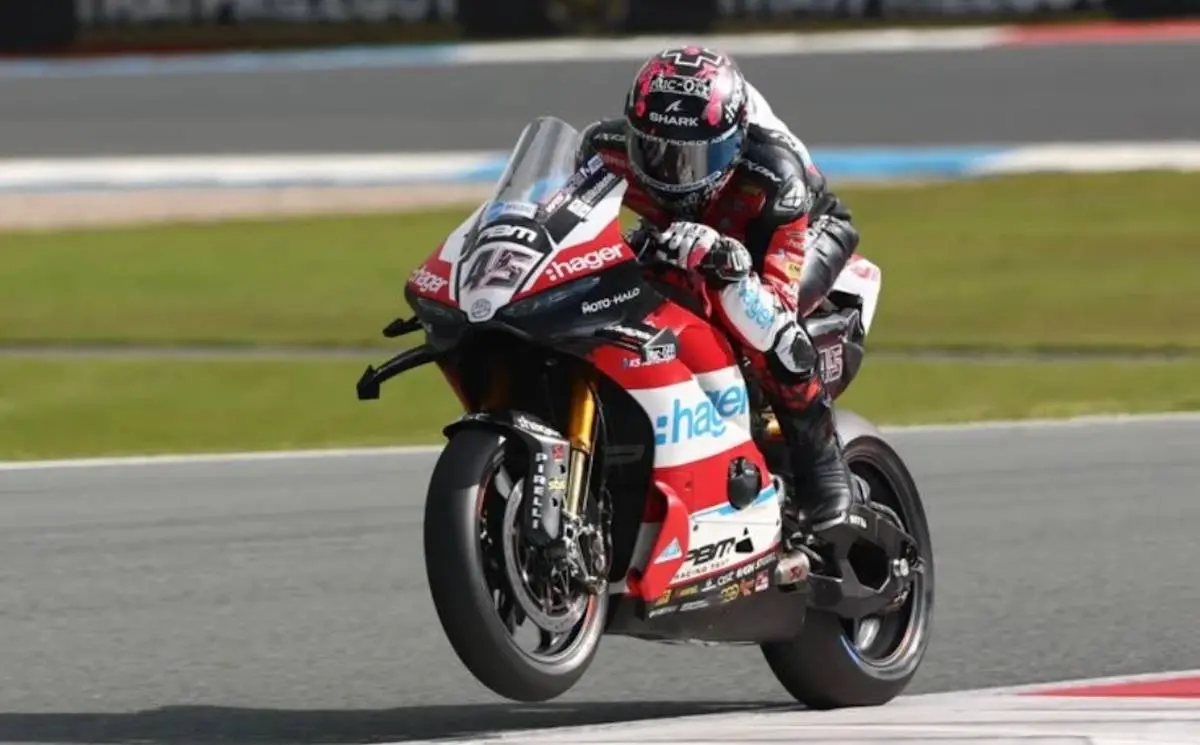
In today’s Superbike, the usual suspect always wins: Nicolò Bulega. But instead of celebrating this superb rider, who seems destined for MotoGP, they blame him for it. “He’s winning against no one, it’s easy with this Ducati: it’s boring to always see the eleven out front.” These days, firing off a verdict on social media takes a second. But is Bulega the executioner or the victim of a Superbike system that doesn’t work?
I lean toward the latter, and to explain the concept I’ll take you back to the 2003 World Championship season, which is being compared to the current one these days. That year, Ducati won every race (12 rounds, 24 heats), as could easily happen again. But the parallel ends there. Back then things were very different, and I’ll explain why. With a fundamental “historiographical” premise. Today’s fans and commentators talk about Superbike’s past based on the digital traces it left behind, almost exclusively lists, standings, and statistics. But there’s a whole history buried in paper archives: knowing it completely changes the yardsticks for judgment.
What was it like in 2003?
At the end of 2002, the year of the formidable duel between Colin Edwards and Troy Bayliss right up to the Imola finish line, the Japanese manufacturers had pulled back, except for Suzuki, which held on because the World Championship arm was Francesco Batta’s Alstare team, a key figure in the success of Superbike’s golden era. So Ducati was racing against (almost) no one: among the 24 permanent entries, 15 rode Ducatis, the only brand (besides Suzuki) to field a factory team with Neil Hodgson and Ruben Xaus. But the overall picture was anything but drab. For starters, Superbike had the scale of a real World Championship: that season (12 rounds, like now) it visited Australia, the United States, and Japan. In Europe there were Monza, Imola, Misano, Brands Hatch, and Silverstone, temples of racing. Now we go to Balaton Park, Most, and Cremona: with all due respect, not exactly cathedrals of passion.
The impact of the wild cards
The 2003 permanent entries were only two more than now, but that championship hosted as many as 36 wild cards. Not just any riders, but big names like Mladin, Kagayama, Bostrom, along with all the British Superbike starlets who enriched the cast at the two British rounds. The two Ducati factory riders wreaked havoc: Hodgson won 14, Xaus 6. But they had to sweat for it, almost every time. Bulega clears off into the distance, and after each win you wonder whether he really pushed, or if he’s keeping something in his pocket.
Live on Rai and huge crowds
That season, RAI held the TV rights, and Monza drew 72,000 spectators who came to see the Ducati one-make show. Back then, at certain circuits, people showed up regardless, because Superbike had become a cultural phenomenon, a shared passion, a lifestyle. Whether it was Bayliss or Hodgson was almost secondary. So even though the grid was poorer than in the golden years, Superbike was still a mainstream World Championship, followed by ordinary people, not just enthusiasts. La Gazzetta dello Sport devoted full spreads, not today’s two lines—on a good day. Look below: here’s how La Gazzetta dello Sport presented the 2013 Championship. Read the headlines and how the riders of the time were presented: like heroes, with a clear identity, characters out of a movie. Today Superbike doesn’t reach the general public and doesn’t even appeal to the hardcore base anymore, who may keep following it but no longer feel represented.

What was the secret?
Simply this: a direct and enthusiastic way of telling its story. Read what I wrote in Motosprint in the opening article on the Monza round: “…It was supposed to be the season of big absences—Honda, Aprilia, Kawasaki—and of regret over the departure of the old heroes Troy, Colin, and Noriyuki. Superbike was expected to weep tears and blood, but go tell that to the people of Monza: they were there from early morning, armed with flags, banners, and immense passion. They paid an entry fee that wasn’t exactly cheap (€40, not peanuts in these times of crisis) convinced that Superbike wouldn’t let them down—and that’s how it was.” In those days, in any case, the alternative World Championship always provided some angle to celebrate itself, to draw attention. It knew how to tell its story magnificently; it conveyed enthusiasm, passion, warmth. Regardless.
And now?
Today, nothing: between promoter, teams, and riders, it seems there’s a race to make themselves more invisible and less appealing. That Superbike, in 2003, knew how to sell what it had, not cry over what it didn’t. There was openness, vision, hospitality, a desire to win people over and excite them. Now it’s all gone: teams worry about the size of the hospitality suite and about posting on social media, without asking themselves whether it wouldn’t be better to open the doors, invite major media with real journalists. Simply, to show themselves. In today’s Superbike there are nobodies who are harder to meet than Marc Marquez, who by contrast is very clever and knows how to market himself.
The money’s gone too, and it’s not just the crisis or the fact that hypersports don’t sell anymore. In September 2003, Neil Hodgson appeared in the glossy pages of SportWeek, La Gazzetta’s prestigious magazine. For the interview and photo shoot, I set off from Italy with Matteo Cavadini—already then the number one photographer—to visit him at his home on the Isle of Man, naturally the previous June, in the middle of the TT. The operation cost a fortune, but back then Ducati had a fashionable sponsor and presenting itself with glamour in certain media was the main investment. Hodgson presented himself like a star, at the stove in his sea-view villa, with his wife beside him and on the Ducati along the TT roads.
Today the only true champion, instead of being celebrated, is pointed to as “the problem.” In 2003, Nicolò Bulega would have done the rounds of all the covers that mattered.
Corsedimoto on Instagram, follow us here
Continue reading
You might also like
More news
Popular articles
Loading