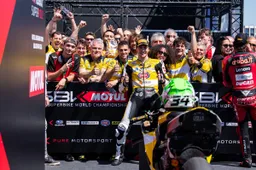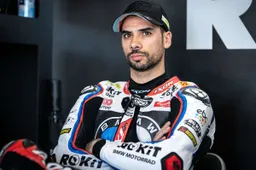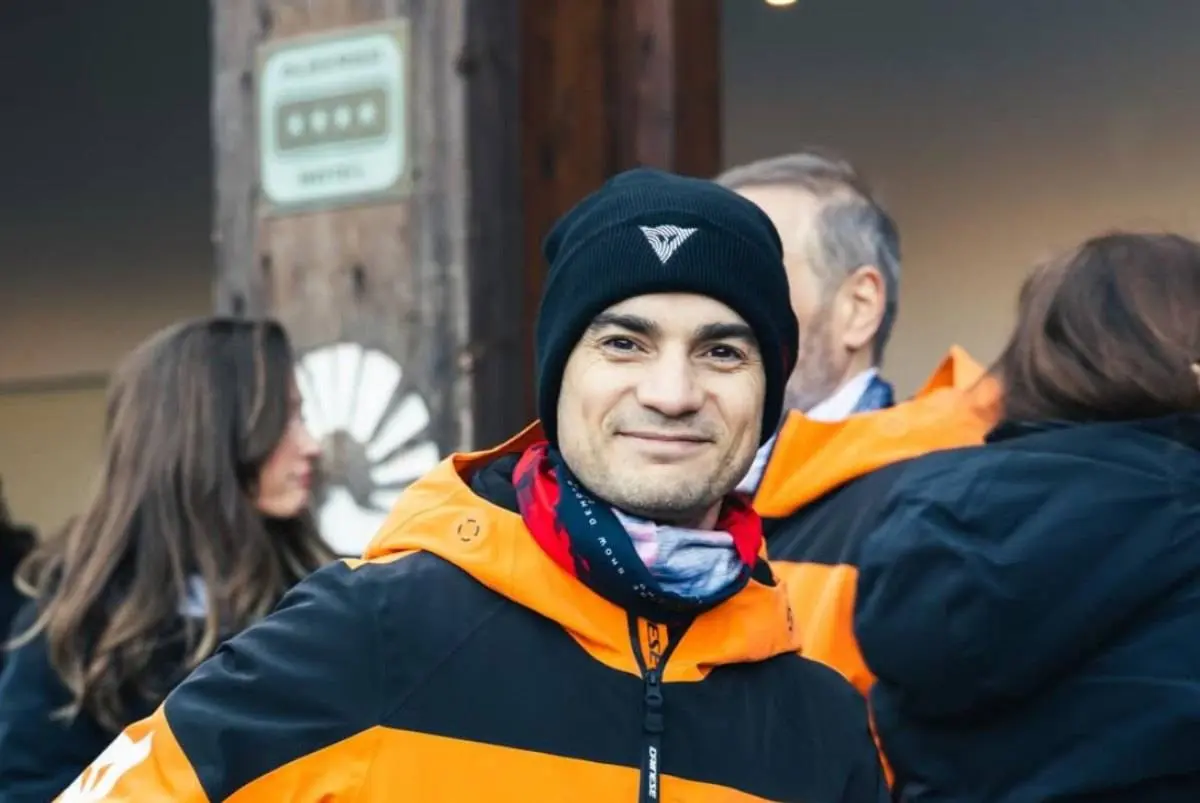
Marc Marquez is not an easy teammate for anyone. Since his MotoGP debut in 2013, he has shared a garage with Dani Pedrosa, Jorge Lorenzo, his brother Alex, Pol Espargaro, and finally Pecco Bagnaia. Invincible (or almost) in head-to-head battles, the nine-time world champion has also brought tensions to the garage. As recounted by compatriot Pedrosa in an interview on the Fast & Curious podcast.
Honda’s golden years
The passage of time helps clarify past events that were not perfectly clear before. Marc Marquez is racing his 14th season in MotoGP, after stepping up to the premier class in 2013 with Honda. Back then, the factory team’s RC213V had star rider Dani Pedrosa, and it was the golden era of the Golden Wing, which had bet on the winning horse from Cervera. It was a period of absolute dominance, in which they won almost all the Triple Crowns, simultaneously clinching the riders’, teams’, and constructors’ championships. But behind those trophies lay a reality that Dani Pedrosa has now chosen to explain transparently.
Marc’s arrival at HRC
The MotoGP Legend, now a KTM test rider, recalled what it means to share a garage with a phenomenon like Marc Marquez. And how the atmosphere at Honda had nothing to do with the camaraderie felt today at other manufacturers. "When Marc arrived in the team, the atmosphere was obviously very tense, because at Repsol Honda, at least in those days, the two riders were like two separate teams. There was no teamwork; you worked to see who was the best, and that was it."
They were two independent structures under the same roof, fighting for one single objective: winning the world title. A philosophy quite different from today’s, where there is collaboration between riders to improve the bike and data sharing to shave off a few tenths per lap. In the end, the fastest rider was the one who dictated development and received most of the engineers’ attention.
A more aggressive approach
The arrival of a rookie like Marc Marquez upended Dani Pedrosa’s modus operandi, as his approach was much more methodical and measured. Instead, #93 came to HRC with a shocking mentality that amazed everyone, always seeking the limit, even at the cost of crashes. Marc came from the lower classes with a hunger for victory, at the peak of his human and professional energy. "My approach to racing has always been to minimize risk, obviously, because every time I crashed I got hurt. I couldn’t risk five crashes in a weekend and then finish on the podium. For me it was unthinkable," Pedrosa recalls.
With Marc’s arrival everything changed, and his method became a winning one. "He would destroy five bikes, but on Sunday he’d win the race or finish second or third. So what I learned from him was that different way of approaching the weekend."
Marquez’s supremacy
The hierarchy within the garage gradually changed, with the brand’s focus shifting to the new phenomenon. For the first two or three years, Pedrosa still had a significant role in developing the Honda RC213V. As soon as Marc began regularly winning MotoGP races and titles, the Japanese manufacturer put everything behind him. "I was able to continue developing the bike and have a say in some decisions. But it’s true that after those three or four years, Marc, who kept winning, had more influence and, with more experience, decided more precisely which components suited him best."
After a few seasons the RC213V did become a winning bike, but thanks to Marquez’s qualities. Honda turned out to be a bike that only Marc could push to the limit, as evidenced by the drought of success after the 2020 injury. A drought that continues to this day and that the Japanese manufacturer seems unable to fill.
Continue reading
You might also like
More news
Popular articles
Loading