Moto Guzzi 500 V8: the futuristic masterpiece that pushed boundaries and took on rivals in the 1950s
StoriesFriday, 30 January 2026 at 19:00
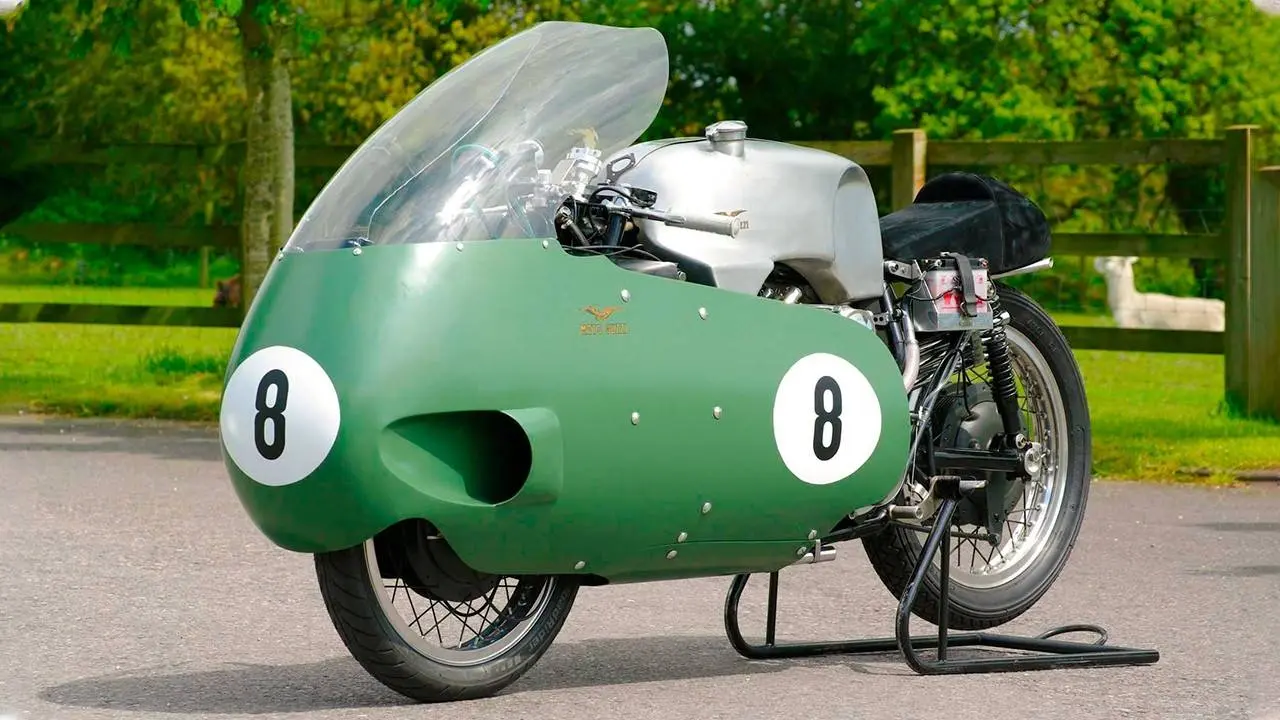
Moto The Moto Guzzi 500 V8 is a masterpiece of Italian engineering so extreme and visionary that it still seems, even today, like an object arrived from the future.
It all began in the early 1950s. Moto Guzzi dominated the smaller classes, but the 500 was taboo. Gilera and MV Agusta reigned supreme with their four-cylinders, and in Mandello frustration was beginning to set in. The solution couldn’t be a copy; it had to be a leap into the unknown. In 1954, engineer Giulio Cesare Carcano was tasked with creating a truly revolutionary motorcycle.
Together with Enrico Cantoni and Umberto Todero, he came up with an idea that at the time seemed like pure witchcraft: a 90° V8 four-stroke engine. It was a mechanical microcosm of staggering precision. Eight tiny carburetors had to work in perfect harmony to feed a power output the world wasn’t yet ready to handle.
When the first prototype appeared in 1955, everyone was left speechless. Hidden beneath a bell-shaped fairing that wrapped the bike like an aluminum shell, the V8 could unleash 80 horsepower at the crank—figures the competition would struggle to reach even ten years later.
But it wasn’t just power: it was pure speed. In an era of often bumpy tracks and city circuits, this missile exceeded 280 km/h. The riders of the day, such as Bill Lomas and Ken Kavanagh, found themselves with a projectile in their hands that laid bare the limits of the surrounding technology. Frames flexed, spark plugs burned out and, above all, tires crumbled under the onslaught of an unprecedented torque delivery.
The official debut in the 1956 World Championship was a crucible of glory and pain. The bike was blisteringly fast, often the quickest on track, but its complexity was a double-edged sword. Joys and sorrows: lap records shattered, followed by retirements due to overheating or minor mechanical failures. This motorcycle demanded obsessive maintenance, and the running costs made the factory’s balance sheets tremble.
In 1957, the tune finally seemed to change. The V8 began to show a semblance of solidity, winning the Shell Gold Cup at Imola with Dickie Dale and finishing just off the podium at the perilous Tourist Trophy and at Hockenheim. The world expected the definitive breakthrough for the following season, with a 90-hp evolution already on the test bench and the shadow of John Surtees ready to swing a leg over the saddle. Instead, just when things looked brightest, the curtain fell. In September of that year, Moto Guzzi announced its withdrawal from racing along with Gilera and Mondial. The “Non-Participation Pact,” dictated by a sales slump caused by the explosion of small cars, erased in an instant the dreams of glory of a motorcycle that left the stage without world titles but with an aura of legend.


Continue reading
You might also like

More news
Popular articles
Loading