When you dream, it’s only right to dream big. And who doesn’t dream of a Zonda, a Huayra, or the Utopia? Paganis are pure mechanical and engineering poetry. Horacio Pagani is a motorsport legend, but few know he started out with motorcycles.
Horacio Pagani was born in Argentina to a family of Italian origin. He soon became passionate about engines and began making models with steel and aluminum sheets, plastic, and fiberglass. At fourteen, he was given a 1950s Sachs Televel engine as a gift—damaged and out of order.
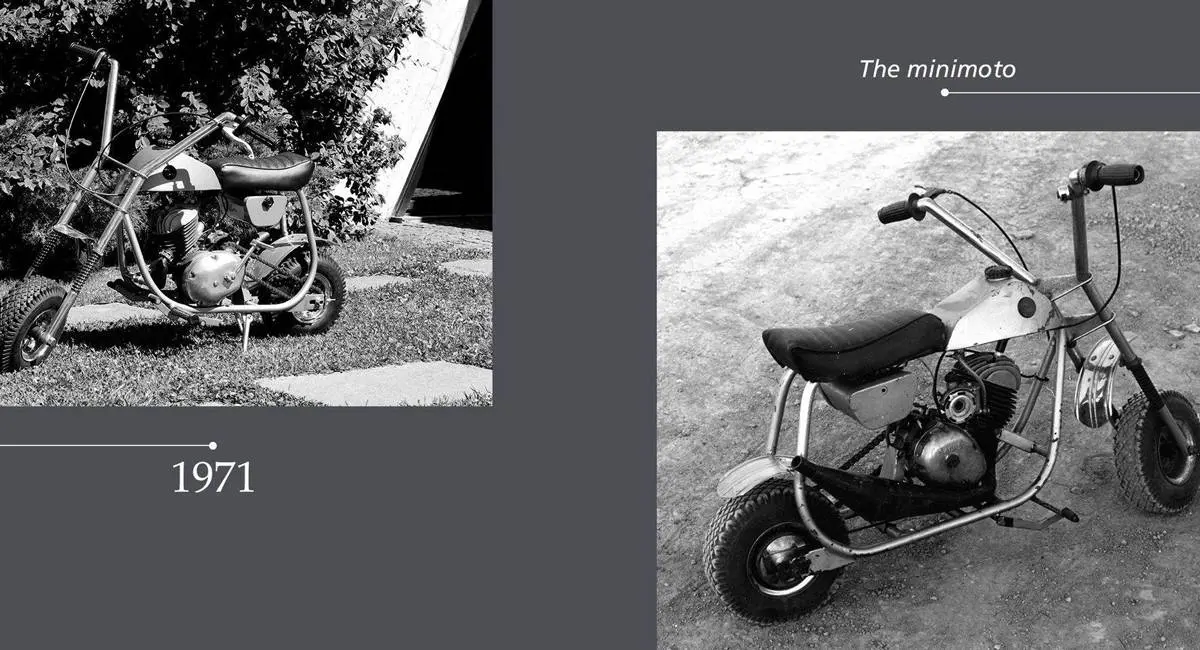
Together with his friend Gustavo Marani, nicknamed "Gustavito," he initially thought of building a go-kart. The two went to buy the four small wheels they needed, but at that very moment came the insight that changed their plans. With a single go-kart, they wouldn’t be able to have fun together, so they decided to abandon the original project and build two separate mini-bikes. The search for parts led Gustavo to uncover a second engine, a 48 cc Deem of the type then mounted on Italian Legnano motorcycles. They thus turned the Marani family workshop into the headquarters of this artisanal challenge.
Although the frames had a similar layout, the two creations reflected profoundly different mechanical souls. Horacio’s bike carried the 125 cc Sachs unit, while his friend’s was powered by the small 48 cc. The difference, however, wasn’t just in displacement, but in construction philosophy. Every single detail—from the tanks to the fenders, from the forks to the exhaust pipes—was forged entirely by hand by the two boys. The result was two unique machines. Gustavo’s bike evoked the style of choppers, while Horacio’s took on the aggressive lines of a motocross bike.
Already visible in those adolescent works was the obsessive care for aesthetics and proportion that would make the Pagani brand famous worldwide.
The final result was so surprising and original that the owner of a local shop decided to display them in his window to attract passersby. Today, those prototypes are on display at the official museum in San Cesario sul Panaro, alongside multi-million-euro hypercars. This testifies to how Horacio Pagani’s genius wasn’t born in Lamborghini’s tech labs, but amid the sparks and grease of an Argentine workshop, where handmade two-wheelers were worth more than any dream of glory.
Continue reading
You might also like
More news



Popular articles

Loading