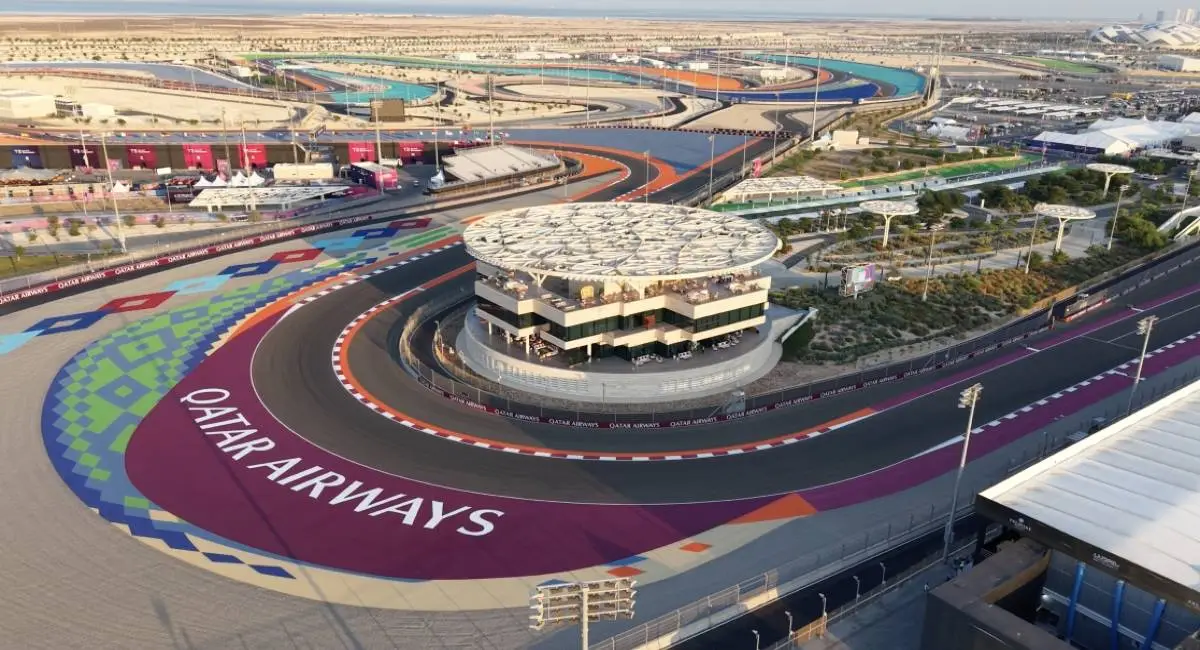
While F1 has announced that it will race as scheduled in Qatar, as it will at the following round in Abu Dhabi, the MotoGP Grand Prix remains a subject of debate.
In Australia, Carlos Ezpeleta, currently the championship's top executive, said that, under pressure from riders and teams, he would specifically ask the local organizers for guarantees. But the organizers' statement seems intended to calm things down. Qatar has every interest in ensuring that the race goes ahead: holding the event will show the world that everything is fine and business is continuing as usual.
Qatar is not a "normal" Arab country: it is one of the most important US military outposts in the region and, returning to motorsport, has very close ties to both F1 and MotoGP. Qatar Airways, a premium sponsor of both championships, is wholly state-owned. So, on the one hand, Qatar has a very strong interest in "normalizing" the situation. On the other, it cannot guarantee that nobody might consider carrying out an attack, perhaps a merely symbolic one, with an enormous global impact.
What's more, since the responses are expected to be positive, neither F1 nor MotoGP has a Plan B, quite simply because one won't be needed—and because it would be impractical. Four rounds remain on the calendar: Malaysia, Qatar, Portugal and Valencia, at the end of November. The Losail GP has already been postponed from April because of the war in Iran, and the situation in the region has not eased in recent weeks. Just a few days ago, Saudi Arabia was attacked by Houthi rebels, who targeted civilian infrastructure.
European governments on alert
European diplomats are urging caution. Spain advises postponing travel until further notice, Germany is taking the same position, while France warns that it may have difficulty providing consular assistance in an emergency. Italy recommends reconsidering travel to Doha and avoiding stopovers there as well. Belgium advises against non-essential travel, citing the risk of a sudden airspace closure.
This is precisely the scenario causing the greatest concern: an escalation while the paddock is already in Qatar could leave thousands of people stranded, with consequences for the final two races in Portimão and Valencia as well.

Riders oppose the trip, teams back the organizer
Last Thursday at Phillip Island, the riders met to discuss the trip. According to several reports, around two-thirds of those present voted against traveling to Losail. Much of the media overlooks the fact that riders have virtually no bargaining power. MotoGP's promoter has contracts with the teams, not the riders. The teams alone are therefore its negotiating counterparts, regardless of the attention-grabbing impact of the riders' statements. We discussed this hard-line stance in MotoGP: The Qatar GP is going ahead, and riders will have to be there, whether they like it or not.
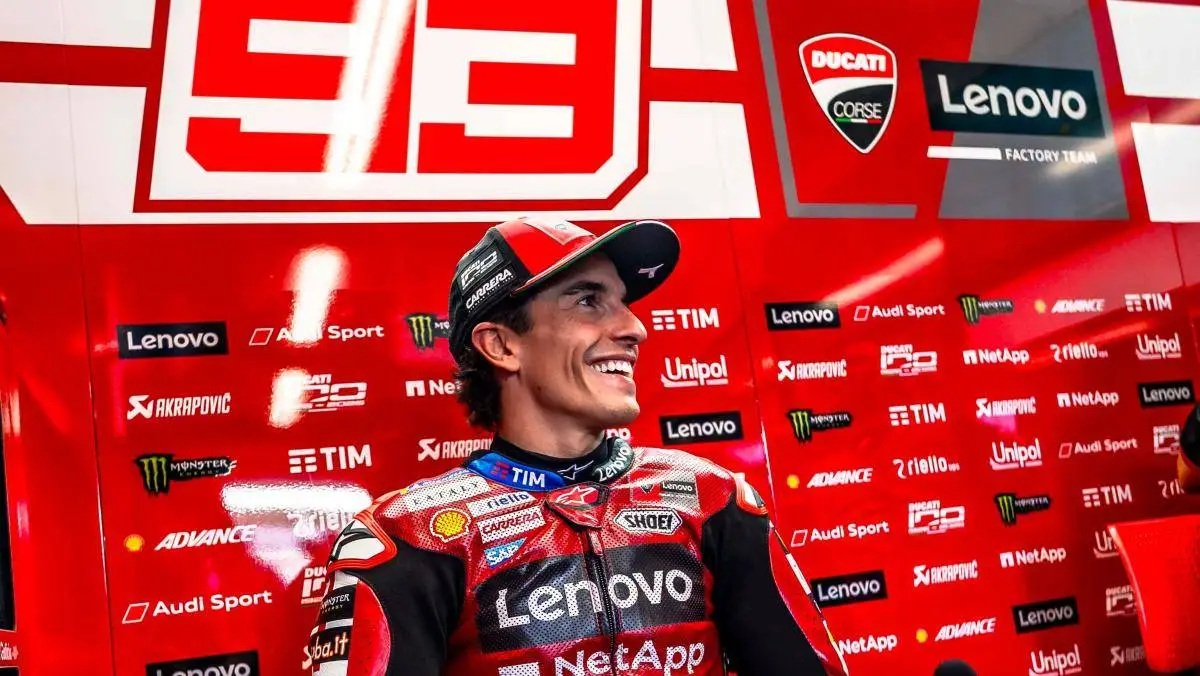
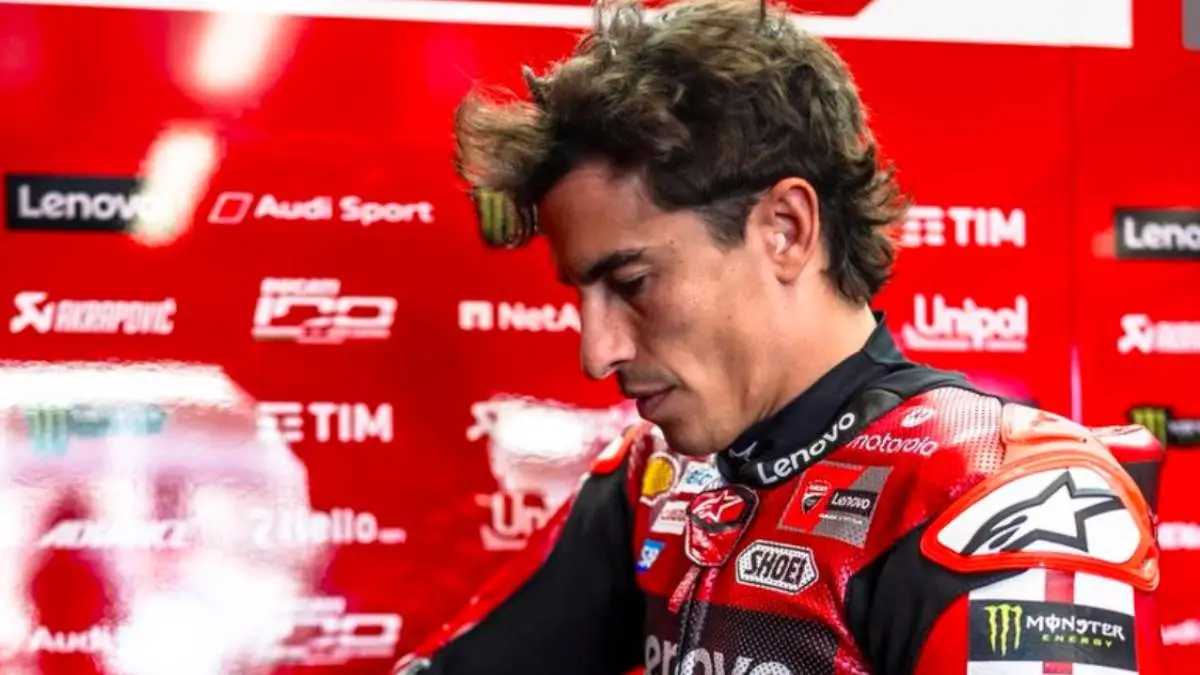
The teams, however, are leaving the matter to the promoter, and the issue essentially comes down to insurance coverage, which might not apply if Qatar were deemed a "war zone". That is why MotoGP's management is pressing the local authorities: it wants an official declaration that the country is safe, so that this evidence can reassure the championship's stakeholders—in other words, the teams. Just try rereading the team bosses' statements in that light. "If they tell us it's safe, then we'll go. Otherwise, we won't," is the position expressed by Aprilia Racing CEO Massimo Rivola and Ducati team manager Davide Tardozzi. The Ducati executive had already defended Marc Marquez for speaking out on the issue (Ducati defends Marc Marquez: "He has the courage to speak out, while other riders stay silent"). On Sunday in Australia, Rivola was even more explicit: "If the organizer tells us that the conditions are right from a safety standpoint, we'll race, and that's that. We're not in a position to say, 'I'm not going.' So far, there's no reason not to go. Maybe we'll wake up tomorrow and the situation will have changed, but not today."
Conflict of interest
Now consider another factor. F1 is controlled by the American company Liberty Media, which is also the overwhelming majority shareholder in MotoGP, with a stake close to 90%. If F1 has said that " Qatar is safe", how could Carlos Ezpeleta, who is currently at the helm but represents a mere 10%, decide that "MotoGP isn't going"? Impossible, wouldn't you say?
So, unless something particularly serious happens to change the situation, it is safe to assume that MotoGP will fire up its engines in Qatar as scheduled. And, you can bet, those two-thirds of riders who reportedly voted against going will be on the grid as usual.
-> Follow us on Instagram too: @Corsedimoto
Continue reading
You might also like
More news
Popular articles
Loading