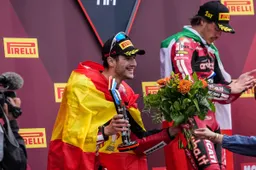
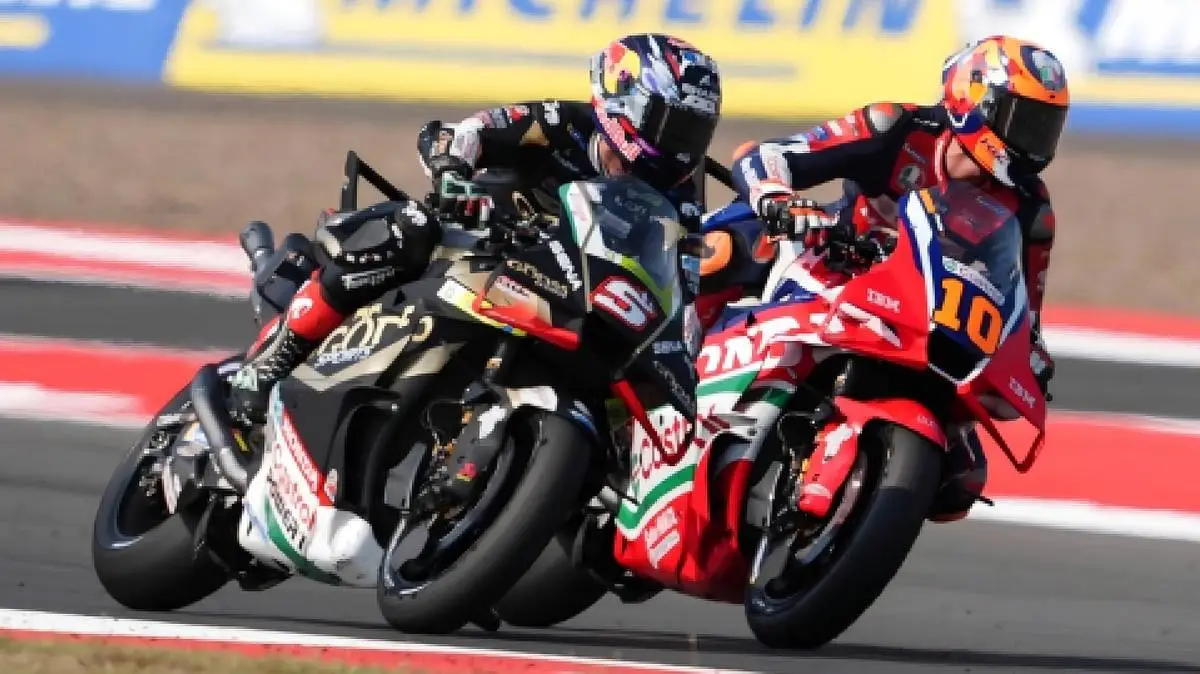
The controversy over tire pressure in MotoGP has resurfaced after the Grand Prix of Texas. The penalty handed to Pedro Acosta, hours after the podium ceremony, reignited a debate that is causing considerable discontent in the paddock. It’s a tricky situation for Michelin to manage, but one that Pirelli promises to change.
The Acosta case in Austin
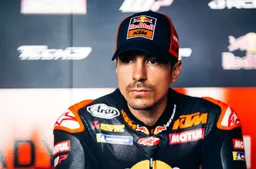
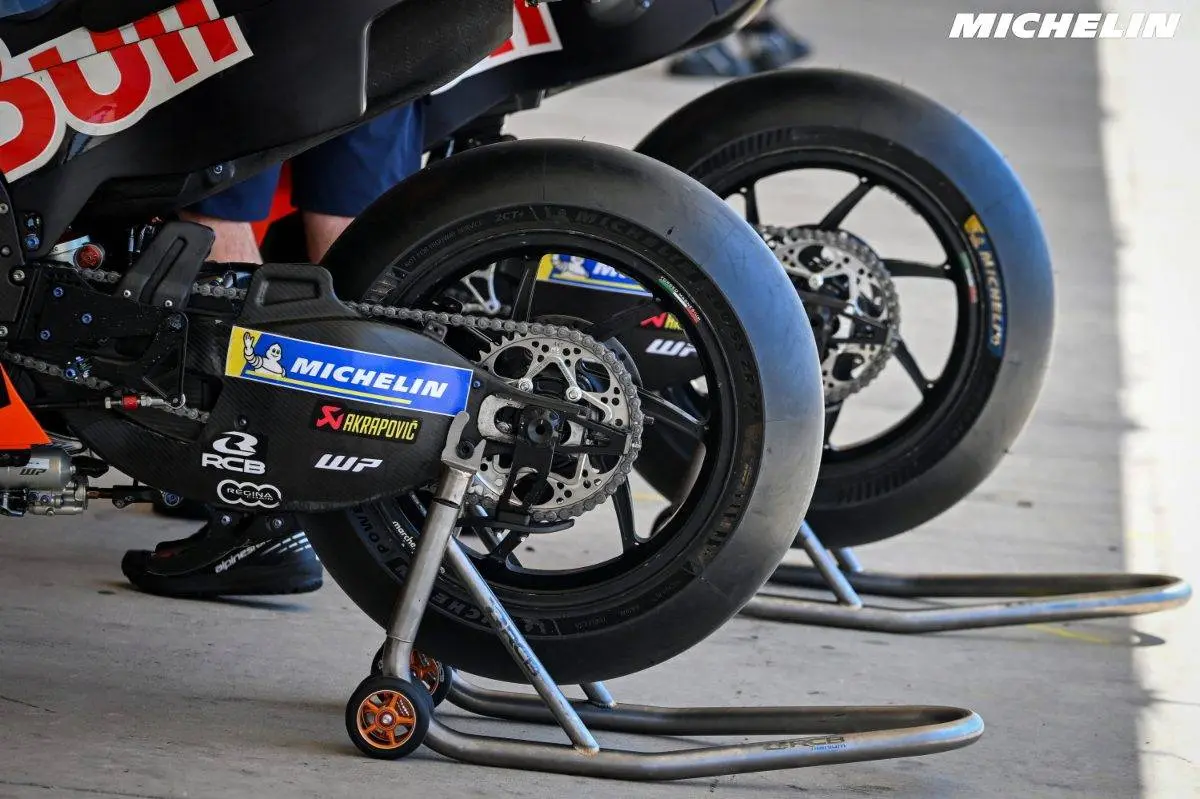
The issue isn’t new, but it’s becoming increasingly critical: riders crossing the finish line in a certain position, only for the results to be changed later in the offices for failing to meet the minimum tire pressure during the race. In the case of Pedro Acosta, he did not reach the required 30% of laps above the minimum limit for the front tire. Pit Beirer, the head of the Mattighofen manufacturer in MotoGP, has already openly condemned the situation, blaming Michelin and the World Championship organizers.
Other teams and riders are also questioning a system that’s hard to control in real time, especially due to factors like “dirty air,” which raises the front tire’s temperature and pressure when riding in a pack. This certainly makes it difficult to set the correct starting pressure and leaves everything at the mercy of unpredictable variables.
Pirelli promises a change of course
In this context, Pirelli’s head of competition, Giorgio Barbier, wanted to make it clear that the issue is not simple, but assures that changes will come in the future. “It’s important that the race can ‘finish’ with the checkered flag,” suggesting that the current penalty system is not entirely convincing. “I know not everyone is happy with what happens after the race,” the manager noted. “If the current supplier requires this rule, it’s because they believe there could be a safety issue.”
The technical basis makes sense, but the application is debatable. The real problem lies in the system’s unpredictability. Pressure variations during the race, especially due to the “dirty air” effect, make choosing the correct initial pressure almost a lottery. And that’s where the problems begin: riders pushing to the limit, teams calculating in the dark, penalties arriving when it’s too late to change anything.
Pirelli’s doubts
Looking ahead to 2027, Pirelli knows it will have to rewrite the regulations from scratch. Its tires will have a different structure, higher pressures, and behavior unlike Michelin’s. But there remains a question mark over what will happen once they enter MotoGP. “We still don’t know what will happen with our tires,” admitted Giorgio Barbier. “We have different carcasses, sizes, and compounds, so the pressure behavior will be different.”
In concrete terms, Pirelli will seek to resolve the pressure issue, but urges caution. “First of all, we’ll establish new limits and see how they behave, then we’ll decide what to do... It’s important that the race finishes with the checkered flag.”
Continue reading
You might also like
More news
Popular articles
Loading