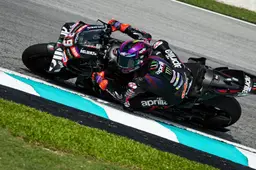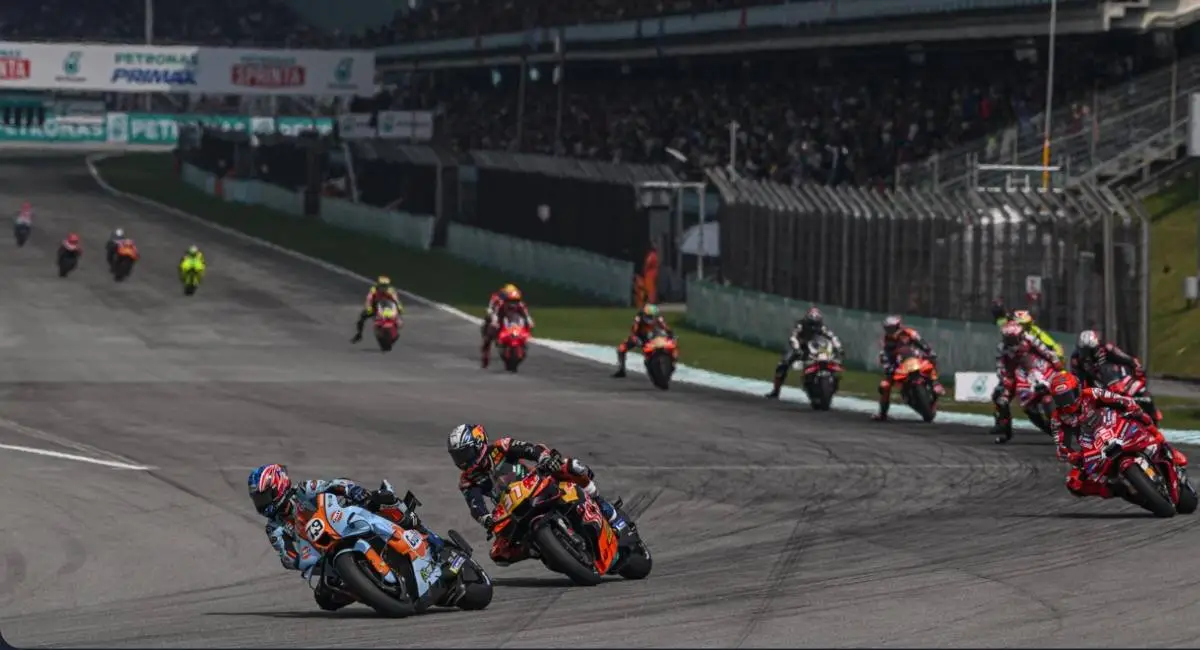
The phantom “riders’ front” that was supposedly opposed to taking part in the Qatar GP has melted away like snow in the desert.
At the many meetings held at Phillip Island, around three-quarters of the grid had said they were against travelling to Qatar. By the latest meeting, held on Friday in Sepang, only three riders were reportedly still opposed. The tense summit was fraught from the outset, even over logistics: the riders were denied a room to meet in, so the group made use of Yamaha’s facilities.
The concern remains the risk of an escalation in the conflict between the United States and Iran. Several sources report that Donald Trump is planning an intense resumption of attacks after the midterm elections on November 3, while governments are updating their travel advice and recommending against non-essential travel to the Gulf. No country, however, has banned travel to the region, and without such a move MotoGP could not cancel the race without facing financial costs.
Qatar’s influence
It was a given that the riders would have no say in the matter. They are the stars of the show, but contractually they have very little leverage. MotoGP has agreements with local promoters and sponsors, while the teams in turn are contractually bound to the championship promoter. Skipping a GP would incur enormous contractual penalties. What’s more, this is a strategically important round, given that the State of Qatar is one of the biggest sponsors not only of the motorcycle championship but also of Formula 1, at considerably higher figures. Since Qatar has a strong interest in holding the GP to show the world that the situation has returned to normal, in reality this race was never in doubt, especially as the F1 round had already been confirmed more than a month ago.
The threats
If a rider refused to go to Qatar, they could be required to compensate their team or the manufacturer that holds their contract. That makes those who take to the track the weakest link in the chain. There is also talk in the Sepang paddock of sporting sanctions that the International Motorcycling Federation could impose on anyone who fails to show up without a valid reason, potentially even disqualifying them from the final GPs in Portimão and Valencia. But that won’t be necessary: multimillion-euro fines carry far more weight than threats from the FIM.
After a week of meetings, doubts and declarations, the standoff between the grid and MotoGP Group is now entering its toughest phase. As we previously reported in Qatar, MotoGP’s absurd side: the riders and the media circus, the riders have very little decision-making power.
While the riders pretend they have a say, when they don’t, the teams and championship officials are meanwhile united in their position: the Qatar GP, already postponed to April because of the war in Iran, must go ahead.

Late arrivals and a reduced paddock
Carlos Ezpeleta flew to Doha during the week to ask the local organisers for assurances. According to Crash.net, the riders will delay their departure for as long as possible and may not arrive in Qatar until Thursday, potentially affecting the pre-event press conference. The paddock will be quieter than usual regardless: DAZN will be the only broadcaster on site, while the VR46 team has confirmed that some of its staff will not travel.
The question of a riders’ union remains in the background. At present, only teams and manufacturers have official bodies with which MotoGP has contractual relationships. The week in Lusail will show whether the hard line has dampened this push to organise and pursue shared demands—or extinguished it for good.
-> Follow us on Instagram too: @Corsedimoto
Continue reading
You might also like
More news
Popular articles
Loading