Are the Spanish wiping the floor with us in Grand Prix racing? The expert: "Here's what we're missing"
MotoGPMonday, 14 September 2026 at 20:15
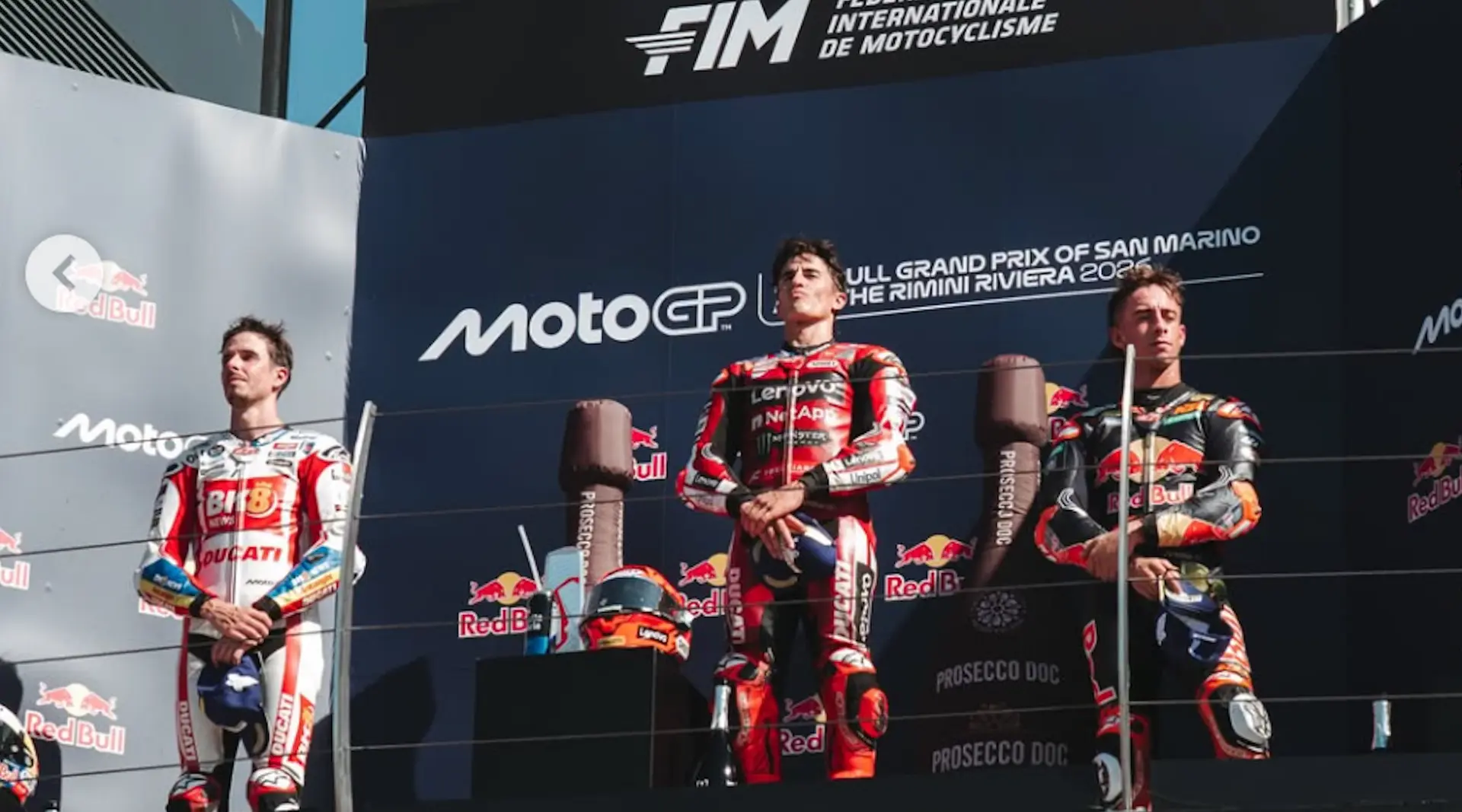
Six Spanish riders in the top six positions of MotoGP at Misano sparked the debate: why are there no longer heirs to Biaggi and Rossi in the lower categories? We asked Gianluca Nannelli, a former world-level rider in production-derived series, now the creator and manager of one of the most prestigious academies for getting started in racing.
“I understand that this Spanish dominance right at Misano caused a stir, but I wouldn’t dramatize it, because many times, even in recent years, our riders have monopolized the MotoGP podium,” Nanna points out. “Let’s say that, speaking of MotoGP, things just didn’t go our way: Bezzecchi is blazing fast but either dominates or throws it away; he still has to find his balance. Bagnaia unfortunately is out of the game at the moment, but he’s a rider who has won three World Championships. Also, Di Giannantonio is doing well, he’s had many podiums. However, the situation in Moto2 and Moto3 is indeed worrisome...”
Why does Spain dominate?
“It’s a matter of the talent pool: in Spain they have a nursery of 1,500 kids who dream of becoming the new Marquez, in Italy we have only 150. It’s a situation with several causes, the first is economic: in Italy the money isn’t flowing like it used to. The second concerns different organization: in Spain starting to race is very easy and costs very little. It’s easy for two reasons: one is the weather, which allows them to ride, anywhere, almost all year round. The second is social: there, in any city, there are lots, motor areas set up even in the very center. Here, if you start up a scooter, the traffic wardens show up in no time: in Spain, bikes are everywhere; we’re a bit ghettoized.”
Why is it cheaper in Spain?
“They run grassroots activity in a bare-bones way: they have kids race on bikes that, compared to ours, are wrecks, but they cost very little. They also use simpler facilities, even at the expense of safety being a bit rough around the edges. With us everything is super safe, everything up to code. So costs rise exponentially. There, any child can race, regardless of the parents’ means. Here, a season in mini-moto can cost 30,000 euros. And considering we’re talking about 7-8-year-olds, the family has to make substantial investments for years to accompany the child up to higher-level racing.”
When can you tell if a child can become a champion?
“Not before puberty, that is, 13-14 years old. It’s important to work with 7-8-year-olds because at that age they learn the basics, as in all other sports. Children are sponges; riding and acquiring certain technical skills becomes instinctive, it’s almost in the DNA. But then there’s the next hurdle: between a fast kid and a future champion there are two or three tenths on long, demanding tracks like Mugello. That performance gap comes down to talent, and talents aren’t born every day. Clearly, the larger the base, the greater the chance of finding the super champion.”
Does the motorcycle federation bear responsibility?
“No, on the contrary, it does a good job helping quite a few promising riders, as do structures like VR46 and very few others. Bringing 13-14-year-olds to race in entry-level international championships costs money, so the ability to invest resources should be expanded to support riders who don’t have dad’s suitcase of cash. The problem is the same as always: in recent years, only kids whose families could afford to invest 200-300 thousand euros for many years in training formulas make it to a certain level. The key is to find a way to let everyone race, as they do in Spain.”
-> Follow us on Instagram as well: @Corsedimoto
Continue reading
You might also like
More news
Popular articles
Loading