Moto2 and Moto3 out of control amid penalties and an uncertain future
MotoGPSunday, 13 September 2026 at 07:33
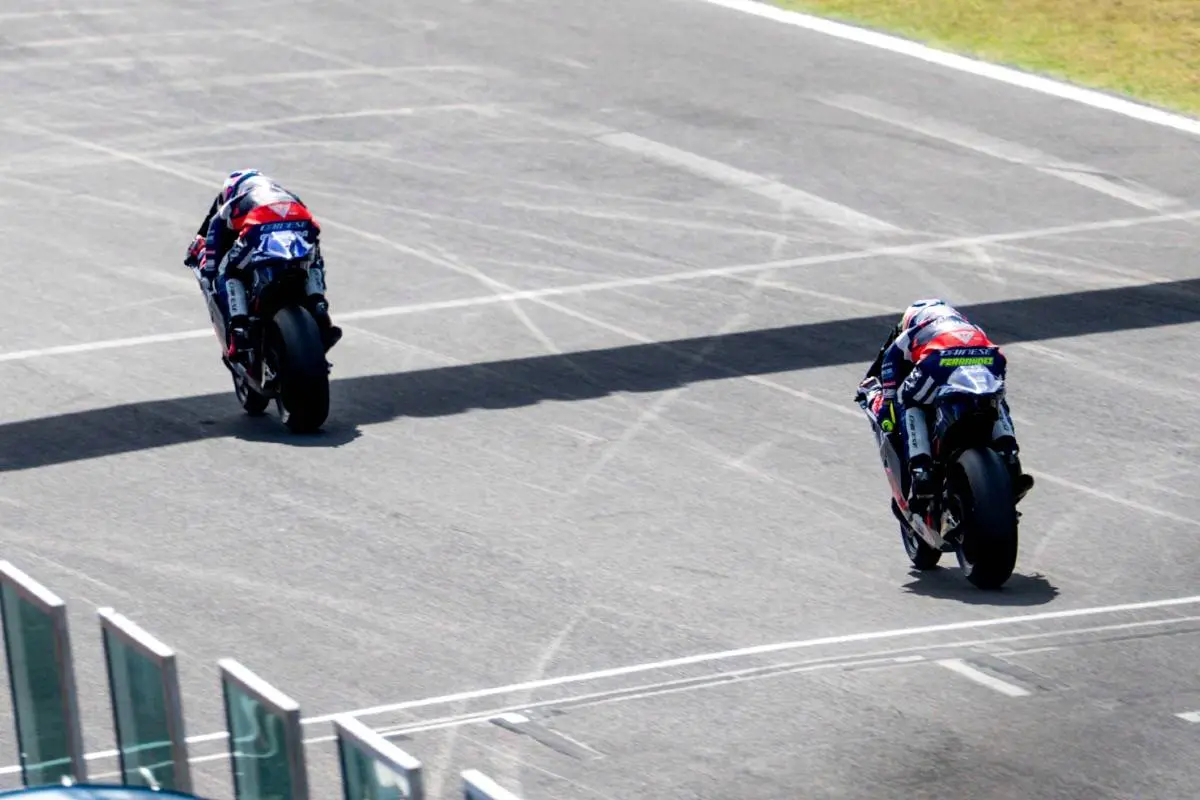
Before the MotoGP Sprint at Misano Adriatico, the Moto2 and Moto3 qualifying sessions took place on Saturday, finishing shortly after 14:00. However, to know the final starting grid for the races in both classes, we had to wait until exactly 18:06.
Specifically, that’s when the Stewards Panel released the document listing, in detail, all the penalties handed out to the riders. If it’s not a record (in MotoJunior last year, they nearly hit 30 penalties in a single day...), it’s close: across the two categories, 16 sanctions of various kinds. Grid positions, long lap penalties, warnings: a bit of everything, and then some.
HEAVY PENALTIES
To curb the Wild West scenarios seen in recent years during sessions (not just official ones, even free practice) with slowdowns and the like, the Stewards Panel drafted a protocol in 2025, further refined and updated for 2026. For every so-called “slow sector,” the penalty (barring duly justified and motivated force majeure) is automatic. As it is in cases where one rider impedes another, and so on. A hard line, in short, but evidently it has done little, given the striking figure of 16 sanctions handed out on Saturday at Misano between Moto3 (9) and Moto2 (7). Top riders were involved too, such as Izan Guevara (6 grid positions for impeding Senna Agius in Q2), with heavy penalties (9 grid positions for Tony Arbolino and Adrian Huertas, and even a back-of-the-grid start for Taiyo Furusato for his third offense of the season). There were even instances of repeat offenses... on the same day: in Moto3 Q1, Jesus Rios first received a warning for a slow sector, then in Q2 was penalized with a long lap penalty for impeding Cruces and Uriarte at turn 15.
FUTURE TO BE DEFINED
Wayward riders, yes, but the teams themselves also bear responsibility for their standard-bearers’ conduct. Meanwhile, those same teams are focused on a still undefined, yet increasingly bleak future. Bleak in the sense of moving further away from the MotoGP spotlight: no garages, separate paddocks, and so on. With “recommendations” as well (not new, but now made “unofficial”) on which riders to choose—preferably (as conveyed to team representatives with IRTA, one each for Moto2 and Moto3) not Spanish or Italian—backed by financial support and advantages guaranteed by promoter MSEG. Of course, entries from teams with a pair of Spanish or Italian riders can’t be rejected, but the invitation is to look elsewhere. Business logic and global product expansion, with Moto2 and Moto3 increasingly becoming feeder series, just like the four-wheeled equivalents F2 and F3 have become.
Read also
-> Follow us on Instagram: @Corsedimoto
Continue reading
You might also like
More news
Popular articles


Loading