KTM and the truth about the seven blown engines: "The worst moment"
MotoGPSunday, 13 September 2026 at 09:39
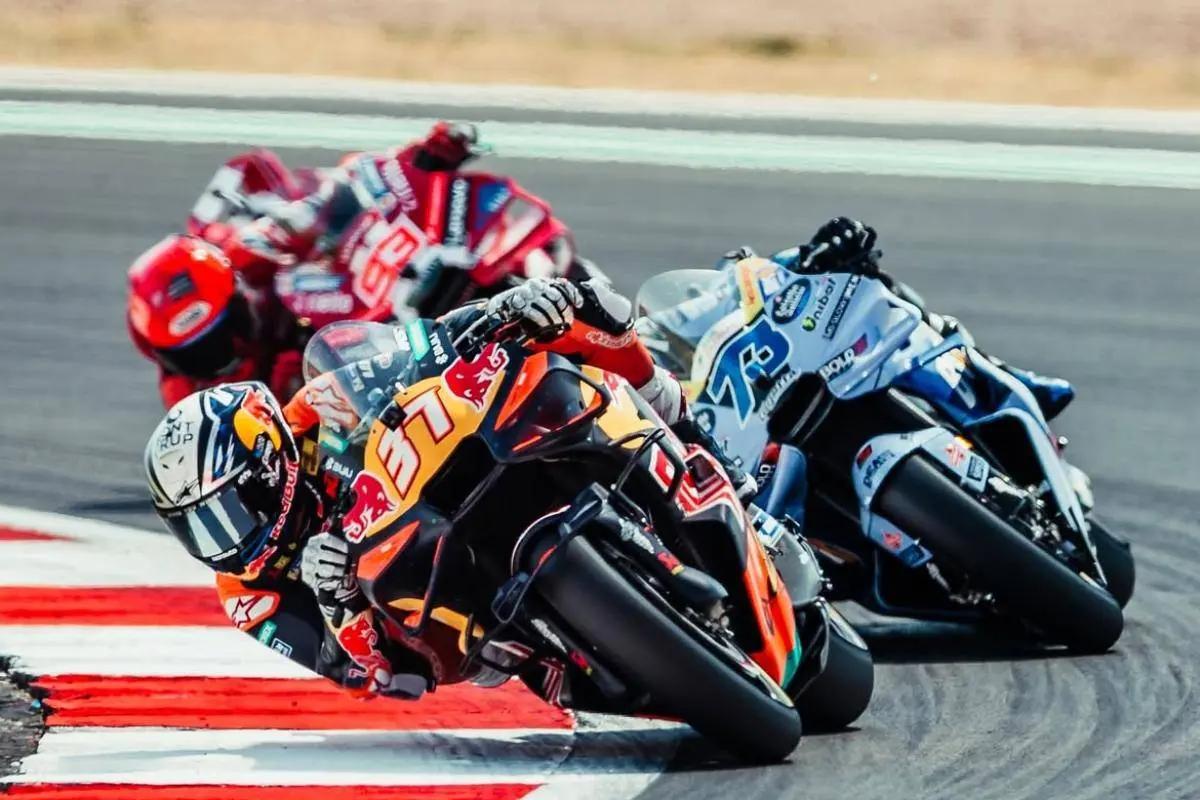
A truly unlucky MotoGP season for KTM, which had to deal with a strange wave of engine failures. The Austrian brand suffered the breakdown of seven power units due to a hidden manufacturing defect in a highly stressed component. Sporting director Pit Beirer called it “the most horrible moment” of the brand’s entire premier-class adventure.
A tough start to the season
The problem emerged at one of the worst possible times. KTM was still trying to stabilize after the financial difficulties that had afflicted the group. The engines in use were exactly the same as those homologated the previous season. With development frozen by the regulations, no one could understand why engines that had worked perfectly had suddenly started to cause problems.
“This year I thought we’d be back to normal, and then this engine problem popped up, which almost destroyed us,” admitted Pit Beirer. “On top of the financial issues we had at home, for me it was the most terrible moment of this whole MotoGP project.”
An unusual problem
The situation became particularly desperate because KTM couldn’t find a logical explanation. The first failure didn’t raise any alarm; it seemed like an isolated case. But when the failures started piling up, the situation spiraled out of control. “We didn’t understand what was happening or where to start,” the Austrian manager explained.
The crisis peaked during the MotoGP weekend at Mugello. One engine broke in the morning and two more over the course of the same day. At that point, KTM stopped relying on the newest units and switched to high-mileage engines. They were the only ones they were certain were free from the defect.
The engineers identified a strange pattern: the failures always occurred between 50 and 100 kilometers of running. This led them to suspect an internal defect in some critical engine component. “It seemed like something snapped all of a sudden, like glass. It was clear that something inside wasn’t working properly.”
The investigation eventually pinpointed the faulty component in a part of the transmission produced by an external supplier. KTM refused to publicly reveal the identity of the component, but explained that the issue lay in a weld that did not meet the required quality standards.

Green light from the MSMA
However, discovering the source of the problem didn’t mean it could be fixed immediately. The engines were sealed, as required by the MotoGP regulations. KTM needed authorization from the other manufacturers to open them and replace the defective parts. “When we discovered the issue, we presented all the documentation, the supplier involved, the defect, and the X-ray images,” Beirer recounted.
Authorization finally arrived between the Sachsenring and Silverstone GPs, despite the initial opposition from some rival manufacturers. “But in the end we got the green light and were able to replace the defective parts.”
As if that weren’t enough, another issue surfaced in Barcelona, involving Pedro Acosta. The rider from Murcia lost power on his RC16 while leading the race and was involved in a serious crash after contact with Alex Marquez. This time the cause was a failure of the electronic control unit. “It was another very difficult problem to understand, and we had to work with Magneti Marelli to figure out what had happened.”
With the crisis behind them, KTM believes it has regained stability and hopes to finally put one of the most complicated chapters of its recent MotoGP history behind it.
Continue reading
You might also like

More news

Popular articles


Loading