Aprilia’s RS-GP 2027 reveals new wings: goodbye fork wing, a cascade of flaps appears at Jerez
MotoGP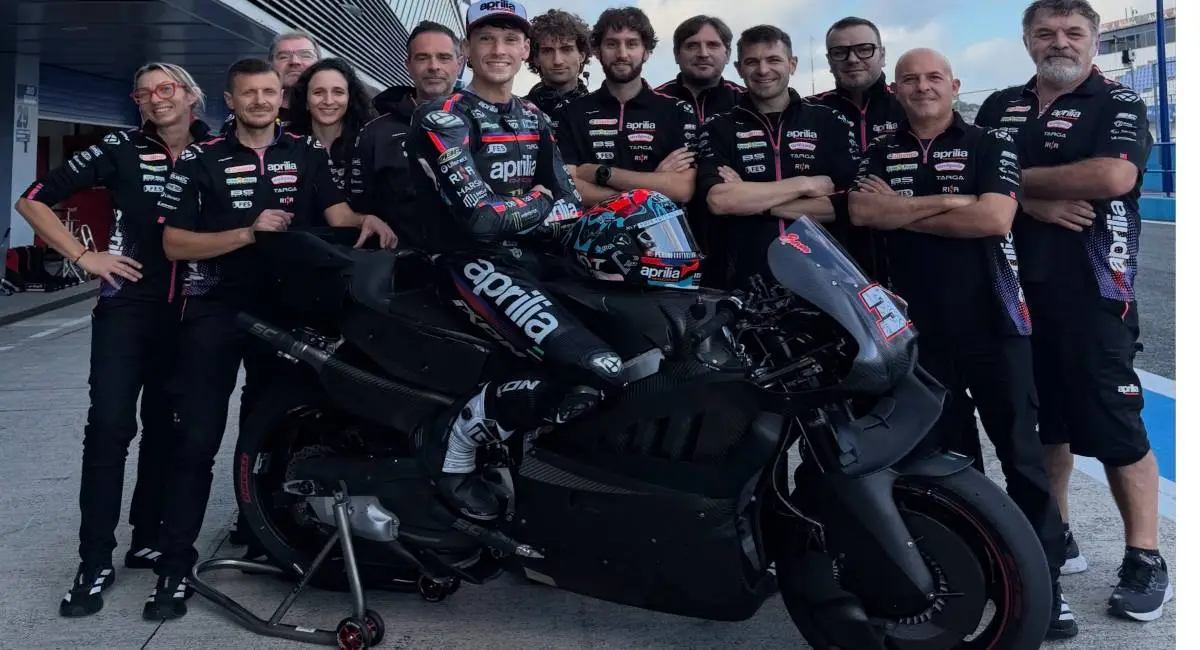
The 2027 regulations were meant to scale back aerodynamics in MotoGP, but Aprilia has already found a way to rethink it.
A simple memento photo taken in the Jerez pit lane, with Lorenzo Savadori aboard the RS-GP 2027, revealed a radically revised front end: in place of the fork wing is a cascade of inward-facing flaps, showing that Noale’s quest for downforce hasn’t stopped with the switch to 850cc engines.
The image was posted on Instagram by Aprilia’s test team at the end of two days of testing at the Andalusian circuit. Savadori himself took the opportunity to thank the team, but it was the bike’s technical details that sent the photo circulating around the world.
What’s changed at the front
The first new feature is the front wing: two pylons position the single curved profile farther from the ram-air intake, leaving more room for airflow. The area around the fork, however, is the most interesting. The 2027 rules prohibit any appendage from protruding beyond the fork, so the engineers led by Fabiano Sterlacchini have developed the element inward.
A vertical flap descends from the fairing and partially wraps around the fork leg. Connected to the front wing by a small support, it holds a second, intricately shaped profile. The aim is to generate downforce at the front without paying too high a price in drag—the compromise every manufacturer is pursuing under the new rules.

A prototype, not the Valencia bike
A note of caution is warranted: the RS-GP 2027 entrusted to the Cesena-born test rider is still a prototype, quite different from the version set to make its debut at the Valencia tests on December 1, when the new MotoGP bikes will be ridden by the full-time racers for the first time. Even so, the direction is clear. The rule-makers aimed to sharply limit the role of aerodynamics, as we explained in MotoGP 2027: how the bikes will change under the new technical regulations, but CFD simulations and wind-tunnel testing are already opening up new possibilities. In short, it’s hard to imagine a real step backwards.
Savadori just three tenths off Bulega
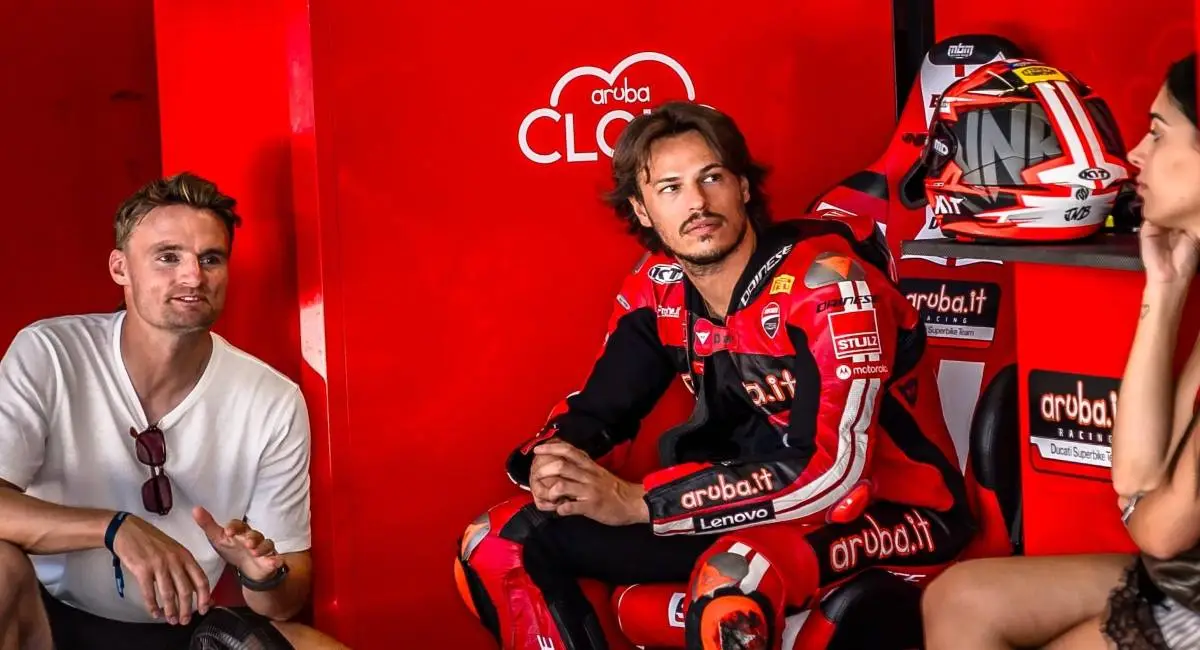
On the timing front, the second day at Jerez ended with Nicolò Bulega on top. With the track drying out, the Superbike world champion clocked a 1'39"253 on the Ducati GP27, leaving Savadori just over three tenths behind. Pol Espargaro was third on the KTM, half a second behind the Aprilia rider, as we reported in Jerez test: Bulega puts Pol Espargaro in his place on the Ducati 850. The next stop is Valencia, where we’ll see how many of these solutions make it onto the final bike.
-> Follow us on Instagram too: @Corsedimoto
Continue reading
You might also like
More news