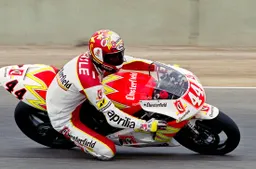
Switzerland returns to racing: the ban has been lifted, but when will we see a real racetrack?
Road RacingThursday, 22 January 2026 at 12:32
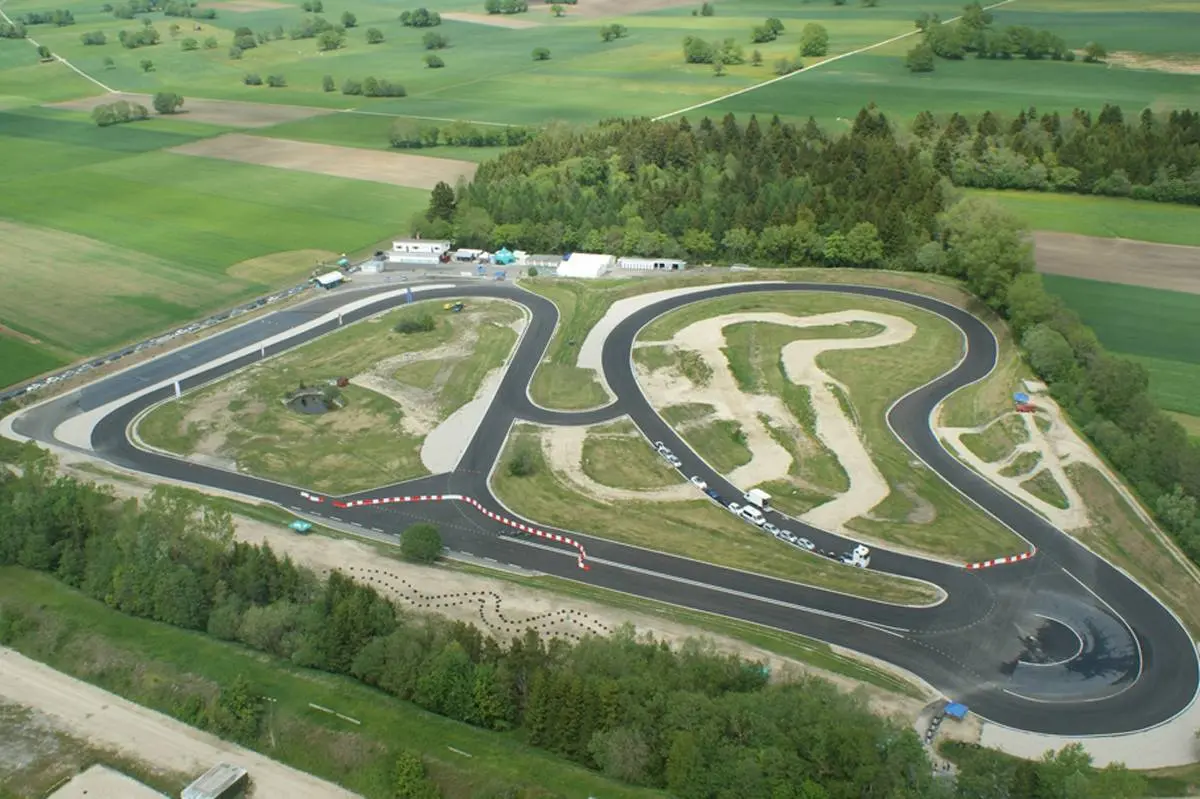
Switzerland is reopening the doors to on-track motorsport competitions. At least on paper. In theory, it could once again have a proper racetrack, but it’s neither automatic nor imminent.
For decades, Swiss enthusiasts have had to contend with a strict law that banned any circuit speed competition on national territory. It was enacted after the tragic 1955 24 Hours of Le Mans accident, in which many spectators died. Historic circuits like the legendary Bremgarten, which had hosted Grands Prix since the 1930s, fell into oblivion, and clearly no others were built except for safe driving course tracks. In 2022, Parliament decided to repeal that law, and the official revocation was set for June 1, 2026. From that date, organizing on-track races will no longer be a federal offense.
With the end of the federal ban, authority shifts to the Cantons. They will be responsible for authorizing any events and, above all, the construction of facilities. Local associations and various environmental groups are already questioning some provisions of the law. In Switzerland, land protection is always in pole position, and particular importance is also given to noise pollution.
For now, one cannot expect large structures with concrete grandstands and 350 km/h straights.
The Circuit de Lignières is currently the only permanent automobile circuit in Switzerland, located in Lignières, in the Canton of Neuchâtel. It is managed by the Swiss Touring Club and is used for various motorsport events, driving courses, and track days. The asphalt strip is 1,350 meters long, with a width varying between 8 and 10 meters, and features 8 turns. The facility could therefore be suitable for junior championships or vintage motorcycles, but it is totally inadequate for races of any significant importance.
In theory, some entrepreneur might get the idea to build a new racetrack. It would be a challenge, an act of great courage that goes beyond simple business. A challenge that, at the moment, seems too great. Switzerland is densely populated, buildable land is scarce and expensive, and even if the right area were found, it would be difficult to obtain permits, striking the right balance between motorsport needs and environmental sustainability. In all likelihood, many more years will pass before Switzerland can host a Grand Prix on its soil. In the meantime, Swiss riders continue to grow and shine beyond its borders.
Continue reading
You might also like

More news


Popular articles

Loading