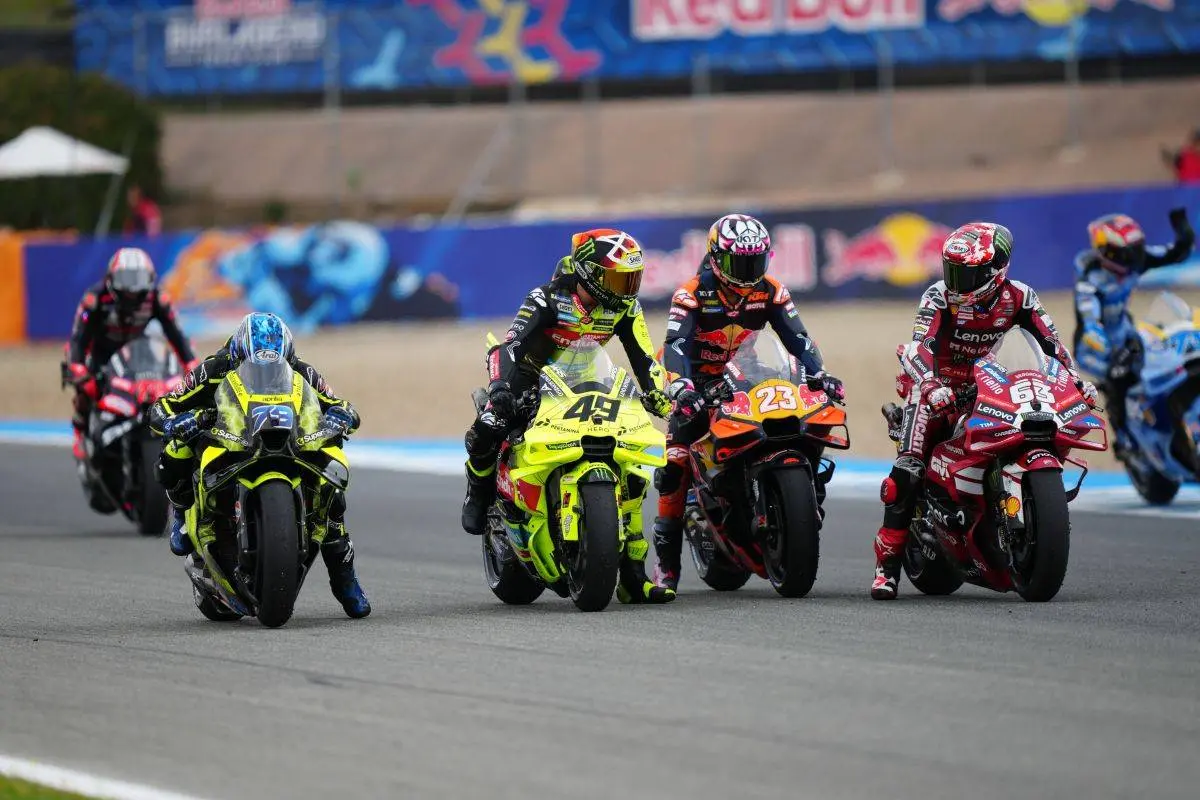
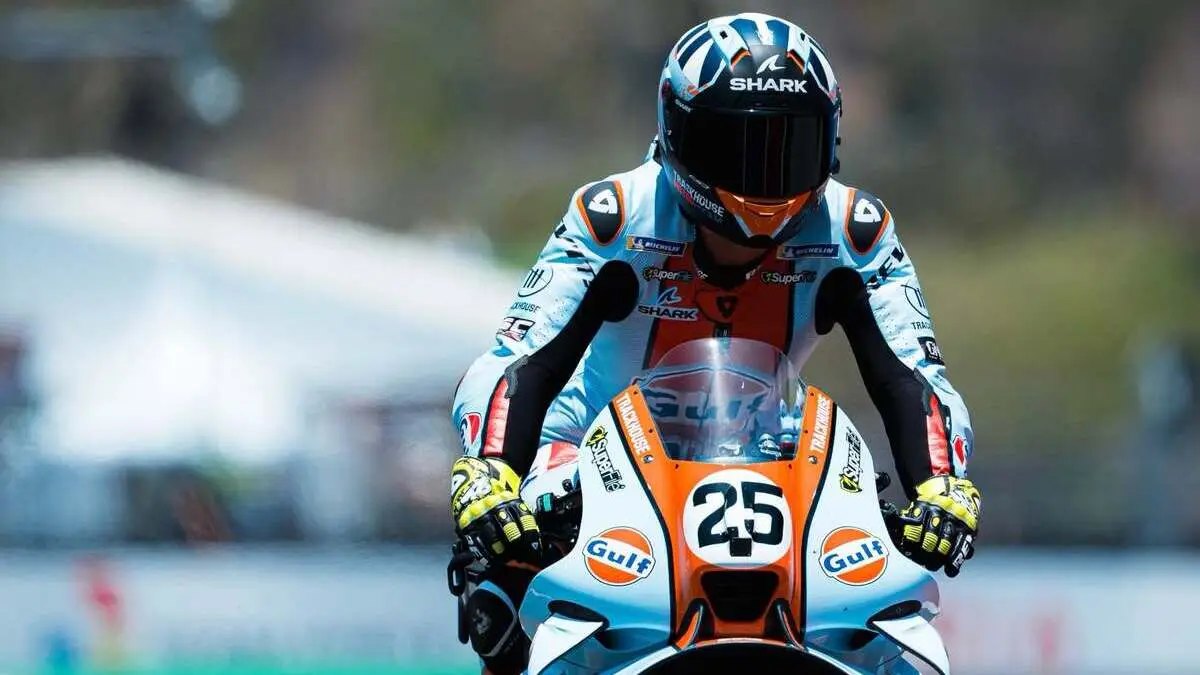
The MotoGP championship manufacturers are already working on the new 850cc prototypes that will officially debut in 2027. Aprilia tested the prototype for next season in Jerez for the first time, with Lorenzo Savadori set to carry out the “dirty work” for Marco Bezzecchi and incoming rider Pecco Bagnaia. Other brands are also busy developing the new project, and the path is anything but simple.
Problems with the first tests
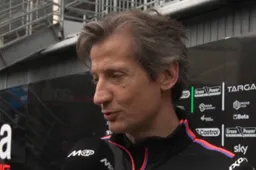
In Noale they have been working on the 850cc engine for many months, running it on the company’s test bench. "The bike, however, was new, and overall it was a good test. Savadori did an excellent job," summarized team manager Paolo Bonora. The elimination of holeshot devices and the general reduction in aerodynamics are pushing MotoGP brands toward a comprehensive "restructuring" of their bikes. "Now we have a lot of work to do: without the ride-height adjustment system, we need to find a different balance and a different setup, also at the electronic level, because wheelie behavior on the straight changes."
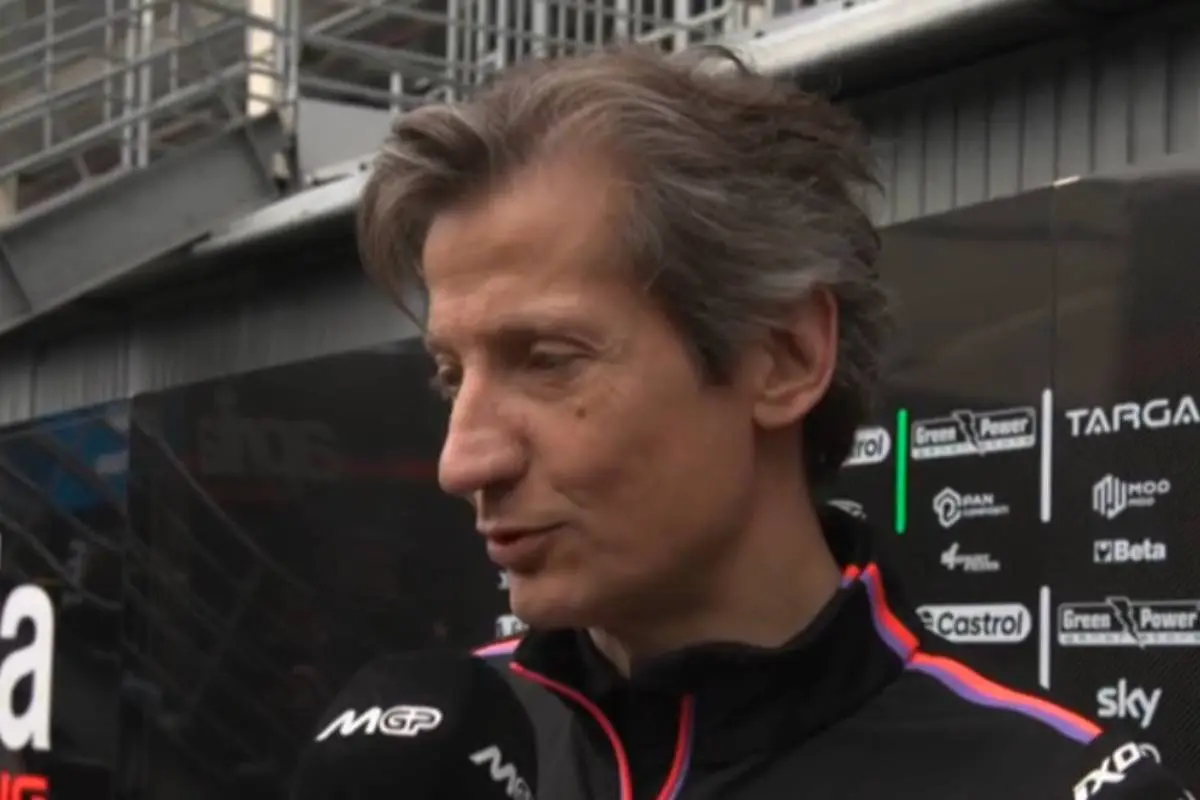
KTM and Honda conducted their first tests with the new bike as early as the end of 2025. Ducati took its new prototype to the track for the first time in mid-April. Aprilia was the last to debut, at the end of April, but considers itself "on schedule." Everything is still evolving; the current prototypes are only hybrids that will undergo drastic changes between now and next year. As confirmed by Marco De Luca, head of vehicle development at Aprilia Racing, "We will repeat the test with a more refined bike. This will continue to evolve until the first race."
The Pirelli tire question mark
The new 850cc bike primarily requires a new weight distribution; this will be one of the main challenges for the engineers. Not to mention that the tire supplier will also change, switching from Michelin to Pirelli. "The tires are an unknown. We don’t produce them, so we don’t know them precisely." Since Aprilia has not taken part in the Superbike World Championship for years, the team is unfamiliar with Pirelli tires.
Everything must be simulated with extreme care to choose the right path; a small mistake could prove costly and require precious time to fix. "If you get it wrong and realize it too late, it’s really too late," added De Luca. "Simulation remains fundamental. It cannot be replaced. We can’t just change everything overnight."
Comments from Honda and Ducati
A clearer idea of the new MotoGP prototypes may come during next winter, as anticipated by Honda’s technical director, Romano Albesiano. "It’s still very, very early to talk about this bike’s performance. I’d say it’s pointless... There’s still so much to develop and so many things we first need to understand. Especially in relation to the tires," emphasized the Italian engineer. "Maybe we’ll start to understand something at the next test in Sepang. Not before."
Ducati, which next year will field Marc Marquez and Pedro Acosta in the factory team, is already studying the gray areas of the regulations. "You need to be lawyers lent to engineering," said general manager Gigi Dall’Igna. In the past, the men from Borgo Panigale have managed to make a difference by leveraging gaps in the technical regulations to develop especially in the aerodynamic field, the real strong point of the Desmosedici.
Read also
If you like Corsedimoto’s content, you can select it as a preferred source by clicking here
Continue reading
You might also like
More news
Popular articles
Loading