Superbike, Serafino Foti (Aruba Ducati): "Lecuona didn’t surprise me. Market? We’re waiting on Bulega"
Superbike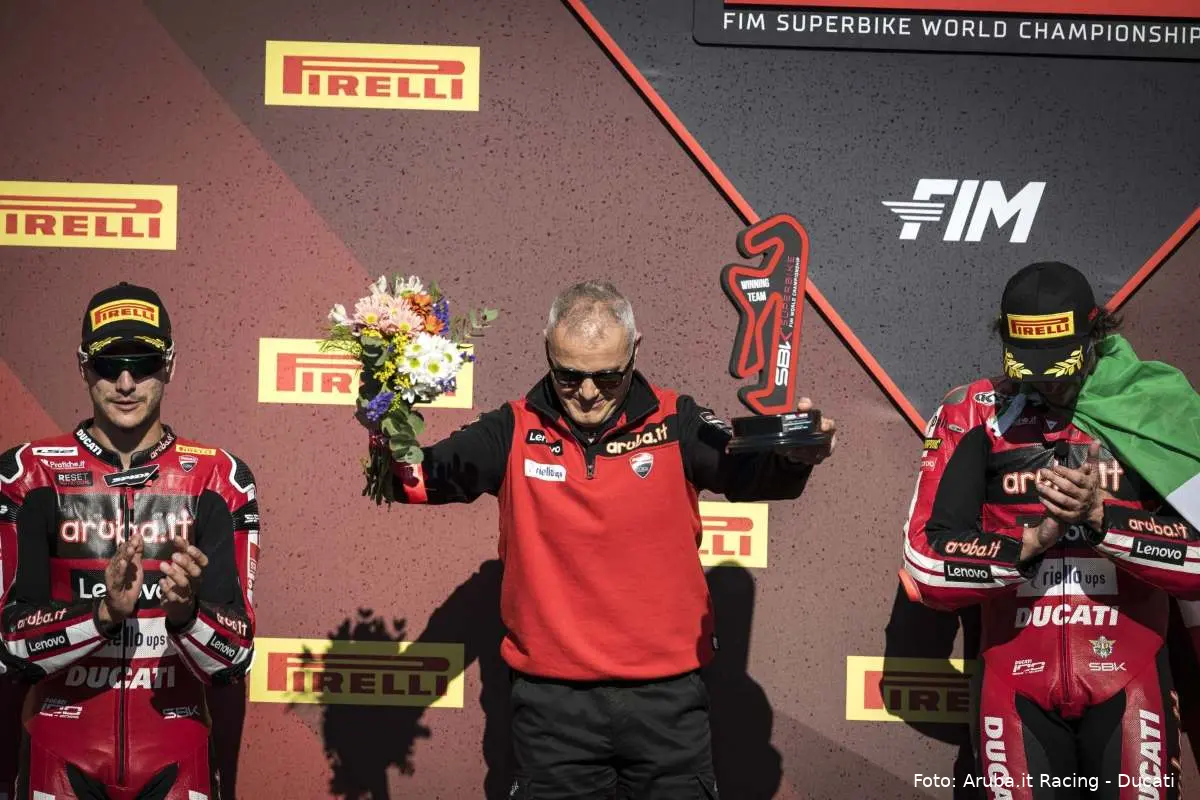
Corsedimoto interviews Serafino Foti, Aruba Ducati team manager: Bulega dominant, Lecuona on the rise, the new Panigale V4 R and much more.
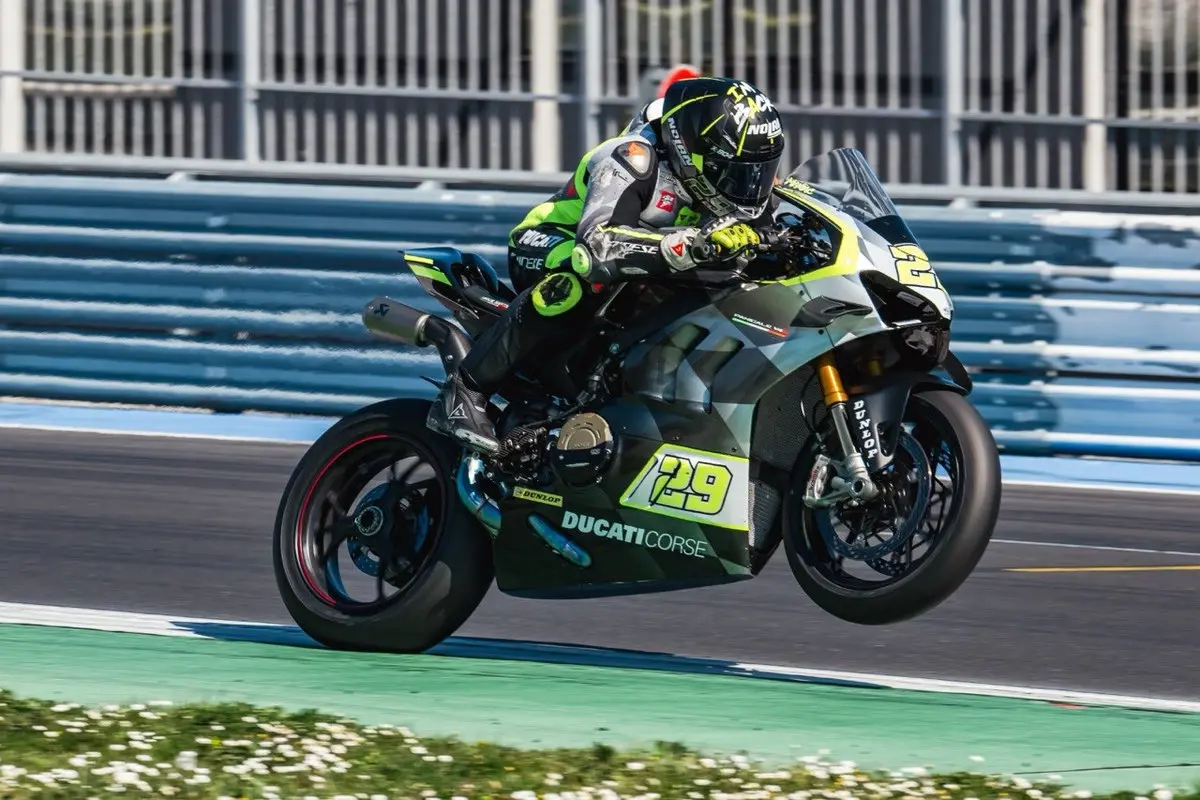
The Aruba.it Racing Ducati team has kicked off the 2026 Superbike World Championship in style: Nicolò Bulega has won six out of six races and leads the overall standings with a perfect score. In second place is the newcomer Iker Lecuona, who is becoming increasingly comfortable with the Panigale V4 R and claimed his first three podiums in red at Portimao. We discussed this and more in our interview with team manager Serafino Foti.
Ducati Superbike: Corsedimoto interviews Serafino Foti
Serafino, Bulega is dominating and Lecuona is growing: an extraordinary start to the season for the Aruba.it Racing Ducati team.
“Obviously, the balance is super positive. Nicolò has won every race—what more could we ask for? Even if you start as the favorite, winning is never a given; every year tells its own story and you must never underestimate anyone. Bulega deserves top marks for what he’s done so far, but we’re also very pleased with Lecuona. He arrived in Australia with very few kilometers on the bike. The first real test was at Phillip Island; adapting to the bike isn’t a given, especially when you’re coming from a completely different machine. While Nicolò was already used to Ducati’s character, Iker needed some time to adapt to the bike and the team. He surprised us with how quickly he learned, though not with his talent, because we expect him to be at the front.”
Bulega doesn’t seem to have any weaknesses at the moment, but is there a specific area of the bike he’s asked you to improve?
“No. More than anything, since it’s a new bike, we still have to explore all its aspects. It’s not easy to find the perfect setup right away, because it was almost like starting from scratch. What Nicolò asks is to reach the best possible setup as early as possible during the race weekend. Some parameters from the old bike are still reliable and others aren’t—they’ve changed—so we need to work on them.”
On Lecuona’s side, what’s the situation?
“He doesn’t have any specific requests either. He’s taken a very constructive approach, putting himself in the team’s hands, and we’re trying to give him the best bike possible so he can have an ideal feeling at the handlebars. If the rider has confidence, he goes fast and gets results. We’re trying to find a base setup that satisfies him. We also need to work a bit on starts, because in Portugal they weren’t the best, but that can happen. He needs to get used to being on the front row again. Looking at the data, at Portimao there were about two tenths between him and Nicolò, and the gap in the race stayed fairly constant. They have slightly different riding characteristics, but both manage to be effective. We’re not celebrating yet—we expect the opponents to come. The championship is long and surprises are just around the corner; it’s important not to let our guard down and to keep working hard.”
Speaking of Lecuona, what led the Aruba Ducati team to bet on him after some difficult Superbike years with Honda?
“We wanted a fairly young rider to develop. He has always had talent: when he went to Moto2, several MotoGP teams set their sights on him. He showed it in MotoGP and in Superbike as well, even if only in flashes. When you have talent, you then need to build everything around it. We saw it with Nicolò too, who came to us in Supersport after some difficult years in the World Championship, but the talent was always there—it’s something you don’t forget. We’re sure that Iker, with our working method, can perform and consistently run at the front.”
With the new Ducati Panigale V4 R, in which areas do you feel strongest?
“The biggest step forward is linked to the use of the double-sided swingarm, which has brought more stability and also made the bike more responsive. There’s no chasm compared to the previous version, but the riders immediately noticed improvements in terms of stability and traction. That’s the most significant thing, and then there are other smaller details that, combined, make the difference.”
Ducati is the benchmark on the Superbike grid, but you’re not underestimating the competition.
“BMW has won the last two riders’ world titles and you can never underestimate them. They have incredible potential in terms of structure, technical package, and riders. Oliveira and Petrucci are strong; improvements were already evident at Portimao, and I’m sure they’ll be even more competitive in the coming races. I’m happy for Bimota and I think they’ll do even better in the future, but I wasn’t surprised: first of all because they have racing DNA, and then because they’re supported by the Provec-KRT team, which has won multiple world championships. They have a good bike and there’s experience there. Honda is hard to judge; I’d wait, given that their factory riders have had injuries and are making their debut in the Superbike World Championship. I was negatively surprised by Yamaha, because they’re doing worse than in 2025. I expected more, but I think they will return to the front: it would be important for the championship to have as many manufacturers as possible fighting for podiums and wins every weekend. I believe there will be more of a battle at Assen, with the rivals closer to Ducati.”
Given the results at the start of the 2026 Superbike World Championship, Ducati risks another fuel flow cut (currently set at 45 kg/h for the Panigale V4 R and also for the BMW M 1000 RR).
“It’s not Ducati’s fault if we’re performing right now. I know our working method; our engineers work in an incredibly meticulous way and they deserve credit for what they’ve done with the bike. I think you have the best bike when you have the best people; that’s why we’re ahead. Obviously, there is a set of regulations that all manufacturers have approved and that we comply with. We could receive an additional penalty, but at most they can take away another half-kilo of fuel: there’s a limit to how much fuel flow can be reduced. Every time they take fuel away from us, we do a huge amount of work, because we have to adapt the mappings, the engine becomes temperamental, and reliability is also affected. Our engineers do double or triple the work to make the bike run well with less fuel. We hope we won’t receive another penalty, given that our bike is already performance-limited and we are not superior to others when you look at top speeds. If they take another half-kilo from us, we’ll accept it and do our best to stay in front without complaining.”
Another topic discussed is pre-season testing, especially in light of the many working days that unfortunately get wasted due to bad weather in Europe. Perhaps different choices should be made for the future. What’s your position?
“In my opinion, the best thing would be to hold two joint tests like MotoGP does. That would be an advantage for everyone: better to do one or two fewer tests, but do them properly. Obviously, we need to get everyone on the same page and find the right conditions, but I think a solution could be found that would allow every team to arrive better prepared at the start of the championship.”
In MotoGP, the rider market is a hot topic. What’s the situation regarding the Aruba.it Ducati team?
“It’s early. First we need to understand what Nicolò will do, and from there we’ll work on the future. For example, if Lecuona continues to perform, why not confirm him? Within two or three months we should understand which direction to take; there are many pieces that need to fit together.”
Continue reading
You might also like
More news
Popular articles
Loading