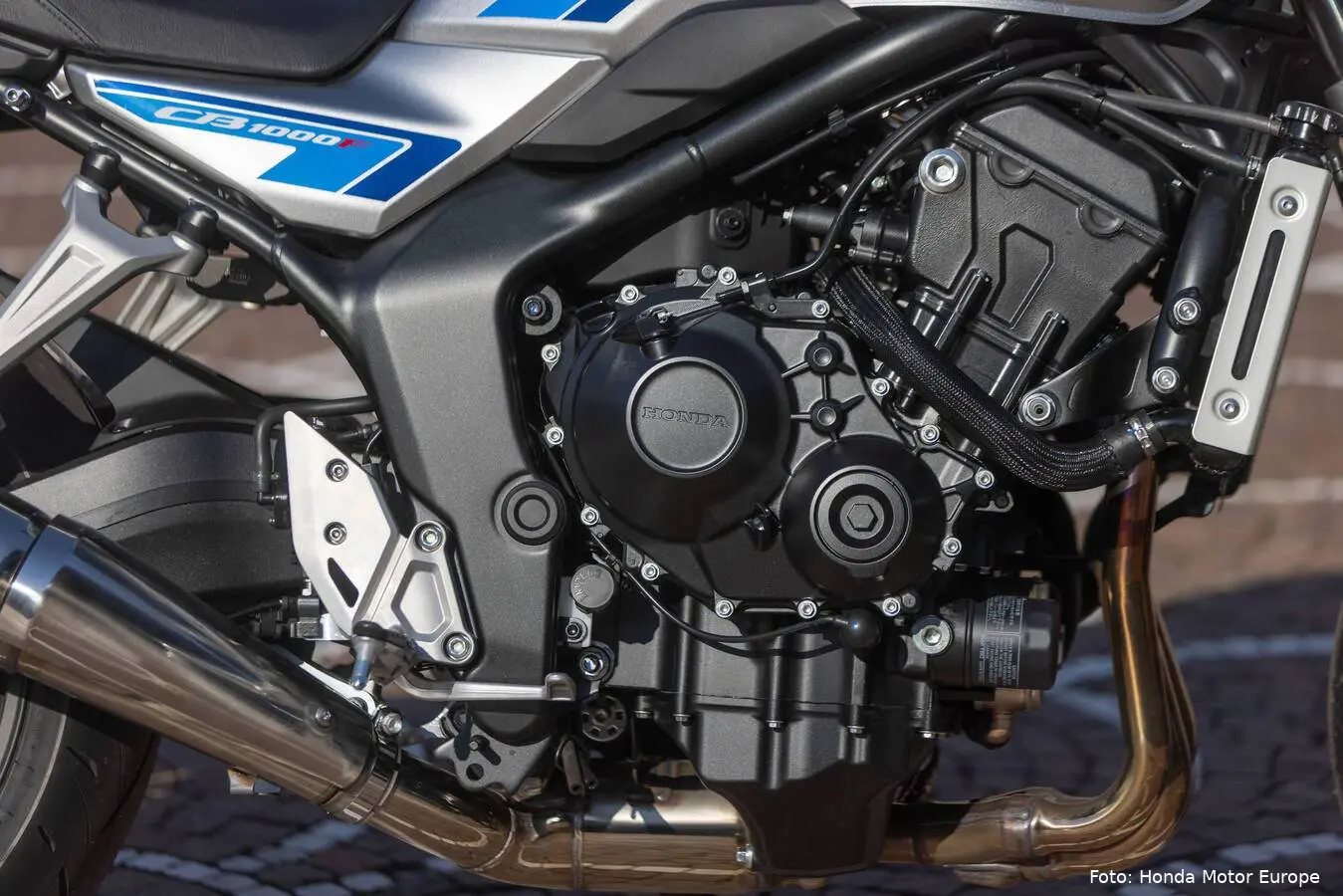
Honda and the acoustic identity of engines: here’s how a motorcycle’s “character” is born, mixing science, art, and the rider’s ear.
The sound, the melody of an engine: something unique to each brand that always gives goosebumps to any motorcycle enthusiast. Have you ever wondered about the work behind a bike’s “character”? You can’t point to a single parameter, nor can you talk exclusively about measurements or solely about feelings and emotional connections. For Takatoshi Tatsumi, an NVH (Noise, Vibration and Harshness) specialist involved in the development of Honda engines, there is science and there is art in creating an engine’s character, but absolutely nothing artificial or electronic. Also because traditional methods and hands-on experience remain fundamental: digital tools support development, but they do not replace the judgment of the human ear. It’s a complex yet very interesting philosophy that he himself recently described through Honda Europe’s channels.
Pulsation sensation
Takatoshi Tatsumi’s explanation starts here, from the fundamental aspect: acoustically, an engine’s character takes shape at the very moment of combustion, without aesthetic add-ons or electronic solutions. What motorcyclists initially hear is “the result of igniting the air-fuel mixture during the intake interval”, an impression that creates expectations about the engine’s behavior as revs rise and fall. Technically, Tatsumi defines it as a “pulsation sensation”, a phenomenon that certainly cannot be created artificially.
“It’s difficult to trace the origin of this pulsation sensation to anything other than the engine’s combustion,” he stated. It immediately appears as a philosophy that has a significant impact on the development process, sweeping away the common idea that engineers simply try different exhausts until they get the desired sound. Tatsumi instead emphasized that acoustic design is never tackled separately from the vehicle’s concept.

Digital simulations, but humans remain essential
Continuous experimentation with impressive numbers. Tatsumi used the development process of the CB750 Hornet as an example: “We tried almost a hundred different configurations just to test the sound.” Small but significant tweaks, until they identified the sound that should represent the Hornet’s idea. For Honda, the development process also relies on digital simulations, carried out well before having a physical prototype, with an important caveat. Better tools allow engineers to analyze acoustic behavior from the earliest stages of the project, but digital analysis still has its limits.
“There are still aspects that cannot be determined without tests on the actual motorcycle,” Tatsumi noted: the reference is to the human being, still irreplaceable for the final decision, well beyond the value of a screen and written data. Sound isn’t just decibels; the perception of the machine matters greatly, a human-centered approach—“the rider’s ear”—along with bystanders at the roadside or people sharing urban environments. Engineers then analyze all those “subtle nuances of sound variation” that distinguish one engine from another. Electronics? No thanks. Tatsumi is very clear on one point: “We have never relied on electronic control to generate the sound.”
From the very first spark
If you think the sound comes from music or nature, the answer is no: Tatsumi doesn’t look to emotions (at least not exclusively), but focuses above all on engineering logic. In the case of new engines, NVH specialists like Tatsumi are involved from the definition of the fundamental technical specifications: it’s at that precise moment that sound and character—and the engine’s roar—begin to take shape. “Sound is a sensory evaluation, so defining targets can be difficult,” Tatsumi explained, highlighting sound’s subjectivity. Also because some models aim for strict numerical performance targets, while others allow for greater emotional involvement.
The right balance doesn’t follow a universal rule, but depends on each motorcycle, which therefore has its own identity. Neither art alone nor pure science exclusively, but the creation of a unique “character,” from the very first ignition spark.
-> Follow us on Instagram: @Corsedimoto
Continue reading
You might also like
More news
Popular articles

Loading