Moto2 Map" and Embarrassing Choices: Fuel Management Becomes a Controversy
MotoGPThursday, 24 September 2026 at 15:24
/width:1920/height:1280/plain/https://s3-newsifier.ams3.digitaloceanspaces.com/corsedimoto.com/images/2026-09/motogp-spielberg-2026.jpg@webp)
In the last GP in Austria, several riders had to manage excessive fuel consumption. A problem that is getting worse with the current MotoGP bikes.
There are many variables that determine MotoGP performance, but last weekend in Austria one issue stood out above the rest. We’re talking about fuel consumption, a point that several riders highlighted after both the Sprint and the GP, forcing them to resort to very conservative engine mappings or even to let others pass and sit in their slipstream to save fuel and make it to the end. The Red Bull Ring has always been very demanding in terms of consumption, but this time the problem was much more evident, partially “skewing” the outcome of the weekend. Let’s not forget there were also brake issues (Marquez and Bagnaia are two examples) or tires (Miller said he was embarrassed because he was “slower than a Bagger”), but in this case let’s focus on the fuel discussion.
The problems with current MotoGP bikes
The Spielberg track is a so-called stop-and-go, a combination of violent braking and acceleration from very low speeds. All of this makes it difficult to optimally manage the maximum of 12 liters of fuel for the Sprint and 22 liters for Sunday’s race. But why? Much depends on the configuration of current MotoGP bikes: aerodynamic wings and all the ride-height devices certainly increase performance, but as with everything there’s a downside, namely greater effort from the engine and therefore higher fuel consumption over the same distance compared to the past. As a result, MotoGP teams have had to adapt to avoid putting their riders in trouble during races, introducing eco mappings that allow them to manage and save fuel to reach the finish line. However, this creates rather awkward situations... There was no shortage of striking cases in Austria.
The “Moto2 map”
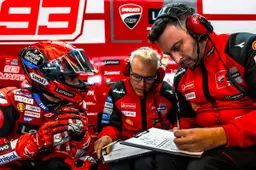
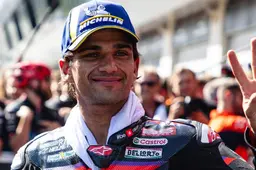
Let’s mention Pedro Acosta’s crash in the Sprint, with the Spaniard later admitting he was distracted by checking his dashboard, or rather the fuel consumption of his KTM, something he also had to manage in the GP he eventually won. Worse still for his teammate Brad Binder in the long race in Austria: the South African later jokingly referred to a “Moto2 map” he had to run from mid-race onward to save fuel after a dashboard warning, feeling embarrassed by the passes he suffered and with the sensation of being almost stopped. Jorge Martin admitted he deliberately tucked in behind Acosta in the early laps to save fuel, forced to manage from the start, but let’s not forget Fabio Quartararo, already in trouble at Misano and struggling for the same reason in Austria starting from the Sprint. Perhaps they’re not the only ones, but these are the riders who clearly acknowledged the problem after the GP. Who knows if the arrival of the new MotoGP bikes will bring improvements in this area as well...
-> Follow us on Instagram: @Corsedimoto
Continue reading
You might also like
More news
Popular articles
Loading