Product placement on two wheels: who pays whom? The winning pact between Hollywood and motorcycle manufacturers
Stories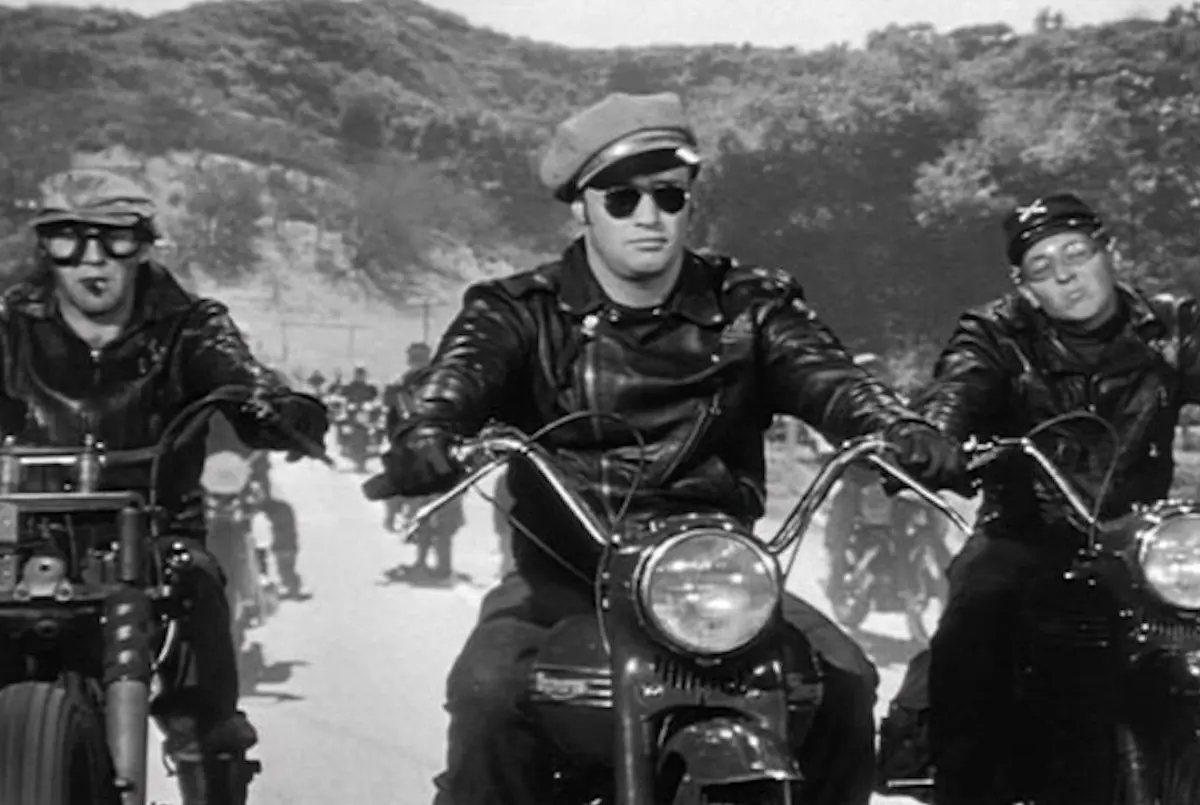
A motorcycle on set is not just a (often) winning cinematic choice. It’s a powerful marketing tool. For over half a century, the film industry and the motorcycle industry have been racing side by side.
Cinema celebrates the myth to boost the box office, while motorcycle manufacturers turn tickets into revenue. The lifestyle projected on the big screen becomes the audience’s purchase desire.
A history of icons
One of the first motorcycles to appear on the big screen is the Triumph Thunderbird 6T. In The Wild One (1953), Marlon Brando embodies a restless generation. The bike is an extension of the protagonist’s personality.
Ten years later, in The Great Escape, another Triumph — the Trophy TR6 — turns Steve McQueen’s ideal of freedom into motion.
Then we move from the allure of classics to the adrenaline of superbikes: Tom Cruise’s Kawasaki GPZ900R in Top Gun cements the myth of speed, contributing to the rise of sport bikes in the ’80s.
The market effect
The influence of cinema on two-wheeler sales is immediate. The John Wick saga is a recent example. The Suzuki GSX-S750, Yamaha MT-07 and MT-09, and the Aprilia Tuono 660 generated spikes in online searches. Many of these translated into real dealership visits.
Even more iconic is the case of Ducati in Matrix Reloaded: the dark green 996 ridden by Trinity became so sought-after that the Borgo Panigale company produced a limited “Matrix Edition,” which sold out quickly.
Who pays whom?
The question arises naturally: does the motorcycle manufacturer pay to appear, or does the film producer request the bike?
In most modern blockbusters, motorcycle manufacturers pay to have their model ridden by the hero. In addition to direct payment, the brand often commits to co-marketing campaigns (that is, advertising that promotes both the film and the motorcycle).
In auteur or historical films, where philological accuracy is essential, the production may purchase or rent the vehicles. If a director wants a specific out-of-production vintage bike, the financial burden falls on the film’s budget.
There’s a middle ground: free supply. The motorcycle company provides several units (even those destined to be destroyed by stunt performers) in exchange for mere visibility.
In any case, it’s a win-win.
Continue reading
You might also like

More news
Popular articles
Loading