Endurance: What a story! Behind the scenes with Aprilia Revo M2 at the Bol d’Or 24 Hours
Road RacingSaturday, 19 September 2026 at 10:48
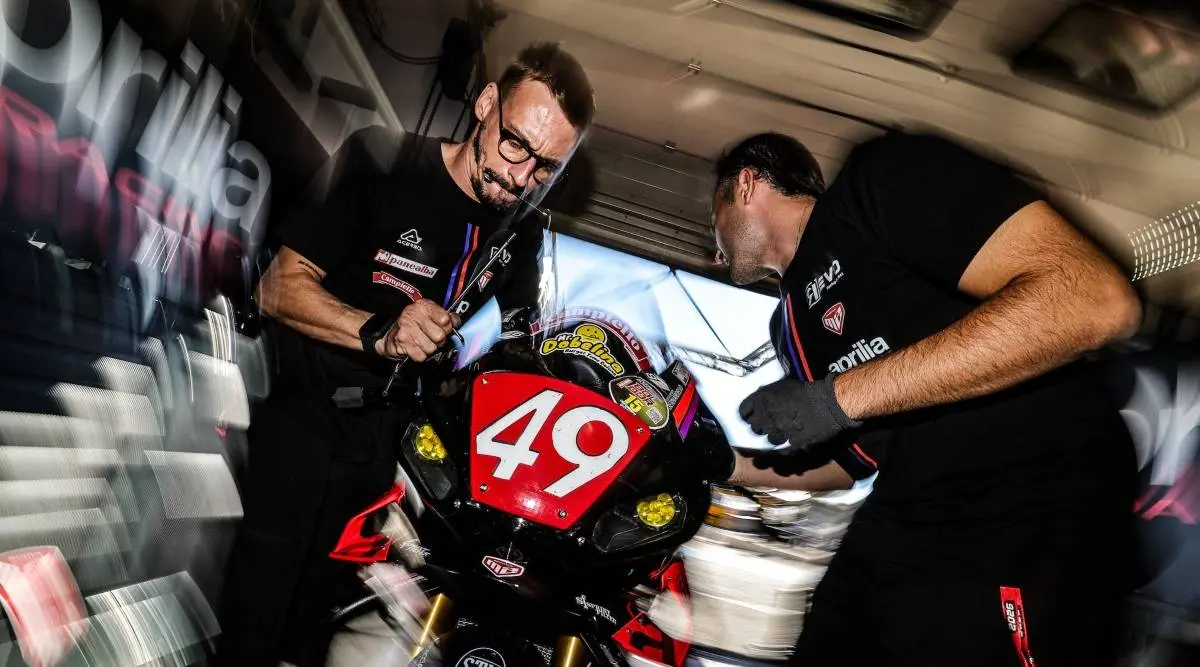
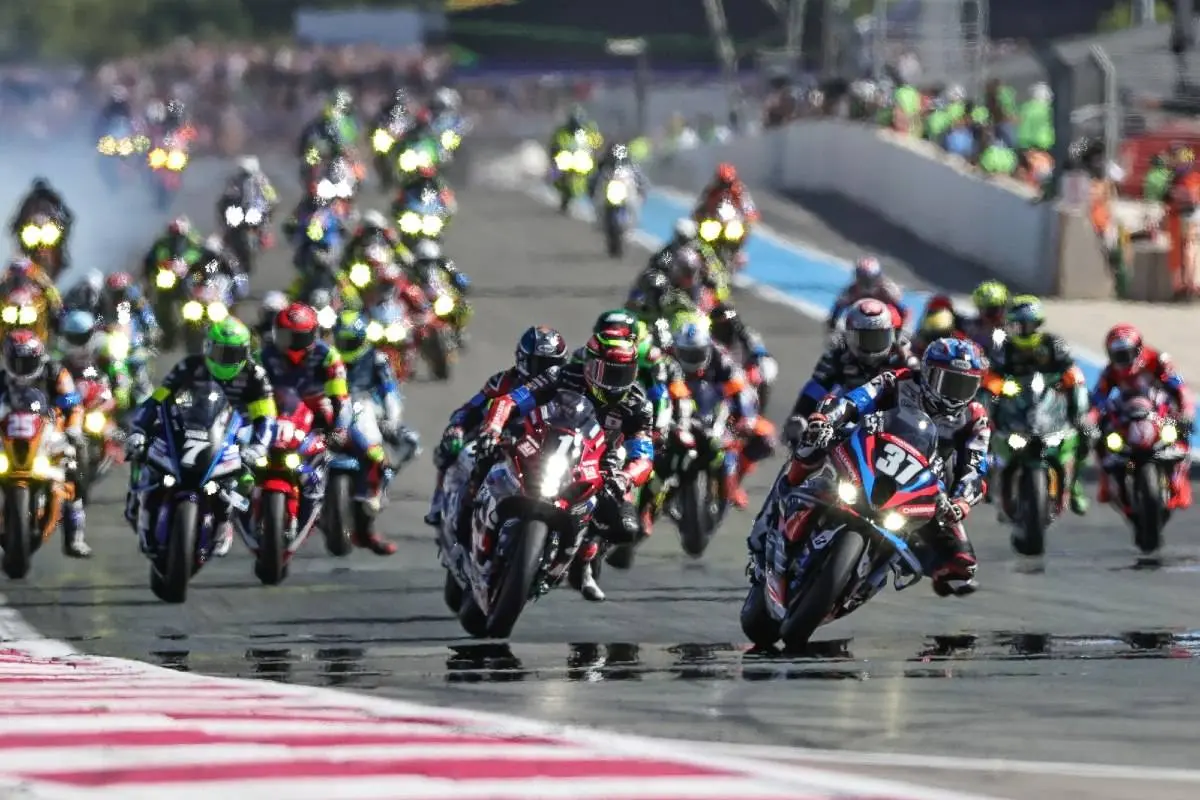
Endurance awards the 2026 World Championship at the photo finish in the iconic Bol d’Or 24 Hours, one of the cornerstones of motorsport. Endurance racing has it all: speed, thrills, challenge. But Endurance is also technology, strategy, and teamwork between riders and crew, for a full day and night. Endurance is a gripping story, and here we bring you the eve of the Bol d’Or from the perspective of Aprilia Revo M2, the top team from Noale setting out to try to win the Superstock class title.
Let’s start with a curiosity: over 24 hours, each of the 56 teams on the grid will use 16 sets of tires, 16 sets of brake pads, and about 720 liters of fuel. That’s practically the same consumption as an entire national championship like the CIV—packed into a single day! Another tidbit: by the end of the race, with debris, dust, grime, and rubber stuck to the fenders, the bike can weigh up to 1.5 kilos more than at the start.
Aprilia Revo M2: the tech
Revo M2 took the Aprilia RSV4 1100 to triumph in the Spa-Francorchamps 8 Hours last June, again in Superstock. At the Bol d’Or the distance is quadruple, but the bike configuration is identical. It’s a deliberate technical choice by the team, so the riders always have the same feel and the mechanics the same working methods. What changes are the ECU maps tailored for ultra-long distances.
There are other measures used for 24h races. First and foremost, a meticulous engine assembly by the in-house engine technicians, who disassemble and reassemble the engine with the utmost care, checking every single part. In addition, adjustments are made to ignition timing and to the maximum engine speed, which is lowered. Particularly important is the support from PRORACE, the technical partner supplying endurance-specific lubricants for Revo M2. The Aprilia structure can count on suppliers like Spider or Motorquality, who find in Endurance the right conditions to test materials under the toughest operating demands.

Fuel use and pit stop strategies
The V4 has higher consumption than inline-fours. The Aprilia RSV4 has a tremendously powerful engine thanks to its larger displacement (1100), which is, however, compensated (Balance Of Performance) with an extra 6-kilo minimum weight compared to 1000cc bikes. All of this affects fuel consumption. The Honda CBR-RR is decidedly the most fuel-efficient bike in the field. BMW fields the four-cylinder M1000RR: it burns more than Honda but less than the Aprilia.
Aprilia Revo M2 has planned a strategy that includes 28 to 29 pit stops, depending on how the 24 hours unfolds. Tires are changed every two or three stints on both wheels: this is a choice made to let the rider handle a more “uniform” bike and to optimize pit box changes. Pit stops are dictated by fuel consumption. The tank has a regulatory maximum capacity of 24 liters, so each time Revo M2 loads 23.8 or 23.7 liters.
A front and rear tire change takes about 19 seconds. The Staubli refueling system allows loading 24 liters in 6.5 seconds. The rider has to get on and off the bike and start it, so in a pit stop the bike typically sits still from 40 seconds to 1 minute. No, there’s no minimum time like in WorldSBK, so the fastest crew gains time over the others. On Superstock bikes no devices are allowed; everything remains stock. During and before the race there are extremely thorough checks by the marshals to prevent the use of illegal systems. During the race, pit stops are monitored by the race direction’s technical staff to verify correct execution. The only permitted aids are “external,” namely stands designed specifically to speed up pit stops. Each team produces its own.
How many kilometers are covered?
It will depend on the weather conditions and safety car neutralizations in case of incidents or issues on track. The expectation is to cover about 4,000 kilometers, roughly the equivalent of a road trip from Madrid to Moscow. The Aprilia RSV4 consumes more, so Revo M2 will use aggressive electronic mappings: the goal is to keep a very high pace. The Bol d’Or is run on the Le Castellet circuit, 5,750 meters long and featuring the Mistral, an extremely long straight that takes about 20 seconds to cover. On this stretch, you’re at full throttle for over ten seconds—an insane mechanical stress for the engine.
Defining the strategy is a real brainteaser because this isn’t a 130-kilometer MotoGP race: in 24 hours dozens of different variables can come into play. Before the start, Revo M2’s engineer prepared various possible scenarios, defined based on tire wear (i.e., changing every two or three stints) and the ability to adapt race pace, also according to the performance of the three riders: Kevin Calia, Simone Saltarelli, and Flavio Ferroni. During the race, the same engineer holds the reins by managing the pace and pit stop timing. Strategy looks ahead, meaning it must establish the order of future pit stops and which components to replace: tires, pads, any broken parts. The same engineer interfaces with the riders so they can prepare or rest at the right times. Everything gets more complicated if there are unforeseen events: decisions must be made on the spot.

At the Bol d’Or you never sleep
Endurance puts incredible stress on mechanics, not only because of the duration but also due to the need, in the few seconds of a pit stop, to figure out which areas might require attention in the next stop. It’s essential to understand what’s needed in under 15 seconds.
The Revo M2 Aprilia crew for the Bol d’Or is large: an engineer, a team manager, four mechanics, a fuel and tire attendant, a firefighter, a timekeeper, and a hospitality attendant. And of course, the four riders, including the reserve. The staff is supported by physiotherapists to treat the riders after each stint. In addition, the group includes numerous helpers for the respective riders. Aprilia’s reference lineup in Endurance doesn’t match the size of the official top EWC teams, but it can count on highly experienced professionals, so beyond the headcount, the organization and management models are identical to factory operations.
During the 24-hour race no one rests; at most, the technicians take micro-naps of 10–15 minutes, in rotation. In particular, the engineer and the timekeeper must always stay alert to respond to any unforeseen issues reported by the riders as they slow down at suitable points on the track.
What do riders eat during a 24-hour race?
The Aprilia riders at the Bol d’Or have a reserved area in the team’s trailer, used for physiotherapy treatments and short rests. Food is prepared in a dedicated facility in the paddock. Calia, Saltarelli, and Ferroni will eat rice and chicken, supplementing these mini-meals with gels and supplements. Physical fitness here is obviously a decisive factor. But endurance riders must not only be fast; they must also adapt to a riding setup shared with two other teammates, have the instinct to avoid problems on track, and adjust to different light and weather temperatures. Basically, they’re supermen. The rest is up to luck, because in a 24-hour race anything can happen: maybe even winning a World Championship that, on the eve of the race, seems incredibly hard to overturn. Good luck, guys!
-> Follow us on Instagram: @Corsedimoto
Continue reading
You might also like
More news
Popular articles
Loading