The Liberty Media Effect: What Does the Public Think of MotoGP's Turning Point?
MotoGPMonday, 21 September 2026 at 19:00
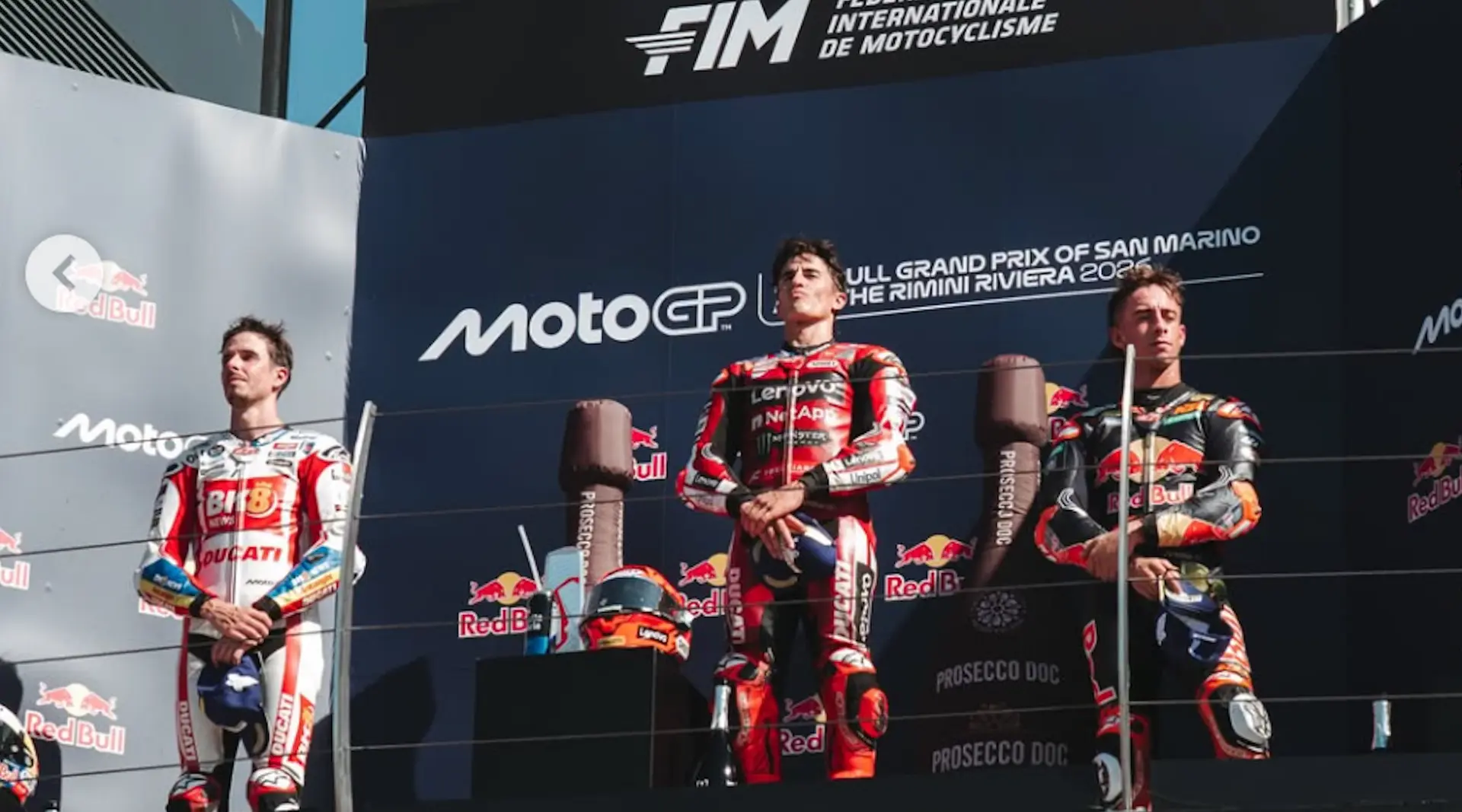
Liberty Media, the American giant that first bought Formula 1 and then MotoGP, brought with it three key words: commercialization, business, spectacle. These are the coordinates of a new era in motorsport, and like all new eras it brings clear opportunities along with some legitimate questions. The main one is also the simplest: are we sure these are the right steps to take?
Riders increasingly becoming stars
Riders are taking on a profile increasingly close to that of celebrities. Visibility grows, the audience widens, sponsors arrive: all effects that are good for the sport. The risk, however, is that in the process the distance between those who race and those who watch lengthens, and that the protagonists end up looking more like Hollywood stars than the down-to-earth athletes the paddock has always known.
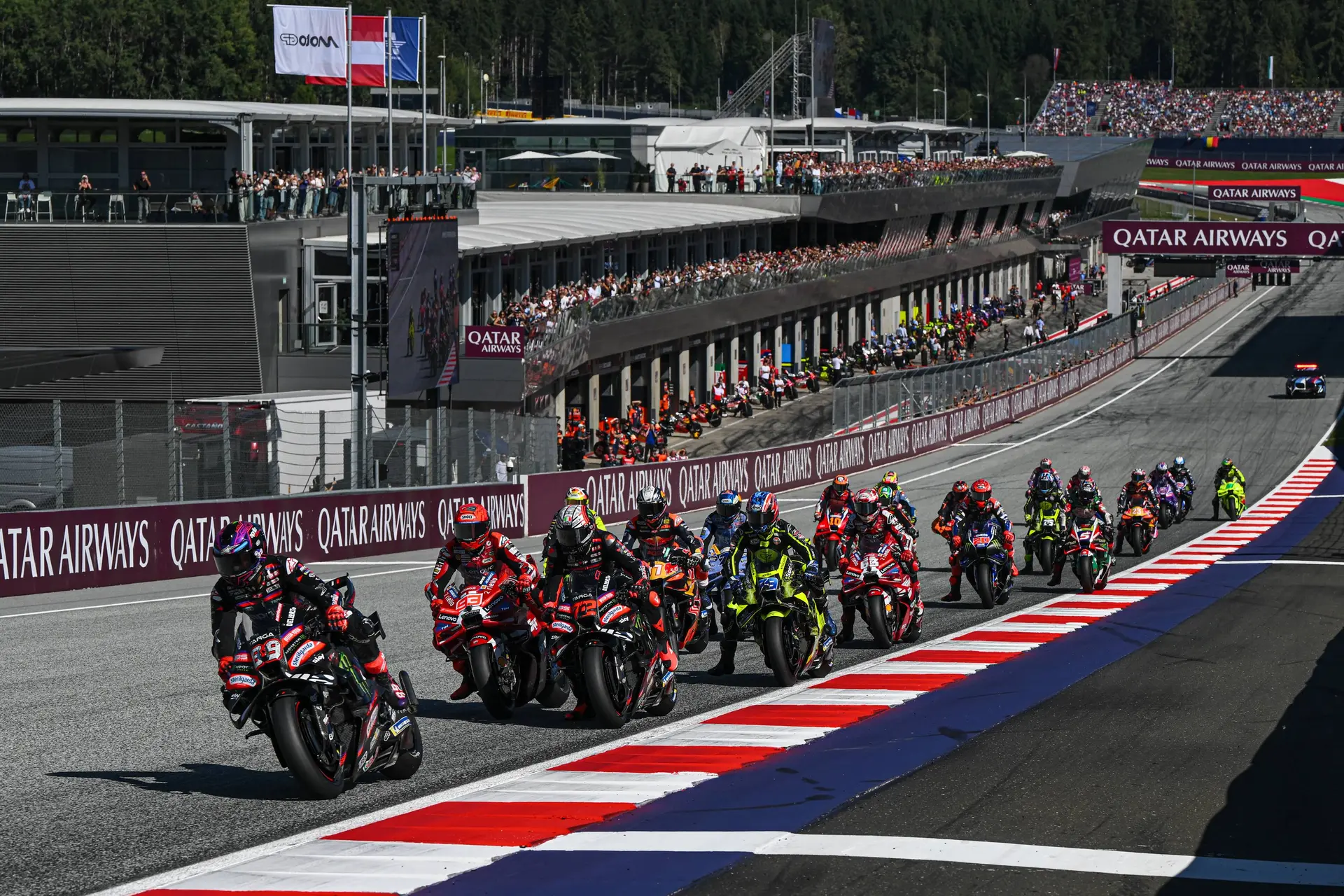
The same goes for the Grands Prix, which look more and more like a big show every year: side events, concerts, influencers. It’s not bad in itself — combining sport and entertainment is a formula that works — but it must be said that ticket prices have reached significant figures, even for just a single day of the race weekend.
An entertainment that already existed
Liberty Media was born as a U.S. mass media company and deals in entertainment: it’s their job, and they do it well. However, there’s a detail that perhaps is being taken for granted: motorsport was already highly entertaining even before. Entertainment doesn’t arise only from glitz, fame, the presence of famous figures: that’s a deeply American model, built on the grammar of Hollywood and cinema.
Sporting entertainment, in every single discipline, is first and foremost a matter of adrenaline and passion: watching athletes who fight, who give their all, who battle tooth and nail against their opponents. That is entertainment. And it’s precisely this aspect that, in both MotoGP and Formula 1, seems less central today than in the past.
The voice of the paddock
At the Misano GP I was able to speak with some MotoGP fans and asked them what they thought about Liberty Media’s arrival. It must be said, the enthusiasm wasn’t very high.
"Some things have now become inaccessible and prohibitive, even just in terms of price. MotoGP is a very down-to-earth sport, close to the people. I remember my father telling me that the garages were open, everything was different. Clearly, crowds have grown, safety regulations are absolutely right, but this commercialization is harmful."
Do we really need to make MotoGP — or any other sporting competition — a copy-and-paste of one another? Personally I don’t think so: the world championship has very specific strengths, and the main one is precisely the riders’ character. They’re very normal people, and you can feel it. What’s the need to build a bubble around them?
"It doesn’t bring the true fan any closer to the sport and to the protagonists who take to the track every weekend."
What draws spectators to a MotoGP GP over an F1 event is the passion, the energy that a MotoGP race manages to generate. It’s a very pure sport, and it begs the question of how necessary it really is to intervene in the race weekend format.
"one by one they’ve turned the paddock into a farce. I hope MotoGP manages to keep more of its purity; F1, for example, has lost a great deal, there’s no longer any contact with reality"
The other side of the coin
It must be said, of course, that everything has room to improve and evolve. Both MotoGP and F1, before being acquired by Liberty, had weaknesses that it was right to address: it’s normal to resort to change and proceed by trial and error. And some results are hard to dispute — Formula 1 under Liberty has vastly expanded its audience, reaching young viewers and a female component that previously struggled to approach this world. If MotoGP managed to do the same without losing its identity, that would be an achievement.
The issue, if anything, is balance: at the moment it seems that Liberty isn’t doing enough to enhance the pillars on which this sport rests, treating it above all like a show, like a festival that takes the stage every weekend in a different part of the world.
"they’re sidelining the fans too much. MotoGP stands also thanks to us; we invest time and money to be here and follow them"
Is this the right path?
What is the direction they want to take? The feeling is that change has arrived faster than the dialogue with those who live this sport from the inside. Even the riders are being consulted less and less on decisions that concern them. Just think of the Sprint races: there’s talk of introducing dedicated qualifying, as in F1. Quartararo himself, on the sidelines of the Austrian GP, commented:
"My opinion is that if we have to copy from F1, we should also copy the number of Sprints. The level of stress and danger is really intense with all these Sprints; if they want to add qualifying as well, then at least reduce the number. They put in the Sprints without really asking. We riders are here to race: if we have to do 22 Sprints we’ll do 22, if we have to do 12 then we’ll do 12; it’s not up to us to decide."
-> Follow us on Instagram: @Corsedimoto
byMartina Campomaggi
Continue reading
You might also like
More news
Popular articles
Loading