The Alvaro Bautista affair divides Superbike: manufacturers turn against their own riders!
Paolo Gozzi Column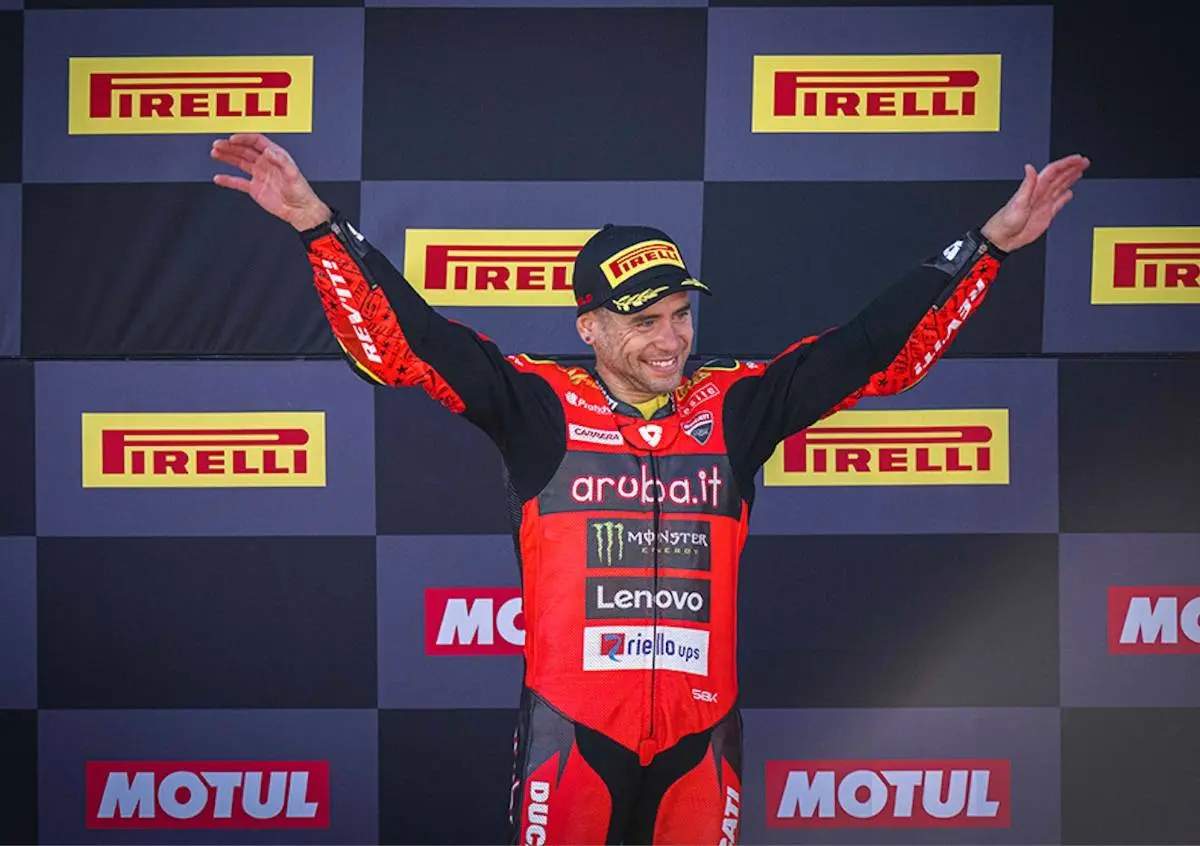
Alvaro Bautista finished the 2025 World Championship without any victories, but on the verge of turning 41 he’s still making waves. The obligation to race with a personalized ballast now risks plunging Superbike into ridicule. Here’s why.
The backstory
As our most loyal readers now know by heart, at the start of 2024 the notorious rider minimum weight rule came into force. In race trim—that is, with suit, helmet, gloves, and boots—you must reach a total of 80 kilograms. If not, a ballast equal to half the delta between actual weight and the regulatory threshold is imposed. In the World Championship only Alvaro Bautista does not reach the set value, so in practice it is a rule that affects him alone, forcing him for two seasons to race with 5–6 kilos of additional weight distributed on the Panigale V4 R. The amount varies because riders are weighed on the eve of each round.
The rationale
This measure came into effect on the heels of the two World Championships dominated by Bautista with Ducati in 2022–23: according to rivals (riders and manufacturers), the Spaniard was winning thanks to his featherweight build. So, by popular demand, Superbike introduced this rule. It’s as if basketball had imposed ballast on a team of giants, or if in soccer they decided to widen the goal only for a specific team because their goalkeeper is too good. The comparisons are a bit forced, but they get the point across: what would seem implausible in the normal world has, for some time now, passed as normal in Superbike.
The petition
Dropped from the Ducati Aruba team’s plans, Alvaro Bautista offered himself to everyone, only to have doors slammed in his face. In the paddock, everyone knows that even at a certain age he’s one of the top riders. Going by the results, he’s the fastest of all the factory riders next season, Nicolò Bulega excluded. But no one signed him because compensating for the ballast was seen as one more problem, all the more so by manufacturers who regularly get beaten despite racing prototypes thanks to super technical concessions. At that point, between Estoril and Jerez, Bautista launched an appeal to fellow riders calling for the cancellation of this rule. Everyone signed it, except Jonathan Rea who, being effectively retired, understandably stayed out of it.
Application rejected
The proposal reached the MSMA, the body that brings together all racing manufacturers and, in today’s motorcycling, has broad influence over technical regulations. Ducati was the only one to express a positive opinion, while BMW, Yamaha, Honda, Bimota, and Kawasaki rejected the rider’s request. The MSMA can approve changes only unanimously, so Bautista’s request was denied.
Ducati’s political choices
Two contradictions surface. The first concerns Ducati itself, which on the eve of 2024 voted in favor of the ballast, effectively acting against the interests of its then star rider. Why? Simple: the Italian brand was interested in abolishing the rule on engine rev limits, which is indeed what happened. From early 2025, performance is balanced by controlling fuel flow. A technical measure that proved completely useless, given that Ducati and BMW raced for half the season with 1.5 kg/hour less fuel than the others and still won almost all the races, with two riders (Razgatlioglu and Bulega) regularly putting 15 seconds into everyone else. Now Ducati would be in favor of abolishing the ballast. This circumstance shows you why the technical regulations don’t work in the World Championship. This fundamental element is not the result of a strategic vision adopted in the interest of the series, but of continuous negotiations between manufacturers. You give me something, and I’ll grant you another advantage.
And now comes the best part...
The story is already laughable as it is, but there’s an even more grotesque aspect. At the MSMA, five manufacturers went against the opinion of their own factory riders, who by signing Bautista’s petition had taken a stance on their colleague’s request. So on a matter as important as the technical regulations, the riders think one way and the brand that runs them (and pays them...) has a different opinion and makes opposite decisions. This episode is the litmus test of today’s Superbike. A championship that carries on by inertia, riding the reflected allure of an ever more distant past, but without leadership or a shared vision.
Continue reading
You might also like
More news
Popular articles
Loading