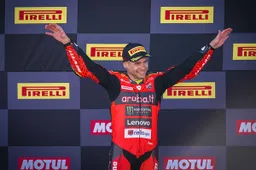
Nicolò Bulega will race the final two MotoGP GPs with the injured Marc Marquez’s Ducati GP '25. A Superbike rider against the big names of the top class. In 2006 at Valencia, Troy Bayliss silenced everyone. Could it happen again?
From a technical standpoint, the natural answer can only be no, also because there are significant differences. In 2006, before the wild card, Troy Bayliss had already secured the second of his three Superbike World Championships early by triumphing at Imola. In the previous three seasons he had raced in MotoGP, and for two years (2003–04) with Ducati itself, finishing on the podium four times, always third. Nicolò, on the other hand, comes to Portimão with only one day of testing on the MotoGP bike: for him it will be an absolute debut.
A clash of classes
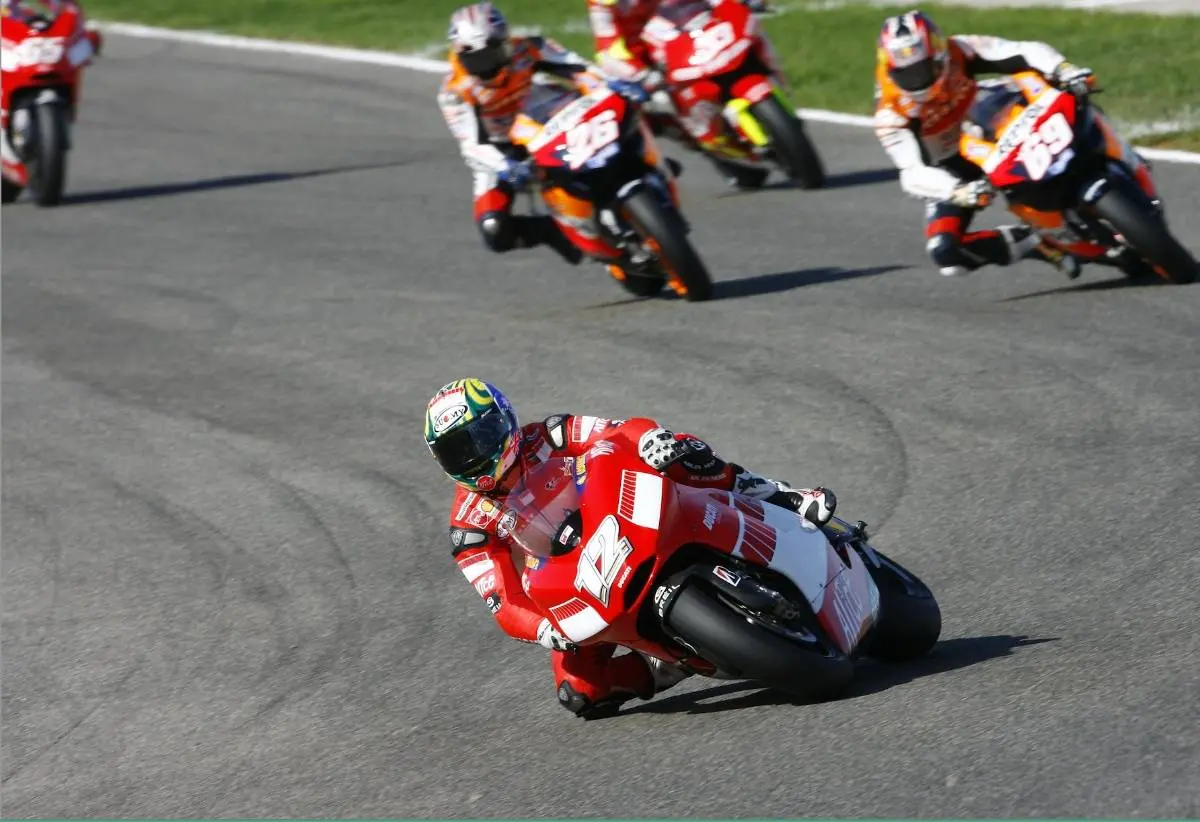
Bayliss returned as a wild card to replace the injured Sete Gibernau. He had never raced on Bridgestones and knew nothing of that Ducati version, which he only got his hands on during Friday practice. And yet he delivered a magical performance. In qualifying he clocked the second-fastest time behind Valentino Rossi, then on Yamaha. The heavy favorite crashed, gifting the World Championship to Nicky Hayden and Honda. Bayliss reached the finish line alone, ahead of the sister Ducati of Loris Capirossi, who was soundly beaten like a drum, as were all the other MotoGP protagonists. “What a lesson!” headlined the papers. Indeed, because at the time Superbike was MotoGP’s sworn enemy. Bayliss hadn’t just won for himself; he made an entire movement swell with pride.
A revenge from another World
Those who have followed bikes only recently may not know that for over thirty years MotoGP and Superbike were bitter rivals. Management was different, and the continued rise in popularity and prestige of the alternative championship was an ever more painful thorn in the side of Dorna, MotoGP’s promoter. The scrapping of the glorious 500GP and the switch to 4-stroke engines—1000 cc, the same displacement as SBK—was presented as a necessary technical evolution, but for Dorna it was also an opportunity to harm the competition. The rivalry was such that in the GP press room it was forbidden to watch Superbike races. The two championships were clans divided by fierce rivalries, in every field: riders, technicians, and even the media.
Bayliss and the revolutionary victory
The Valencia triumph was not just a sporting matter, but the redemption of a movement that MotoGP consistently diminished. Troy flipped the script, flooding the entire Superbike paddock with pride, from the organizer Maurizio Flammini down to the last mechanic. “It’s hard to claim that MotoGP’s stars came out of it unscathed,” wrote Motosprint’s MotoGP correspondent. “Bayliss’s superlative race also calls into question the level of MotoGP, seeing as the Australian made a mockery of young talents like Stoner (who ended up on the ground, as usual), Pedrosa (who ran an anonymous race, finishing fourth), and Marco Melandri, who was fifth. It may have been a race in which Bayliss had nothing at stake, so he enjoyed the ‘vacation,’ but the kids should reflect.”
Everything is different now
Since 2013, Superbike has been managed by the same Dorna, which has become the monopolist of the entire motorcycle racing world. So if Nicolò Bulega were to pull off the phantasmagoric feat of winning on debut, the “political” repercussions would certainly not be as sensational as back then. Today the system is structured so that Superbike champions are presented as future MotoGP riders anyway, as in the case of Toprak Razgatlioglu next year with Pramac Yamaha. Bulega is also predestined: in 2026 he will be a Ducati tester, ahead of a fully expected full-time move the following year.
The effects of the monopoly
Troy Bayliss’s stunning, surprising victory at Valencia 2006 was both a sporting feat and a revolutionary event. If it happened again, instead people would say that Nicolò Bulega simply got ahead of the curve, proving he is already ready for MotoGP. No upheaval of the landscape, no rivalry, no debate about the supposed technical superiority of MotoGP riders. The monopoly has erased the class struggle.
Continue reading
You might also like
More news
Popular articles
Loading