Suzuki, the big regret: that deal until 2026 before the shock exit
MotoGPSaturday, 07 February 2026 at 14:48
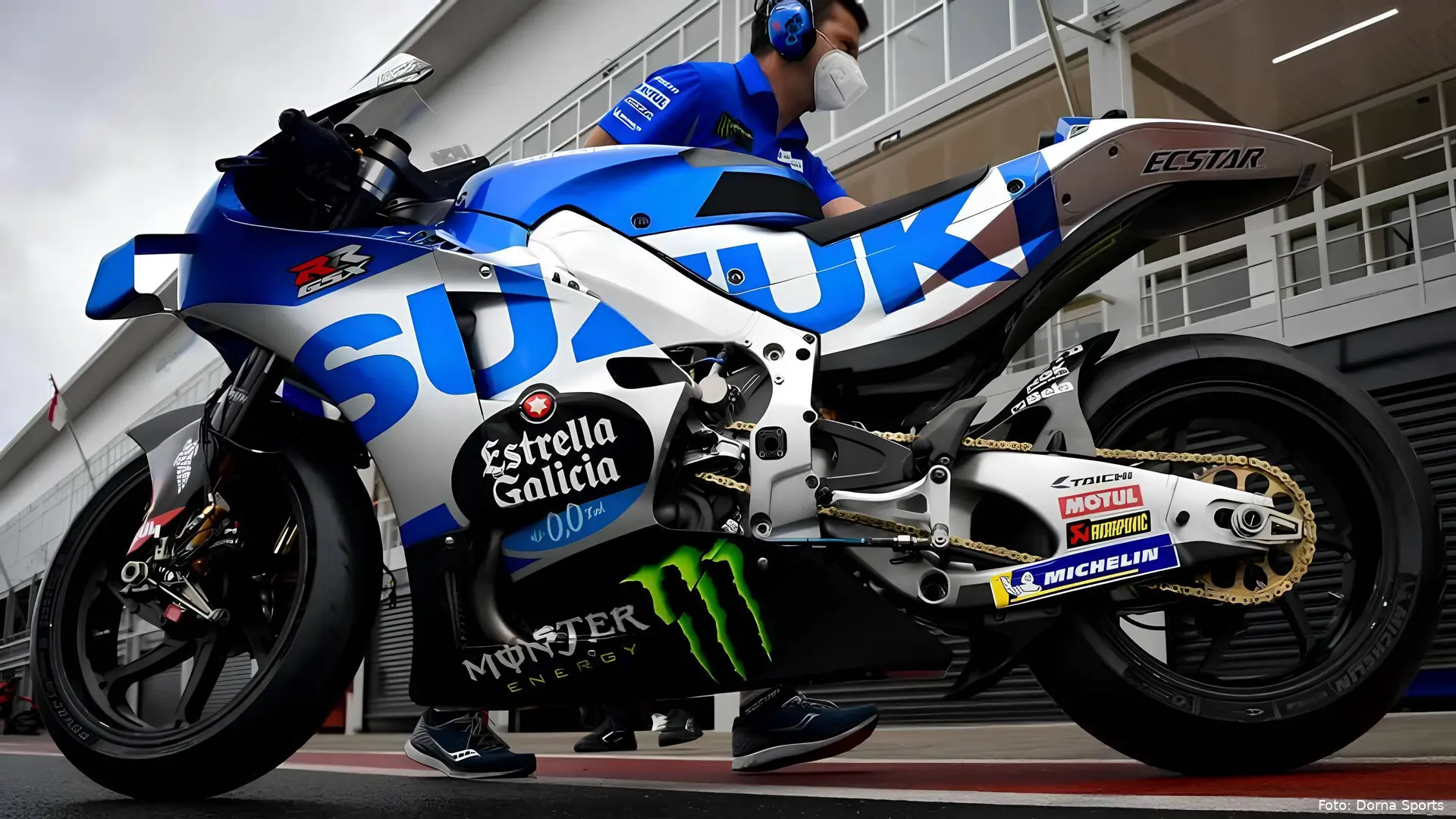
Suzuki, the brand that has disappeared from today’s MotoGP and was supposed to be there right up to 2026... Let’s revisit the story.
We’re just over a month into 2026, heading into another MotoGP season with five manufacturers. It should have been a very different story: in 2021, in fact, Suzuki announced it had signed an agreement to continue competing in the premier class of the World Championship through 2026. As we know, unfortunately, it turned out very differently: the cold shower at Jerez 2020, the Hamamatsu men gathered the whole team and announced they were abandoning the MotoGP project. A second farewell—final this time? Rumors swirl about a possible return given the 2027 overhaul, but for now they remain just unfounded whispers. Let’s briefly retrace the history.
All the champions
In the World Championship, Suzuki has a history rich with success and world titles. Do you remember all the names? The very first was German rider Ernst Degner, who in 1962 delivered the Japanese brand its first riders’ title in the 50cc class, the legendary “mosquitoes.” Next came the Kiwi Hugh Anderson, who reached the top of the world in 1963 in both 50cc and 125cc, repeating in 1964 in the smallest class and again in 1965 in the eighth-liter. The success story continued: 1966, 1967, and 1968, with the 50cc title exclusively in the hands of Hans-Georg Anscheidt. Two more years and here’s the third German world champion with Hamamatsu, Dieter Braun, who took the 125cc crown in 1970. Then we had to wait a few years and move up to what was then the premier class, the now-defunct 500cc: Barry Sheene stamped a double seal in 1976-1977, followed by Italians Marco Lucchinelli in 1981 and Franco Uncini in 1982. A decade later, Suzuki returned to winning ways with Kevin Schwantz; in 2000 it was Kenny Roberts Jr.’s turn. It would then take another 20 years and the new premier class of the World Championship for the final riders’ crown, signed by Joan Mir.
The last MotoGP chapter
The “second phase” began in 2015, after a few years’ break following the stop at the end of 2011 (closing the GSV-R project). De Puniet’s wildcard at Valencia at the end of 2014, debuting the GSX-RR, foreshadowed Suzuki’s official return to MotoGP with Aleix Espargaro and Maverick Viñales. Important results arrived as early as 2016, as the latter delivered the first win of this comeback, plus three other podiums and a slew of top-10 finishes (only one GP outside, and a single DNF), which weighed heavily in the team’s 4th place in the standings. In 2017 everything changed with Andrea Iannone and Alex Rins as riders, supported by test riders Takuya Tsuda and Sylvain Guintoli. The lineup stayed the same the following year, and several podium finishes again earned the team 4th in the championship. In 2019 came a mid-cycle change: Alex Rins was confirmed (two wins and one podium), and Joan Mir stepped up to MotoGP. It was the prelude to the Japanese brand’s year of glory: in 2020, with Mir, they returned to the top of the world, a historic milestone. 2021 wasn’t too dazzling, but the #1 still brought several podiums, with Rins adding another.
The MotoGP renewal
In April 2021, meanwhile, came great news for Suzuki: the extension of the agreement with Dorna to continue being among the protagonists of MotoGP until… Do you remember when? Exactly 2026. This season that has yet to begin should also have featured the Hamamatsu brand on the grid, as this announcement stated: “Dorna Sports is pleased to announce that an agreement has been signed with Suzuki Motor Corporation to renew the Japanese manufacturer’s involvement in the MotoGP World Championship for the period from the 2022 season to the 2026 season. As a result, Suzuki Motor Corporation will field its Factory Team, currently known as Team Suzuki Ecstar, in the premier class of the MotoGP World Championship.” An officially enthusiastic collaboration for what should have been the sixth manufacturer in the premier class for the years to come...
The unexpected epilogue
They arrived at the start of 2022 with updates, technical innovations—everything needed to get back to the top. But a troubling rumor began circulating over the Jerez GP weekend, and on July 13 the cold shower was made official as follows: “Suzuki Motor Corporation and Dorna have reached an agreement to end Suzuki’s participation in MotoGP at the end of the 2022 season. Suzuki will also end its official participation in the Endurance World Championship (EWC) at the end of the 2022 season. We will continue to race in the 2022 MotoGP and EWC championships, committing fully to winning the remaining races. We aim to continue supporting our customers’ racing activities through our global distributor network. We would like to express our deepest gratitude to all Suzuki fans who have given us their enthusiastic support and to everyone who has supported Suzuki’s motorcycle activities for many years.” A tough year after this announcement—everyone felt the blow... Until the finale: Rins gifted Suzuki its last smiles with wins at Phillip Island and Valencia, a swan song.
Between dreams and rumors
Over the years, there has been no shortage of speculation about Suzuki’s return to MotoGP—ifs and whens that have so far remained only talk. The brand has decided to focus all its efforts on sustainability, and we can’t rule out a significant technical aspect: like Yamaha, it was the only brand left with an inline-four engine, up against the V4s that now dominate MotoGP. And we’re seeing how hard Yamaha is working to make a very young project function, in a race against time to keep up... But there are also rumors pointing to a possible Suzuki comeback “at the right moment,” namely in 2027: MotoGP will undergo a radical revolution, which could be the right year for another brand to enter. That, however, would mean a tremendous amount of behind-the-scenes work; at the moment there are no traces... Or has the brand built an impenetrable wall of secrecy? Clearly these are unfounded hypotheses, but the regret remains over what could have been in recent years yet never was.
Continue reading
You might also like
More news
Popular articles
Loading