by Marc Seriau/paddock-gp
In the stifling heat of the Thai Grand Prix, MotoGP rims suffered particularly this year, with significant consequences in the standings.
What’s happening to the rims?
On Saturday, fifteen minutes after the end of the Sprint, the now-classic live message “Tire pressure under investigation” appeared for Jorge Martin, who had crossed the line in fifth place.
This tire pressure check almost always results in a time penalty for the rider concerned, since the system automatically calculates the average pressure during the race and is always accurate. In practice, if the message appears, it means the minimum regulatory pressure was not reached, either at the front (1.8 bar for 30% of the race) or at the rear (1.68 bar for 50%), but usually at the front, with an 8-second penalty in Sprint races and 16 seconds in Grand Prix races.
However, after a while, Jorge Martin and Aprilia were cleared of all charges, after the FIM MotoGP stewards determined that the pressure loss was due to a rim leak, as per the official communication: “After carrying out post-race technical checks, the tire pressure was correct at the start of the race and the pressure loss during the race was found to be due to an air leak from the rim. The Technical Director, in consultation with the official tire supplier, determined that no breach of the regulations was found.”
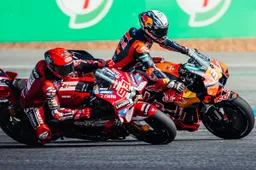
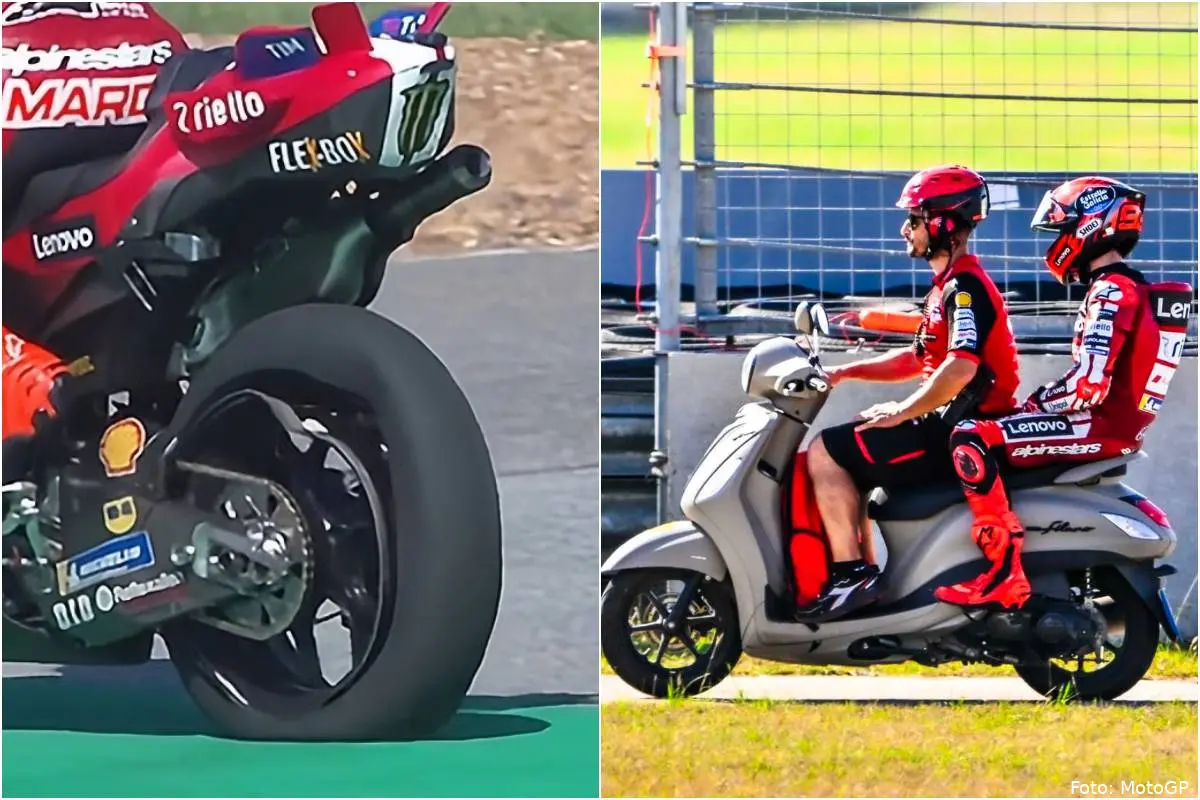
On Sunday, during lap 21 of the Thai Grand Prix, the consequences were quite different: Marc Marquez, running fourth at the time, hit the kerb at Turn 4, immediately de-beading the tire and retiring on the spot. The deformation of the rear rim, in several places, is striking! An aspect also acknowledged by Michelin’s Piero Taramasso.
A matter of materials
Today all MotoGP rims, whether Marchesini (Ducati, Aprilia, KTM, Honda) or OZ Racing (Yamaha), are made of magnesium, a very light but fragile material. Pure magnesium melts at about 650 °C, but magnesium alloys (like those used for MotoGP rims, often AZ80, ZK60, WE43 or similar forged Marchesini alloys) begin to soften (significant loss of mechanical strength, increased creep, increased ductility) well before that point.
- At room temperature (20–25 °C): high strength (yield strength ~200–300 MPa, tensile strength ~300–400 MPa depending on alloy and treatment). Stiff and high-performance.
- At 95–150 °C: notable softening begins for conventional alloys (AZ80, AZ91, etc.). The yield strength decreases by 20–40% compared to room temperature. Traditional alloys start to show creep (slow deformation under constant load) and a decrease in stiffness.
Remember that MotoGP tires operate at about 90–110 °C at the front and about 110–140 °C at the rear...
Currently, most homologated kerbs are of the “Misano 200” type, deeply notched at the end to slow down riders who use them. They have already been called into question after Jorge Martin’s crash in Qatar 2025.
Today the air temperature in Buriram was 38 °C, while the asphalt and rumble strips were 55 °C...
Will it now be necessary to take all these elements into account, starting from Goiânia in three weeks?
Read also

Continue reading
You might also like
More news



Popular articles



Loading