Boom in entries, champions born, and women’s inclusion: why the Suzuka 4 Hours matters more than ever
Road Racing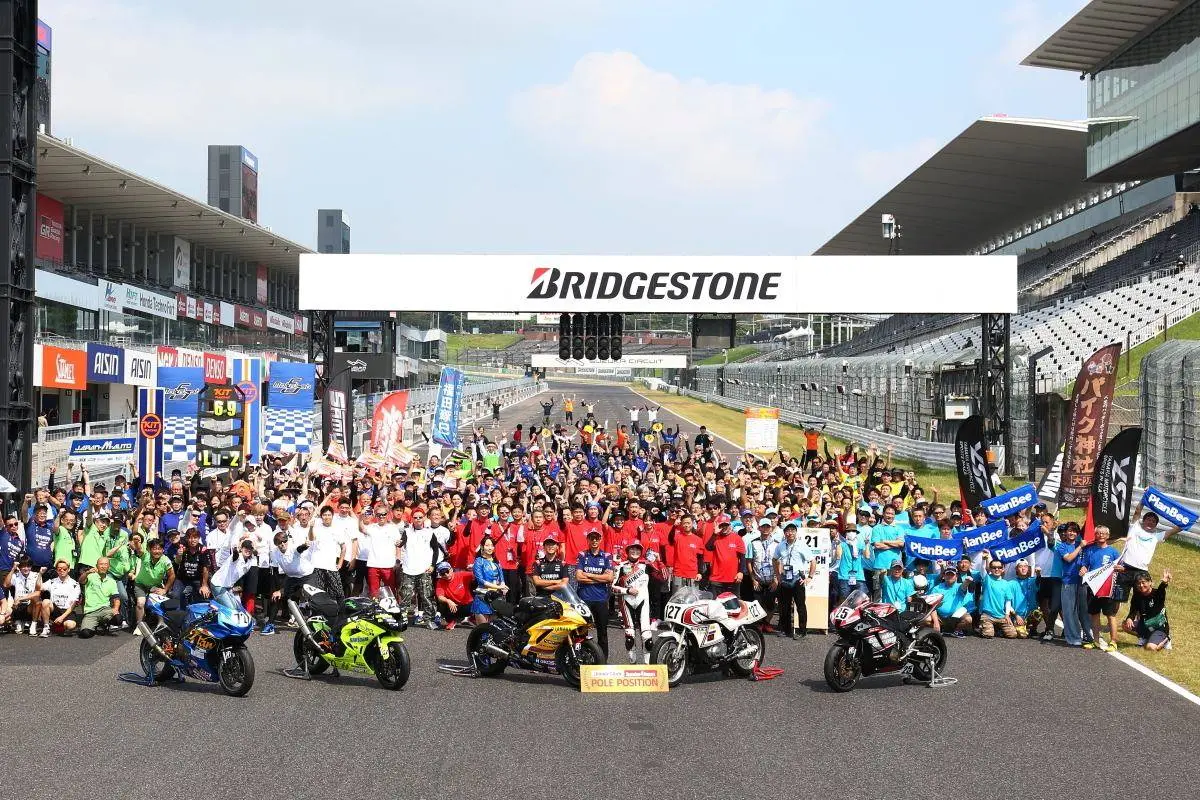
The Suzuka 4 Hours, originally reserved for 250cc 2-strokes and 400cc 4-strokes before switching to 600 Supersport at the start of the Third Millennium, has never enjoyed the same prestige and recognition as the 8 Hours. In fact, it has mostly served as a sort of “side dish” to the main event, but its importance in the history of All Japan motorcycling is well established. Proof of this is that, after just one year off the calendar, it will return on September 6, 2026, with a new purpose: to prepare teams and riders for the 8 Hours, albeit on 600 Supersport machines.
DEBUT IN 1980
The Suzuka 4 Hours was established in 1980, two years after the first edition of the 8 Hours held on July 30, 1978. Compared to its “big sister,” the original purpose of the “Yon Tai” was to give novice riders a place to race, so much so that it soon earned the title of “Koshien for beginner motorcyclists” (Koshien being the two annual national high school baseball tournaments in Japan). This was a necessity given that, in 1980, the Suzuka 8 Hours became part of the Endurance World Championship calendar, therefore admitting only riders holding an international license. At the same time, the first 4 Hours held in 1980 accepted riders holding Novice and Junior licenses issued by the MFJ. The former could race on production-derived motorcycles up to a maximum of 250cc or TT-F3, while Junior license holders were restricted to bikes up to a maximum displacement of 125cc.
RULE CHANGE
Until 1991, the eligible bikes were 250cc 2-strokes (TT-F3) and 400cc 4-strokes (SP400), with regulatory adjustments from 1992 to 2000: the same construction philosophy with the duality between 250cc 2-strokes (SP250 regulations) and 400cc 4-strokes (SP400). From 2001 to 2024, the series switched to 600cc inline-four Supersport, under All Japan ST600 and ST600R regulations.
FROM BOOM TO DISINTEREST
In 2024 the last edition was held before the planned return in 2026 as a race conceptually aimed at preparing teams and riders for the 8 Hours. Much like in its early days, when the 4 Hours represented the “boom” race: in 1983 there were 283 teams entered (566 riders) for 60 spots on the grid. In 1988, entries soared to an incredible 619 participants (273 in TT-F3, 364 in SP400) for just 60 race slots. For this reason, a “Race B” was created where teams qualified from 61st to 120th were admitted, with the top 3 then promoted to the A final.
HISTORIC NAMES ON THE HONOR ROLL
While in the most recent editions the Suzuka 4 Hours effectively became a hunting ground for the Southeast Asian branches of Honda and Yamaha (Thailand, Malaysia, and Indonesia), in the 1980s and 1990s a number of riders who later succeeded at international levels stood atop the podium. Such is the case of Hikaru Miyagi (1983), Katsuro Takayoshi (1986), Tohru Ukawa and Akira Yanagawa (1990), Takeshi Tsujimura (1991), Haruchika Aoki and Katsuaki Fujiwara (1992), Shinya Nakano (1994), and Daisaku Sakai, who in 1995 won at just 13 years old! In 1993, a very young Daijiro Kato made a name for himself at the 4 Hours, fighting for the win with Team Kotake with RSC Honda.
SUZUKA 4 HOURS IN PINK
The “Yon Tai” has been, in effect, the race of opportunities and as inclusive as possible, with particular focus on women in motorcycling. In the very first edition held in 1980 there were as many as five female riders in the Novice ranks on TT-F3 bikes, with pole position taken by the Suzuki GSX400E prepared by Dr. SUDA and equipped with a Yoshimura engine, ridden by Hiroko Hori and Mineko Imazato. In the second edition held in 1981, rider Mari Igata, partnered by Hiroo Takemura, took pole position in the 125cc class with a Honda MT125R; in later years she would contest two editions of the Suzuka 8 Hours (1983 and 1984) and found her own school, “Team Mari,” which welcomed a total of 14,000 women riders over the years.
HISTORIC WOMEN’S VICTORY IN 2019
The pairing between the 4 Hours and women’s motorcycling continued in 2004–2005 with the Synergy Force Moriwaki Club team fielding an all-female crew conceived by Midori Moriwaki and Nita Korhonen (then head of FIM Women in Motorcycling, and daughter of former Finnish GP rider Pentti Korhonen). In 2004 Melissa Paris and Shelina Moreda finished 28th, while in 2005 the lineup featuring the same Shelina Moreda alongside Avalon Biddle (now Avalon Lewis), called up to replace the injured Melissa Paris, finished 26th overall. Unforgettable was what happened in 2019: Thai rider Muklada Sarapuech took victory, becoming the first woman to win an international race at Suzuka with the A.P. Honda Racing Thailand team led by Ratthapark Wilairot, doing so aboard the Honda CBR 600RR #149 alongside compatriot Piyawat Patoomyos. Also in 2019, the all-female GOSHI Racing crew of Chisato Katayama and Karen Ogura (sister of Ai Ogura) finished 5th overall.
Continue reading
You might also like
More news
Popular articles
Loading